
Tech
The Strategic Benefits of Agentic Decision Intelligence for Business Growth


In today’s fast-moving digital economy, businesses must make faster, smarter, and more consistent decisions to stay competitive. Traditional decision-making processes often rely on fragmented data, manual analysis, and delayed insights, which limit an organization’s ability to respond to market changes quickly. This is where Agentic Decision Intelligence emerges as a transformative capability.
Agentic Decision Intelligence combines artificial intelligence, automation, and data analytics to create intelligent systems that can analyze complex business situations, generate decision logic, and execute actions autonomously. According to Aera Technology’s explanation of Decision Intelligence, decision intelligence enables organizations to connect data, recommendations, and execution in real time, allowing businesses to optimize decisions across operations and drive measurable value.
For modern enterprises, adopting Agentic Decision Intelligence is not just a technological upgrade—it is a strategic move that accelerates growth, enhances operational efficiency, and enables scalable decision-making.
1. Faster and More Accurate Decision-Making
One of the biggest advantages of Agentic Decision Intelligence is its ability to process massive volumes of data and generate real-time insights. Instead of relying solely on human interpretation, organizations can leverage AI-driven systems that analyze structured and unstructured data simultaneously.
These systems evaluate multiple variables, simulate scenarios, and recommend the most effective course of action. By automating parts of the decision process, companies can dramatically reduce delays and improve decision accuracy.
For example, businesses can instantly detect supply chain disruptions, adjust inventory levels, or optimize pricing strategies using automated insights. As a result, organizations become more agile and responsive to market fluctuations.
2. Autonomous Decision Execution
Traditional analytics platforms typically provide insights but require humans to execute decisions manually. Agentic Decision Intelligence goes beyond this limitation by enabling autonomous execution of decisions.
Agentic systems can coordinate multiple AI agents that work together to perform complex tasks such as:
- Monitoring operational data
- Identifying patterns or anomalies
- Recommending solutions
- Executing decisions across enterprise systems
Unlike static automation workflows, agentic systems dynamically generate decision logic and orchestrate multi-step processes in real time. This capability significantly improves operational speed and reduces the burden on human teams.
For businesses operating in highly dynamic environments, this autonomy creates a powerful competitive advantage.
3. Improved Operational Efficiency
Organizations constantly deal with repetitive decision tasks across departments such as finance, logistics, procurement, and customer service. When these decisions rely on manual processes, inefficiencies and inconsistencies often arise.
Agentic Decision Intelligence helps streamline operations by automating routine decisions and optimizing workflows. Key efficiency benefits include:
- Reduced manual workload for employees
- Faster processing of operational decisions
- Improved resource allocation
- Lower operational costs
By automating thousands of micro-decisions daily, organizations can focus human expertise on strategic initiatives rather than repetitive tasks.
4. Enhanced Data-Driven Culture
Many companies struggle to build a truly data-driven culture because insights remain confined to analytics teams. Agentic Decision Intelligence democratizes decision-making by making insights accessible across the organization.
Modern decision intelligence platforms offer user-friendly interfaces, dashboards, and natural language interactions that allow business users to understand recommendations and take action quickly. This transparency builds trust in AI-driven systems while enabling employees to collaborate around shared insights.
Over time, organizations develop a culture where decisions are consistently supported by data, analytics, and automated intelligence.
5. Continuous Learning and Decision Optimization
Another strategic advantage of Agentic Decision Intelligence is its ability to continuously learn from outcomes. Unlike traditional decision systems that rely on static rules, agentic systems use feedback loops to refine their models and improve future decisions.
These systems evaluate the results of previous actions, identify what worked or failed, and update decision logic accordingly. This continuous learning capability helps organizations:
- Improve forecasting accuracy
- Minimize operational risks
- Enhance strategic planning
- Optimize long-term performance
As a result, decision intelligence platforms become smarter over time, creating a self-improving ecosystem for enterprise decision-making.
6. Scalable Enterprise-Wide Decision Management
Large organizations often struggle with inconsistent decision-making across departments and systems. Agentic Decision Intelligence addresses this challenge by connecting data sources, AI models, and operational systems into a unified decision framework.
Through a centralized decision platform, companies can ensure that decisions across supply chain, finance, operations, and sales are aligned with business objectives.
Solutions from Aera Technology enable organizations to orchestrate decision processes across the enterprise, ensuring that every decision is informed by the latest data and optimized for business impact.
This enterprise-wide visibility and coordination allows companies to scale intelligent decision-making across complex business environments.
7. Competitive Advantage and Business Growth
Ultimately, the strategic value of Agentic Decision Intelligence lies in its ability to accelerate business growth. By enabling faster decisions, autonomous execution, and continuous optimization, organizations can respond to market opportunities more effectively than competitors.
Companies that leverage decision intelligence can:
- Improve customer experiences
- Optimize supply chains
- Reduce operational costs
- Increase revenue opportunities
In a world where speed and precision determine market leadership, intelligent decision automation becomes a key differentiator.
Final Thoughts
Agentic Decision Intelligence represents the next evolution of enterprise decision-making. By combining artificial intelligence, automation, and real-time data, organizations can transform how decisions are created, executed, and optimized.
Platforms such as those developed by Aera Technology empower businesses to move beyond traditional analytics and embrace a new model of autonomous, data-driven decision management. Through faster insights, improved efficiency, and scalable intelligence, Agentic Decision Intelligence enables companies to unlock sustainable business growth.
For organizations looking to modernize their operations and gain a strategic edge, exploring Agentic Decision Intelligence is no longer optional—it is a critical step toward the future of intelligent enterprise management.


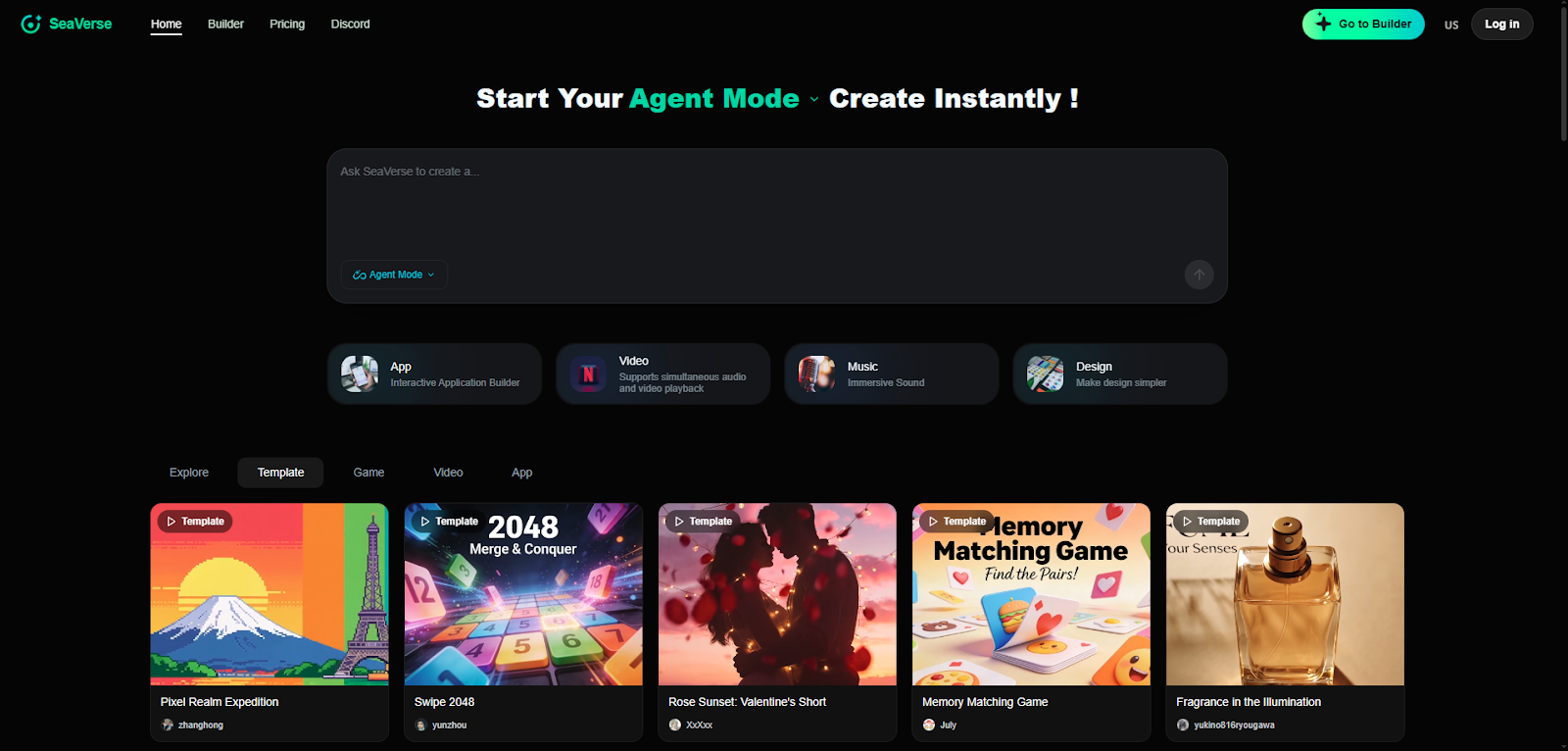
In the rapidly evolving world of artificial intelligence, new platforms are emerging that make advanced technology accessible to everyone. One such platform gaining attention is SeaVerse AI. It is designed as an all-in-one creative ecosystem where users can generate images, videos, games, music, and even applications using AI tools. Instead of relying on multiple websites or complex software, SeaVerse AI brings many creative capabilities into a single platform, allowing creators, developers, marketers, and beginners to build digital content quickly and efficiently.
What is SeaVerse AI?
SeaVerse AI is an advanced artificial intelligence platform that combines several AI tools in one place. Its goal is to simplify digital creation and allow users to transform ideas into real content with minimal technical knowledge. Whether someone wants to create artwork, develop a game, generate videos, or design an app, the platform provides easy-to-use AI tools that automate much of the creative process.
The platform is particularly attractive to people who want to create digital content but do not have coding or design experience. Through intelligent automation and simple prompts, SeaVerse AI allows users to describe what they want and the system generates the result.
AI Image Generation
One of the most popular features of SeaVerse AI is its AI image generator. Users can create high-quality images simply by typing text descriptions. For example, a user can request a futuristic city, a fantasy landscape, or a realistic portrait, and the AI will generate detailed artwork within seconds.
This tool is useful for graphic designers, social media creators, bloggers, and marketers who need unique visuals. Instead of spending hours designing graphics manually, users can generate professional-looking images quickly and easily.
The AI image generator also supports different styles such as realistic art, digital paintings, anime designs, and creative illustrations. This flexibility allows creators to experiment with multiple artistic styles.
AI Video Creation
Another powerful feature of SeaVerse AI is its AI video generator. Video content is extremely popular online, but producing videos traditionally requires editing skills, cameras, and expensive software. SeaVerse AI simplifies this process by allowing users to generate videos using AI technology.
With simple prompts, users can convert images into videos, create animated scenes, or generate short clips for social media. This makes the platform useful for YouTubers, content creators, and businesses that want to produce engaging video content quickly.
AI video tools can also help with storytelling, advertising content, and educational videos, making them valuable for multiple industries.
Create Anything with AI: The New Era of Digital Creativity
Artificial intelligence has dramatically changed the way people create digital content. In the past, producing images, videos, apps, music, or games required specialized skills and expensive tools. Today, modern AI platforms make it possible for anyone to create anything with AI using simple instructions. Whether you are a beginner, a content creator, or a business owner, AI technology is making creativity faster, easier, and more accessible than ever before.
The idea that people can create anything with AI is no longer just a concept. AI-powered platforms now offer tools that can generate artwork, produce videos, compose music, design websites, and even build applications. With just a few prompts, users can turn their ideas into real digital content within seconds.
The Rise of AI Creative Tools
AI creative tools are designed to simplify complicated processes. Instead of spending hours learning professional software, users can simply describe what they want and let AI do the work. For example, someone might type “create a futuristic city at sunset,” and the AI will generate a detailed image in seconds.
Because of this technology, more people are discovering that they can create anything with AI even without technical knowledge. These tools remove many of the barriers that once limited creativity, allowing more individuals to experiment with digital content.
AI platforms are becoming popular among designers, marketers, educators, and entrepreneurs who want to produce content quickly while maintaining high quality.
AI App and Game Development
AI technology is also transforming software development. In the past, creating apps or games required programming knowledge. Now AI platforms allow users to create anything with AI, including apps and games, without writing complex code.
Users can describe what they want their application to do, and the AI generates the basic structure. Entrepreneurs and startups can test ideas quickly and build prototypes without hiring developers immediately.
AI game creation tools also help generate characters, environments, and gameplay features, making game development more accessible.
Benefits of Creating with AI
The ability to create anything with AI offers several advantages. First, it saves time by automating complicated tasks. Second, it allows people with little technical knowledge to create professional content. Third, it encourages creativity by making experimentation easier.
AI tools also help businesses produce marketing materials, digital products, and online content more efficiently. This can reduce costs and improve productivity.
The Future of AI Creation
As artificial intelligence continues to evolve, its creative abilities will become even more powerful. Soon, AI may be able to generate entire movies, advanced video games, and fully functional applications from simple prompts.
The concept that anyone can create anything with AI is quickly becoming reality. With these tools becoming more advanced and widely available, the future of digital creativity will be driven by imagination rather than technical limitations.


Large scale commerce operations demand infrastructure that stays firm when weight increases. Your storefront must handle half a million SKUs without a stutter. BigCommerce serves these massive inventories through a specific architectural strategy. It separates the presentation layer from the data management layer. This means your customer never feels the heavy load of your backend database. Speed stays high even as your product list grows into the hundreds of thousands.
The Architecture of Headless Scalability
Headless setups provide the first line of defense against lag. BigCommerce headless commerce lets stores decouple the front end from the back end. You store your massive data sets in the vault but display them through a lightweight interface. This prevents the browser from loading unnecessary scripts every time a user clicks a product.
- API-first design ensures rapid data retrieval.
- Decoupled storefronts reduce server-side execution time.
- Multiple frontends can pull from one single source of truth.
- CDN integration pushes content closer to your global shoppers.
GraphQL plays a part here. Standard REST APIs often fetch too much data at once. GraphQL allows your site to ask for exactly what it needs. If a user wants to see a price, the system does not load the full product description too. This thriftiness keeps the load times low and the users happy.
Efficient Data Indexing and Search
Search functionality often breaks first when catalogs expand. BigCommerce relies on advanced indexing to prevent this collapse. The platform prepares the data before the user even types a query. It builds a map of your inventory that allows for instant discovery.
- Elasticsearch integration provides sub-second search results.
- Filtering happens on the edge rather than the main server.
- Customized facets allow users to drill down through thousands of items.
- Automated updates ensure the index reflects current stock levels.
Imagine a user looking for a specific bolt in a warehouse of a million parts. Without proper indexing, the system looks at every part one by one. BigCommerce creates a digital aisle guide. The search engine knows exactly which shelf holds the item. This precision saves CPU cycles and prevents site crashes during peak traffic hours.
High Performance Category Page Management
Category pages involve heavy lifting for any e-commerce engine. They must display dozens of images and details simultaneously. BigCommerce uses pagination and lazy loading to manage this burden. The server only renders the items visible on the screen.
- Lazy loading defers image requests until a user scrolls down.
- Pagination limits the number of database calls per page.
- Image optimization automatically resizes files for different devices.
- Product caches store frequently accessed pages for instant retrieval.
Your CFO cares about the bounce rate. Slow pages drive customers away. By optimizing how categories load, you keep the flow smooth. The system handles the math of discounts and variants behind the scenes. The shopper only sees a fast, responsive list of products.
Multi-Storefront Efficiency for Global Brands
Managing large catalogs often means selling across different regions. BigCommerce Multi-Storefront (MSF) allows you to use one catalog across many sites. You don’t need to duplicate your data. This reduces the strain on your database and simplifies your workflow.
- One central dashboard controls inventory for ten different sites.
- Localized pricing avoids complex on-the-fly currency calculations.
- Unique product subsets can be assigned to specific storefronts.
- Shared inventory levels prevent overselling across multiple channels.
Redundancy often slows down digital systems. MSF removes that redundancy. You update the price once and it reflects everywhere. This streamlined approach keeps the database lean. It ensures that background processes don’t hog resources needed for front-end speed.
Handling Complex Product Variants
A single product might have dozens of sizes, colors, and materials. These variants multiply the size of your database quickly. While some platforms struggle with variant limits, BigCommerce handles up to 600 variants per product. It uses a flat structure to keep these variations from bloating the load time.
- Options and modifiers allow for deep customization without lag.
- Bulk edit tools update thousands of variants in seconds.
- Rule-based logic adjusts prices based on selection instantly.
- Inventory tracking remains granular at the SKU level.
Complexity shouldn’t mean sluggishness. The platform treats variants as secondary data points. They only activate when a user selects them. This “just-in-time” data delivery keeps the initial page load remarkably light.
Why Choose Anchor Group for BigCommerce Implementation?
Success with large catalogs requires more than just good software. It requires a strategy that aligns with your specific business logic. Anchor Group provides the technical depth to make this happen. We don’t just install a theme; we architect a solution.
- Expertise in ERP integrations ensures your data stays synchronized.
- Custom BigCommerce API development connects your stack without creating bottlenecks.
- Performance audits identify and remove scripts that slow you down.
- Post-launch support keeps your site fast as your catalog grows.
We understand the pressure on a COO to maintain uptime. We know the CTO needs scalable code. Our team focuses on the plumbing that enables high-volume commerce. We verify that every API call is necessary, and every image is optimized.
Our approach centers on your long-term growth. We build storefronts that handle your current catalog and your future expansion. Transitioning to BigCommerce with Anchor Group means you get a partner who understands the technical debt. We clear the path so your business can run at full speed.
Strategic Benefits of a High-Speed Catalog
Speed is a competitive advantage. When your site responds instantly, your conversion rate climbs. Large catalogs often suffer from “information density” issues. BigCommerce solves this with a clean UI and a fast backend. This allows you to outcompete smaller shops through sheer volume and variety.
- Improved SEO rankings due to faster page load speeds.
- Higher mobile conversion rates through optimized data delivery.
- Lower server costs because of efficient resource management.
- Greater customer trust in your digital infrastructure.
Your business owners want results. They want a site that feels premium. A slow site feels cheap, regardless of the price of the products. BigCommerce provides the engine, and Anchor Group provides the tuning. Together, we create a shopping experience that handles the heaviest loads with grace.
Reliability During Peak Traffic
Black Friday or a sudden viral trend can crush a weak site. BigCommerce offers a 99.99% uptime guarantee. This reliability is built into how it handles large data sets. The cloud-based nature of the platform means it scales horizontally. When traffic spikes, more server power becomes available automatically.
- Auto-scaling resources handle sudden influxes of shoppers.
- DDoS protection keeps your data safe from external threats.
- Automatic backups ensure you never lose your catalog data.
- PCI compliance is handled at the platform level for security.
You can focus on marketing while we handle the tech. You don’t have to worry about the site crashing when you send out a massive email blast. The infrastructure is ready for the volume. It treats a million products with the same speed as a dozen.
Streamlined Backend Operations
A large catalog is a nightmare to manage manually. BigCommerce provides tools that make administration fast. You can import and export data in bulk without timing out the server. This operational efficiency trickles down to the user experience.
- CSV and XML imports handle large data sets with ease.
- Third-party PIM integrations centralize your product data.
- Automated category mapping saves hours of manual labor.
- Standardized data formats prevent errors during sync.
Efficiency in the back office leads to a better front end. If your staff can update products quickly, your customers always see current info. This avoids the frustration of “out of stock” errors or incorrect pricing. It keeps the machine humming.
Choosing the right platform is half the battle. Choosing the right partner wins the war. BigCommerce provides the best-in-class tools for large catalogs. Anchor Group provides the specialized knowledge to implement them correctly. We ensure your large catalog is an asset, not a burden. Your customers will appreciate the speed. Your team will appreciate the ease of use. Your bottom line will appreciate the growth. Let’s build a store that moves as fast as you do.
| Feature | BigCommerce Capability | Business Impact |
| Product Limit | 600 Variants per SKU | Support for complex products |
| API Speed | High-concurrency throughput | Real-time data sync without lag |
| Search | Integrated Elasticsearch | Instant item discovery for users |
| Architecture | Headless-ready | Unlimited frontend flexibility |
Contact Anchor Group today to discuss your migration. We analyze your current catalog and find the fastest path forward. Don’t let your inventory slow you down. Move to a platform built for the heavy lifting. Move to a partner who knows how to carry the load.

- File name: gear-generating-vs-forming-process-js-precision.jpg
- Introduction
In the fiercely competitive global manufacturing landscape, companies universally grapple with the multifaceted pressures of enhancing production efficiency, controlling costs, and ensuring on-time delivery. Traditional gear manufacturing methods are often characterized by long lead times and poor flexibility, struggling to adapt to the modern market’s demand for small batches and high variety. The root cause of these challenges lies in the reliance on traditional processes like gear forming, which are limited in precision, require extensive setup and debugging time, and find it difficult to optimize complex tooth profiles, ultimately leading to sluggish supply chain responsiveness. This article delves into Gear Generating, an advanced manufacturing process, explaining how it achieves high-precision, high-efficiency gear production by simulating meshing motion, serving as a critical bridge connecting Precision Manufacturing Services with Industrial Technology Solutions. Next, let’s dissect how this technology specifically addresses the deep-seated pain points in manufacturing.
What is Gear Generating and How Does It Disrupt Traditional Manufacturing Thinking?
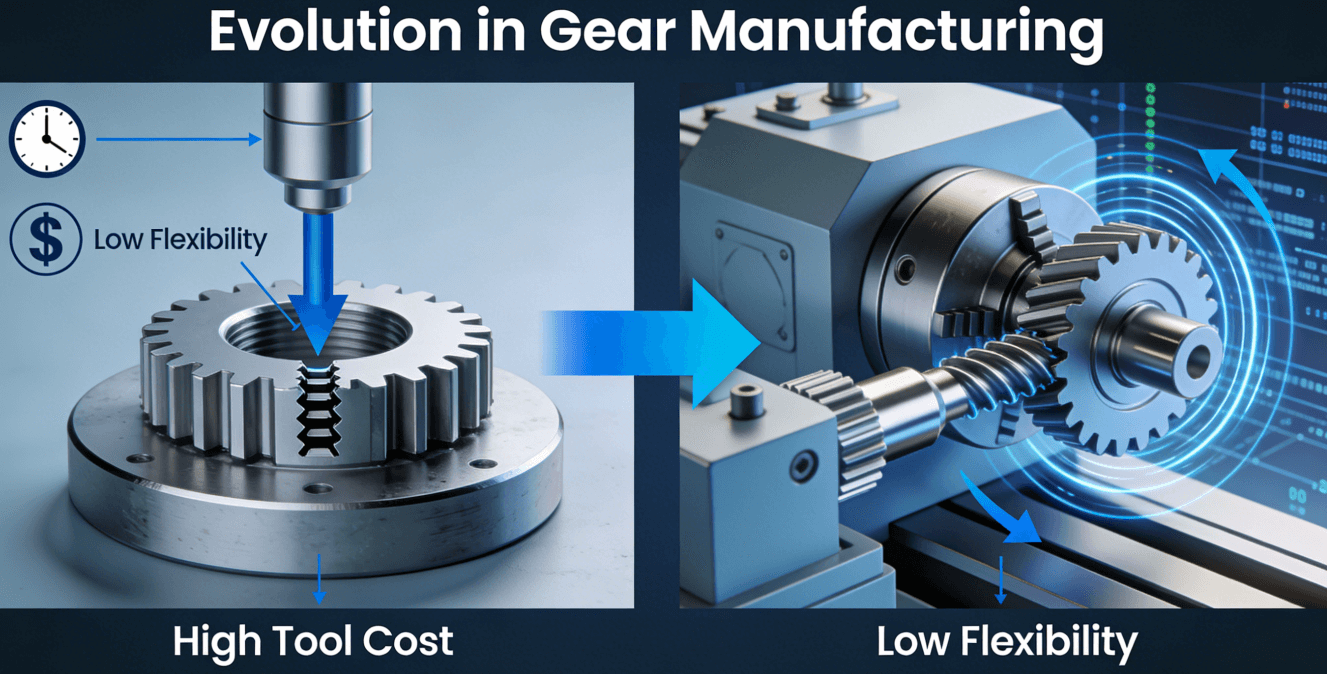
Gear generating, fundamentally different from forming, is a machining process where the tooth profile is not directly copied from the tool’s shape. Instead, it is “generated” through the relative motion between a cutting tool (like a hob or shaping cutter) and the gear blank, meticulously simulating the meshing action of two gears. This kinematic replication allows for the creation of precise, theoretically perfect involute profiles.
The Principle of Simulated Meshing
The core of the gear generating process lies in this synchronized movement. As the tool and workpiece rotate in a precise ratio corresponding to their intended numbers of teeth, the tool’s cutting edges progressively remove material to form the gear teeth. This method ensures that each tooth is shaped by the continuous path of the tool, leading to superior surface finish and profile accuracy compared to the discrete, impression-based approach of forming.
Position within Modern Manufacturing Frameworks
Authoritative bodies like the American Gear Manufacturers Association (AGMA) and the Society of Manufacturing Engineers (SME) classify generating as a primary method for high-quality gear production, especially for complex or high-precision applications. Its ability to produce a family of gears (same module, different tooth counts) with a single tool underscores its strategic value in modern, flexible manufacturing systems.
Generating vs. Forming: A Clear Advantage
- Precision and Flexibility:
Generating inherently produces more accurate tooth geometry and better surface integrity. It is exceptionally flexible, easily adapting to different tooth counts and profiles, including helicals and double helicals, with simple machine adjustments or CNC programming. - Tooling and Cost:
While forming uses a dedicated, profile-specific tool for each gear type, generating employs a generic tool (e.g., a hob) for all gears of the same module. This drastically reduces tooling inventory costs and changeover times, making it economically superior for medium-volume and high-mix production.For a more in-depth technical exploration, readers can refer to this comprehensive guide on Gear Generating .
What Are the Core Advantages of Gear Generating, and How Can It Boost Efficiency by 30%?
The efficiency claims associated with gear generating are not merely theoretical but are grounded in tangible process benefits. Understanding how to make gears efficiently is crucial, and generating offers a compelling answer.
The most significant efficiency driver is tooling commonality. A single hob can generate all spur or helical gears of a given module, regardless of tooth count. This eliminates the need for multiple, dedicated form tools, slashing tooling costs and, more importantly, reducing machine downtime for tool changes by up to 50% in batch production scenarios. The continuous cutting action of processes like hobbing also offers higher material removal rates compared to the intermittent cutting of some forming or shaping methods.
In sectors like Automotive Component Manufacturing, where project cycles are tight and volumes can vary, this flexibility is transformative. A manufacturer can rapidly switch between producing a prototype gear set for testing and a pre-production batch for validation using the same setup, dramatically accelerating time-to-market. This seamless support from prototype to volume production defines a true gear manufacturing partner. The efficiency gain consolidates across the entire gear manufacturing workflow—from reduced setup and programming time to faster cutting cycles—culminating in the reported 30%+ overall project timeline reduction.
How Does Gear Generating Tackle High-Precision Challenges in Complex Component Manufacturing?
When precision is non-negotiable, such as in aerospace actuators or high-performance automotive transmissions, gear generating demonstrates its paramount strength. This is particularly evident in services like custom spiral bevel gear generating services, where tooth geometry is complex and load distribution is critical.
The process’s digital nature is key. Through advanced CNC programming, the machine tool’s axes can be controlled with extreme precision to generate non-standard, optimized tooth profiles that maximize strength and minimize noise—a task nearly impossible with conventional forming. This capability is vital for custom applications where off-the-shelf solutions fail.
Furthermore, generating excels when paired with Advanced Material Engineering. Whether machining high-strength alloy steels for durability or specialized engineering plastics for weight reduction and corrosion resistance, the controlled, continuous cut of generating minimizes heat-affected zones and work-hardening, preserving material properties and ensuring dimensional stability. The process can consistently achieve high precision levels, such as those specified by AGMA quality classes (e.g., AGMA 2000 standards ). For the utmost precision requirements, the gears produced can subsequently undergo gear grinding services as a final finishing operation to achieve the highest quality grades with micron-level accuracy.
What Key Qualifications Should You Look for in a Gear Machining Service Provider?
Selecting a partner for custom gear machining requires careful evaluation beyond just machine capabilities. The supplier’s systemic qualifications are the bedrock of consistent quality and reliable delivery.
The Imperative of International Quality Certifications
Certifications are not just badges; they are evidence of a robust quality management system. Key certifications to prioritize include:
- ISO 9001: The foundation for quality management, ensuring consistent processes and continuous improvement.
- IATF 16949: Essential for automotive projects, specifying stringent quality requirements for the automotive supply chain.
- AS9100D: The aerospace standard, focusing on safety, reliability, and traceability in highly regulated environments.
- ISO 14001: Demonstrates environmental management commitment, increasingly important for sustainable manufacturing.
Engineering Support and “One-Stop” Service Capability
A qualified provider should offer deep engineering support for Design for Manufacturability (DFM), helping optimize gear designs for cost and performance. True value lies in a “one-stop” service encompassing everything from material selection and process planning to heat treatment, finishing, and final inspection, ensuring accountability and streamlined communication.
Assessing Technical and Operational Depth
- Technological Portfolio:
Evaluate their range of generating equipment (CNC hobbers, gear shapers) and complementary services like grinding and honing. - Proven Track Record:
Request case studies or references from similar industries, such as Automotive Component Manufacturing, to verify their practical experience and problem-solving ability.
A provider like JS Precision, which embodies these qualifications, can be a strategic asset. Their expertise in custom gear machining is detailed in their service portfolio .
How to Integrate Advanced Gear Technology into Existing Digital Production Flows?
The true power of Gear Generating is fully unlocked when it is seamlessly integrated into a digital manufacturing ecosystem, forming a core component of holistic Industrial Technology Solutions.
The gear generating process, driven by CNC, naturally interfaces with CAD/CAM systems. Digital gear models can be directly translated into machine code, eliminating manual programming errors and ensuring the physical part matches the digital twin exactly. This data can feed into Manufacturing Execution Systems (MES) for real-time production monitoring, scheduling, and quality traceability. Every gear’s manufacturing parameters and inspection results can be logged digitally, enabling full lifecycle tracking and rapid root-cause analysis if issues arise.
This digital thread is fundamental to “avoiding delivery delays.” Predictive analytics can forecast machine maintenance needs, while integrated supply chain platforms ensure material availability. Looking ahead, the convergence of generating technology with the Internet of Things (IoT) and Artificial Intelligence (AI) promises even greater gains. AI algorithms could optimize cutting parameters in real-time for tool life and surface finish, while IoT sensors could enable predictive quality control, flagging potential deviations before they become defects.
Conclusion
In summary, Gear Generating stands as a cornerstone Precision Manufacturing Service. Through its inherent high precision, remarkable efficiency, and exceptional flexibility, it has become a pivotal Industrial Technology Solution for manufacturers seeking digital transformation and competitive edge. It provides a superior answer to how to make gears and offers a reliable pathway to navigate market volatility.
If your projects are challenged by precision, efficiency, or delivery timelines, it is time to evaluate how advanced gear manufacturing technology can transform your outcomes. Proactively engage with a professional precision manufacturing service provider to obtain technical consultation and tailored solutions for your specific needs.
H2:Author Biography
The author is an industry observer and analyst with over a decade of experience in the industrial manufacturing sector. With a long-term focus on advanced manufacturing technologies, supply chain optimization, and digital transformation, the author provides strategic insights to numerous international manufacturing enterprises.
FAQs
Q: What types of gears is the gear generating method mainly suitable for?
A: This method is particularly suitable for involute cylindrical gears, helical gears, herringbone gears, and complex spiral bevel gears. Its flexibility also allows it to be adapted through programming to various non-standard tooth profile designs.
Q: What is the biggest cost difference between gear generating and traditional forming?
A: The initial equipment investment may be higher, but due to its high material utilization, low tooling inventory (one tool for multiple tooth counts), and shorter production cycles, the total manufacturing cost for small-to-medium batches and high-variety production is often more advantageous.
Q: How to ensure that gears manufactured by the generating method achieve the required service life and reliability?
A: The key lies in combining the correct Advanced Material Engineering selection, controlled heat treatment processes, and, when necessary, supplementing with gear grinding services for final finishing. Strict inspection following international standards like AGMA is essential for guarantee.
Q: Is gear generating also suitable for small-batch prototype making?
A: Yes. Modern CNC generating equipment offers flexible programming and quick changeovers, making it highly suitable for small-batch rapid prototyping. It can significantly accelerate design verification and product development cycles.
Q: What practical capabilities should be considered when selecting a service provider, besides certifications?
A: One should examine their past case experience in similar industries (like Automotive Component Manufacturing), the technical depth of their engineering support team, and whether their end-to-end quality control system from design to delivery is comprehensive.

Why Is Self Care Becoming an Important Part of Men’s Health Routines
What is PLA Filament? A Complete Beginner’s Guide for 3D Printing

The Strategic Benefits of Agentic Decision Intelligence for Business Growth

Carolin Bacic: Life, Biography, Family, and Legacy

Christine Williamson: A Rising Star in Sports Journalism

Dame Esther Rantzen: Life, Career, and Legacy of a British Broadcasting Icon
-
 Celebrity7 months ago
Carolin Bacic: Life, Biography, Family, and Legacy
-
 Celebrity1 year ago
Christine Williamson: A Rising Star in Sports Journalism
-
 Celebrity2 months ago
Dame Esther Rantzen: Life, Career, and Legacy of a British Broadcasting Icon
-

 Celebrity6 months ago
Dani Daniels: A Complete Biography of the Artist, Media Personality, and Entrepreneur
-

 Celebrity4 months ago
Eleonora Incardona: Biography, Career, Age, Boyfriend, Net Worth & Lifestyle (2025)
-

 Celebrity2 months ago
Stephen Mulhern: The Complete Biography of Britain’s Beloved Television Entertainer
-

 Celebrity1 year ago
Berniece Julien: A Comprehensive Biography2025
-

 Celebrity5 months ago
Juan Gabriel: The Legendary Life of El Divo de Juárez