
Tech
How BigCommerce Handles Large Product Catalogs Without Slowing Down


Large scale commerce operations demand infrastructure that stays firm when weight increases. Your storefront must handle half a million SKUs without a stutter. BigCommerce serves these massive inventories through a specific architectural strategy. It separates the presentation layer from the data management layer. This means your customer never feels the heavy load of your backend database. Speed stays high even as your product list grows into the hundreds of thousands.
The Architecture of Headless Scalability
Headless setups provide the first line of defense against lag. BigCommerce headless commerce lets stores decouple the front end from the back end. You store your massive data sets in the vault but display them through a lightweight interface. This prevents the browser from loading unnecessary scripts every time a user clicks a product.
- API-first design ensures rapid data retrieval.
- Decoupled storefronts reduce server-side execution time.
- Multiple frontends can pull from one single source of truth.
- CDN integration pushes content closer to your global shoppers.
GraphQL plays a part here. Standard REST APIs often fetch too much data at once. GraphQL allows your site to ask for exactly what it needs. If a user wants to see a price, the system does not load the full product description too. This thriftiness keeps the load times low and the users happy.
Efficient Data Indexing and Search
Search functionality often breaks first when catalogs expand. BigCommerce relies on advanced indexing to prevent this collapse. The platform prepares the data before the user even types a query. It builds a map of your inventory that allows for instant discovery.
- Elasticsearch integration provides sub-second search results.
- Filtering happens on the edge rather than the main server.
- Customized facets allow users to drill down through thousands of items.
- Automated updates ensure the index reflects current stock levels.
Imagine a user looking for a specific bolt in a warehouse of a million parts. Without proper indexing, the system looks at every part one by one. BigCommerce creates a digital aisle guide. The search engine knows exactly which shelf holds the item. This precision saves CPU cycles and prevents site crashes during peak traffic hours.
High Performance Category Page Management
Category pages involve heavy lifting for any e-commerce engine. They must display dozens of images and details simultaneously. BigCommerce uses pagination and lazy loading to manage this burden. The server only renders the items visible on the screen.
- Lazy loading defers image requests until a user scrolls down.
- Pagination limits the number of database calls per page.
- Image optimization automatically resizes files for different devices.
- Product caches store frequently accessed pages for instant retrieval.
Your CFO cares about the bounce rate. Slow pages drive customers away. By optimizing how categories load, you keep the flow smooth. The system handles the math of discounts and variants behind the scenes. The shopper only sees a fast, responsive list of products.
Multi-Storefront Efficiency for Global Brands
Managing large catalogs often means selling across different regions. BigCommerce Multi-Storefront (MSF) allows you to use one catalog across many sites. You don’t need to duplicate your data. This reduces the strain on your database and simplifies your workflow.
- One central dashboard controls inventory for ten different sites.
- Localized pricing avoids complex on-the-fly currency calculations.
- Unique product subsets can be assigned to specific storefronts.
- Shared inventory levels prevent overselling across multiple channels.
Redundancy often slows down digital systems. MSF removes that redundancy. You update the price once and it reflects everywhere. This streamlined approach keeps the database lean. It ensures that background processes don’t hog resources needed for front-end speed.
Handling Complex Product Variants
A single product might have dozens of sizes, colors, and materials. These variants multiply the size of your database quickly. While some platforms struggle with variant limits, BigCommerce handles up to 600 variants per product. It uses a flat structure to keep these variations from bloating the load time.
- Options and modifiers allow for deep customization without lag.
- Bulk edit tools update thousands of variants in seconds.
- Rule-based logic adjusts prices based on selection instantly.
- Inventory tracking remains granular at the SKU level.
Complexity shouldn’t mean sluggishness. The platform treats variants as secondary data points. They only activate when a user selects them. This “just-in-time” data delivery keeps the initial page load remarkably light.
Why Choose Anchor Group for BigCommerce Implementation?
Success with large catalogs requires more than just good software. It requires a strategy that aligns with your specific business logic. Anchor Group provides the technical depth to make this happen. We don’t just install a theme; we architect a solution.
- Expertise in ERP integrations ensures your data stays synchronized.
- Custom BigCommerce API development connects your stack without creating bottlenecks.
- Performance audits identify and remove scripts that slow you down.
- Post-launch support keeps your site fast as your catalog grows.
We understand the pressure on a COO to maintain uptime. We know the CTO needs scalable code. Our team focuses on the plumbing that enables high-volume commerce. We verify that every API call is necessary, and every image is optimized.
Our approach centers on your long-term growth. We build storefronts that handle your current catalog and your future expansion. Transitioning to BigCommerce with Anchor Group means you get a partner who understands the technical debt. We clear the path so your business can run at full speed.
Strategic Benefits of a High-Speed Catalog
Speed is a competitive advantage. When your site responds instantly, your conversion rate climbs. Large catalogs often suffer from “information density” issues. BigCommerce solves this with a clean UI and a fast backend. This allows you to outcompete smaller shops through sheer volume and variety.
- Improved SEO rankings due to faster page load speeds.
- Higher mobile conversion rates through optimized data delivery.
- Lower server costs because of efficient resource management.
- Greater customer trust in your digital infrastructure.
Your business owners want results. They want a site that feels premium. A slow site feels cheap, regardless of the price of the products. BigCommerce provides the engine, and Anchor Group provides the tuning. Together, we create a shopping experience that handles the heaviest loads with grace.
Reliability During Peak Traffic
Black Friday or a sudden viral trend can crush a weak site. BigCommerce offers a 99.99% uptime guarantee. This reliability is built into how it handles large data sets. The cloud-based nature of the platform means it scales horizontally. When traffic spikes, more server power becomes available automatically.
- Auto-scaling resources handle sudden influxes of shoppers.
- DDoS protection keeps your data safe from external threats.
- Automatic backups ensure you never lose your catalog data.
- PCI compliance is handled at the platform level for security.
You can focus on marketing while we handle the tech. You don’t have to worry about the site crashing when you send out a massive email blast. The infrastructure is ready for the volume. It treats a million products with the same speed as a dozen.
Streamlined Backend Operations
A large catalog is a nightmare to manage manually. BigCommerce provides tools that make administration fast. You can import and export data in bulk without timing out the server. This operational efficiency trickles down to the user experience.
- CSV and XML imports handle large data sets with ease.
- Third-party PIM integrations centralize your product data.
- Automated category mapping saves hours of manual labor.
- Standardized data formats prevent errors during sync.
Efficiency in the back office leads to a better front end. If your staff can update products quickly, your customers always see current info. This avoids the frustration of “out of stock” errors or incorrect pricing. It keeps the machine humming.
Choosing the right platform is half the battle. Choosing the right partner wins the war. BigCommerce provides the best-in-class tools for large catalogs. Anchor Group provides the specialized knowledge to implement them correctly. We ensure your large catalog is an asset, not a burden. Your customers will appreciate the speed. Your team will appreciate the ease of use. Your bottom line will appreciate the growth. Let’s build a store that moves as fast as you do.
| Feature | BigCommerce Capability | Business Impact |
| Product Limit | 600 Variants per SKU | Support for complex products |
| API Speed | High-concurrency throughput | Real-time data sync without lag |
| Search | Integrated Elasticsearch | Instant item discovery for users |
| Architecture | Headless-ready | Unlimited frontend flexibility |
Contact Anchor Group today to discuss your migration. We analyze your current catalog and find the fastest path forward. Don’t let your inventory slow you down. Move to a platform built for the heavy lifting. Move to a partner who knows how to carry the load.

Tech
How to improve manufacturing efficiency by 30% and avoid delivery delays through gear generation technology

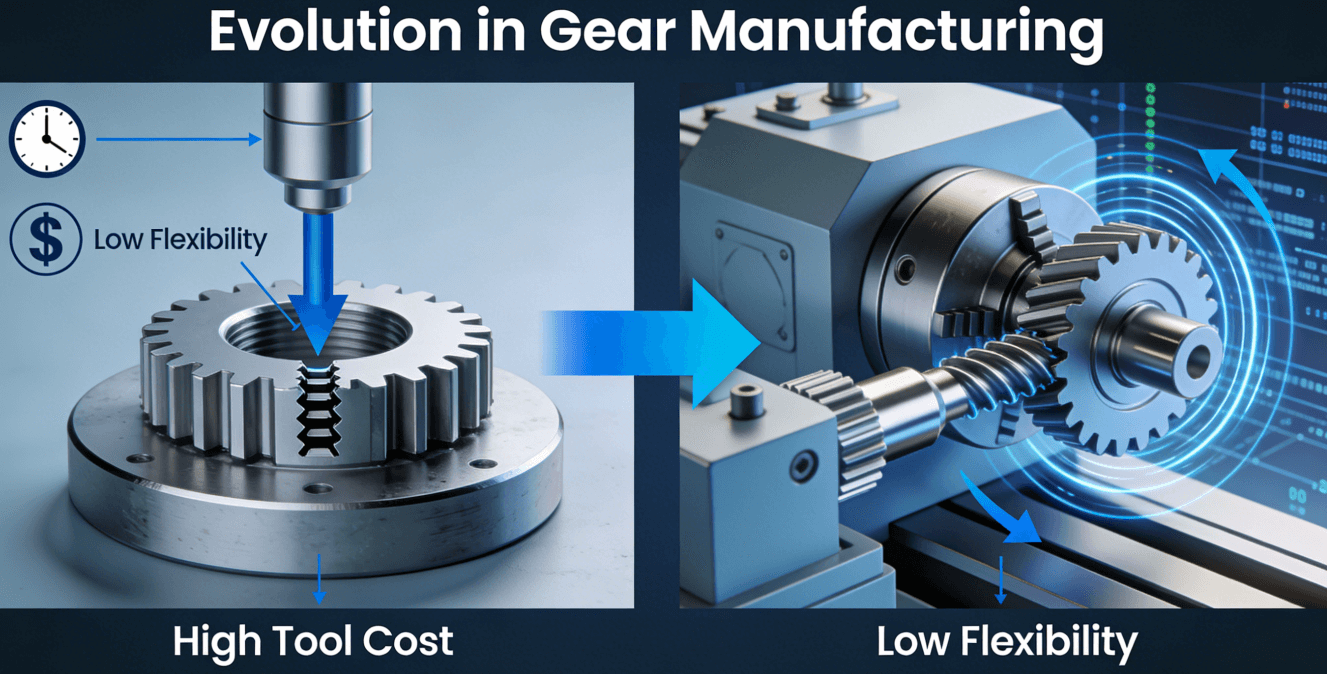
- File name: gear-generating-vs-forming-process-js-precision.jpg
- Introduction
In the fiercely competitive global manufacturing landscape, companies universally grapple with the multifaceted pressures of enhancing production efficiency, controlling costs, and ensuring on-time delivery. Traditional gear manufacturing methods are often characterized by long lead times and poor flexibility, struggling to adapt to the modern market’s demand for small batches and high variety. The root cause of these challenges lies in the reliance on traditional processes like gear forming, which are limited in precision, require extensive setup and debugging time, and find it difficult to optimize complex tooth profiles, ultimately leading to sluggish supply chain responsiveness. This article delves into Gear Generating, an advanced manufacturing process, explaining how it achieves high-precision, high-efficiency gear production by simulating meshing motion, serving as a critical bridge connecting Precision Manufacturing Services with Industrial Technology Solutions. Next, let’s dissect how this technology specifically addresses the deep-seated pain points in manufacturing.
What is Gear Generating and How Does It Disrupt Traditional Manufacturing Thinking?
Gear generating, fundamentally different from forming, is a machining process where the tooth profile is not directly copied from the tool’s shape. Instead, it is “generated” through the relative motion between a cutting tool (like a hob or shaping cutter) and the gear blank, meticulously simulating the meshing action of two gears. This kinematic replication allows for the creation of precise, theoretically perfect involute profiles.
The Principle of Simulated Meshing
The core of the gear generating process lies in this synchronized movement. As the tool and workpiece rotate in a precise ratio corresponding to their intended numbers of teeth, the tool’s cutting edges progressively remove material to form the gear teeth. This method ensures that each tooth is shaped by the continuous path of the tool, leading to superior surface finish and profile accuracy compared to the discrete, impression-based approach of forming.
Position within Modern Manufacturing Frameworks
Authoritative bodies like the American Gear Manufacturers Association (AGMA) and the Society of Manufacturing Engineers (SME) classify generating as a primary method for high-quality gear production, especially for complex or high-precision applications. Its ability to produce a family of gears (same module, different tooth counts) with a single tool underscores its strategic value in modern, flexible manufacturing systems.
Generating vs. Forming: A Clear Advantage
- Precision and Flexibility:
Generating inherently produces more accurate tooth geometry and better surface integrity. It is exceptionally flexible, easily adapting to different tooth counts and profiles, including helicals and double helicals, with simple machine adjustments or CNC programming. - Tooling and Cost:
While forming uses a dedicated, profile-specific tool for each gear type, generating employs a generic tool (e.g., a hob) for all gears of the same module. This drastically reduces tooling inventory costs and changeover times, making it economically superior for medium-volume and high-mix production.For a more in-depth technical exploration, readers can refer to this comprehensive guide on Gear Generating .
What Are the Core Advantages of Gear Generating, and How Can It Boost Efficiency by 30%?
The efficiency claims associated with gear generating are not merely theoretical but are grounded in tangible process benefits. Understanding how to make gears efficiently is crucial, and generating offers a compelling answer.
The most significant efficiency driver is tooling commonality. A single hob can generate all spur or helical gears of a given module, regardless of tooth count. This eliminates the need for multiple, dedicated form tools, slashing tooling costs and, more importantly, reducing machine downtime for tool changes by up to 50% in batch production scenarios. The continuous cutting action of processes like hobbing also offers higher material removal rates compared to the intermittent cutting of some forming or shaping methods.
In sectors like Automotive Component Manufacturing, where project cycles are tight and volumes can vary, this flexibility is transformative. A manufacturer can rapidly switch between producing a prototype gear set for testing and a pre-production batch for validation using the same setup, dramatically accelerating time-to-market. This seamless support from prototype to volume production defines a true gear manufacturing partner. The efficiency gain consolidates across the entire gear manufacturing workflow—from reduced setup and programming time to faster cutting cycles—culminating in the reported 30%+ overall project timeline reduction.
How Does Gear Generating Tackle High-Precision Challenges in Complex Component Manufacturing?
When precision is non-negotiable, such as in aerospace actuators or high-performance automotive transmissions, gear generating demonstrates its paramount strength. This is particularly evident in services like custom spiral bevel gear generating services, where tooth geometry is complex and load distribution is critical.
The process’s digital nature is key. Through advanced CNC programming, the machine tool’s axes can be controlled with extreme precision to generate non-standard, optimized tooth profiles that maximize strength and minimize noise—a task nearly impossible with conventional forming. This capability is vital for custom applications where off-the-shelf solutions fail.
Furthermore, generating excels when paired with Advanced Material Engineering. Whether machining high-strength alloy steels for durability or specialized engineering plastics for weight reduction and corrosion resistance, the controlled, continuous cut of generating minimizes heat-affected zones and work-hardening, preserving material properties and ensuring dimensional stability. The process can consistently achieve high precision levels, such as those specified by AGMA quality classes (e.g., AGMA 2000 standards ). For the utmost precision requirements, the gears produced can subsequently undergo gear grinding services as a final finishing operation to achieve the highest quality grades with micron-level accuracy.
What Key Qualifications Should You Look for in a Gear Machining Service Provider?
Selecting a partner for custom gear machining requires careful evaluation beyond just machine capabilities. The supplier’s systemic qualifications are the bedrock of consistent quality and reliable delivery.
The Imperative of International Quality Certifications
Certifications are not just badges; they are evidence of a robust quality management system. Key certifications to prioritize include:
- ISO 9001: The foundation for quality management, ensuring consistent processes and continuous improvement.
- IATF 16949: Essential for automotive projects, specifying stringent quality requirements for the automotive supply chain.
- AS9100D: The aerospace standard, focusing on safety, reliability, and traceability in highly regulated environments.
- ISO 14001: Demonstrates environmental management commitment, increasingly important for sustainable manufacturing.
Engineering Support and “One-Stop” Service Capability
A qualified provider should offer deep engineering support for Design for Manufacturability (DFM), helping optimize gear designs for cost and performance. True value lies in a “one-stop” service encompassing everything from material selection and process planning to heat treatment, finishing, and final inspection, ensuring accountability and streamlined communication.
Assessing Technical and Operational Depth
- Technological Portfolio:
Evaluate their range of generating equipment (CNC hobbers, gear shapers) and complementary services like grinding and honing. - Proven Track Record:
Request case studies or references from similar industries, such as Automotive Component Manufacturing, to verify their practical experience and problem-solving ability.
A provider like JS Precision, which embodies these qualifications, can be a strategic asset. Their expertise in custom gear machining is detailed in their service portfolio .
How to Integrate Advanced Gear Technology into Existing Digital Production Flows?
The true power of Gear Generating is fully unlocked when it is seamlessly integrated into a digital manufacturing ecosystem, forming a core component of holistic Industrial Technology Solutions.
The gear generating process, driven by CNC, naturally interfaces with CAD/CAM systems. Digital gear models can be directly translated into machine code, eliminating manual programming errors and ensuring the physical part matches the digital twin exactly. This data can feed into Manufacturing Execution Systems (MES) for real-time production monitoring, scheduling, and quality traceability. Every gear’s manufacturing parameters and inspection results can be logged digitally, enabling full lifecycle tracking and rapid root-cause analysis if issues arise.
This digital thread is fundamental to “avoiding delivery delays.” Predictive analytics can forecast machine maintenance needs, while integrated supply chain platforms ensure material availability. Looking ahead, the convergence of generating technology with the Internet of Things (IoT) and Artificial Intelligence (AI) promises even greater gains. AI algorithms could optimize cutting parameters in real-time for tool life and surface finish, while IoT sensors could enable predictive quality control, flagging potential deviations before they become defects.
Conclusion
In summary, Gear Generating stands as a cornerstone Precision Manufacturing Service. Through its inherent high precision, remarkable efficiency, and exceptional flexibility, it has become a pivotal Industrial Technology Solution for manufacturers seeking digital transformation and competitive edge. It provides a superior answer to how to make gears and offers a reliable pathway to navigate market volatility.
If your projects are challenged by precision, efficiency, or delivery timelines, it is time to evaluate how advanced gear manufacturing technology can transform your outcomes. Proactively engage with a professional precision manufacturing service provider to obtain technical consultation and tailored solutions for your specific needs.
H2:Author Biography
The author is an industry observer and analyst with over a decade of experience in the industrial manufacturing sector. With a long-term focus on advanced manufacturing technologies, supply chain optimization, and digital transformation, the author provides strategic insights to numerous international manufacturing enterprises.
FAQs
Q: What types of gears is the gear generating method mainly suitable for?
A: This method is particularly suitable for involute cylindrical gears, helical gears, herringbone gears, and complex spiral bevel gears. Its flexibility also allows it to be adapted through programming to various non-standard tooth profile designs.
Q: What is the biggest cost difference between gear generating and traditional forming?
A: The initial equipment investment may be higher, but due to its high material utilization, low tooling inventory (one tool for multiple tooth counts), and shorter production cycles, the total manufacturing cost for small-to-medium batches and high-variety production is often more advantageous.
Q: How to ensure that gears manufactured by the generating method achieve the required service life and reliability?
A: The key lies in combining the correct Advanced Material Engineering selection, controlled heat treatment processes, and, when necessary, supplementing with gear grinding services for final finishing. Strict inspection following international standards like AGMA is essential for guarantee.
Q: Is gear generating also suitable for small-batch prototype making?
A: Yes. Modern CNC generating equipment offers flexible programming and quick changeovers, making it highly suitable for small-batch rapid prototyping. It can significantly accelerate design verification and product development cycles.
Q: What practical capabilities should be considered when selecting a service provider, besides certifications?
A: One should examine their past case experience in similar industries (like Automotive Component Manufacturing), the technical depth of their engineering support team, and whether their end-to-end quality control system from design to delivery is comprehensive.
Tech
How to Decode 5-Axis CNC Machining Costs: A 40% Budget Overrun Avoidance Guide with Transparent Pricing
- File name: decode-5-axis-cnc-cost-transparent-vs-opaque-quote-comparison.jpg
Introduction
When sourcing quotes for complex 5-axis CNC machined parts, companies often get lost in a “quotation fog” — quotes from different suppliers for the same part can vary by 40%-80% and are typically presented as a single, opaque lump sum. This cost opacity makes it nearly impossible to lock down a project budget and sows the seeds for overruns during design changes or production scaling, leading to an average budget deviation of up to 40%. The root cause is a traditional quoting model heavily reliant on experience-based estimation, which bundles critical variables like programming, material utilization, custom tooling, and overhead costs into one opaque package, leaving buyers without the tools to verify a quote’s rationale or identify the primary cost drivers in their design.
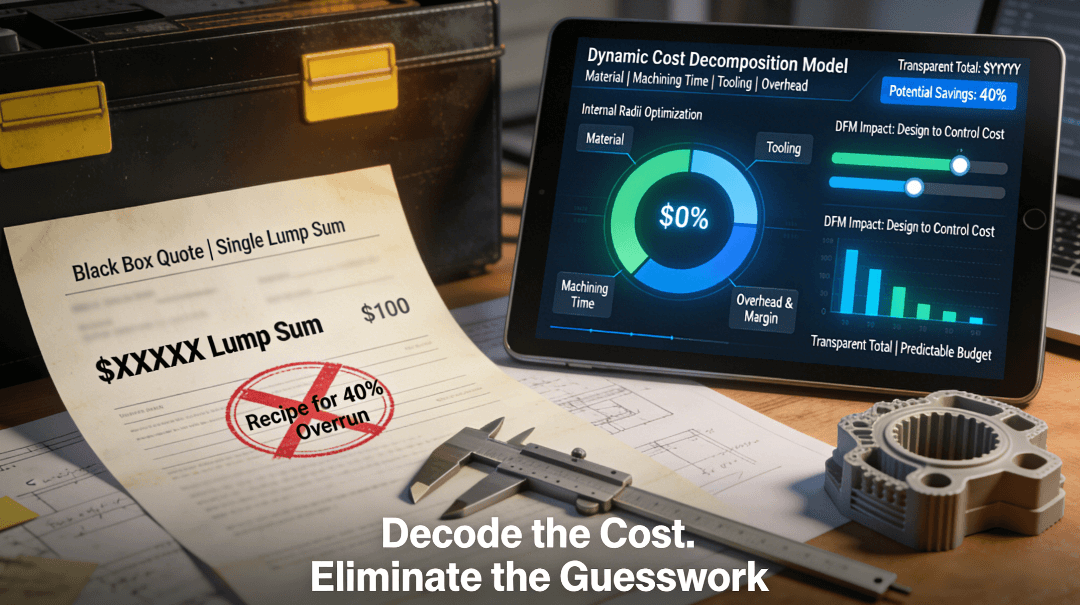
This article provides a solution through a “Dynamic Cost Decomposition Model.” This framework breaks down the total cost of 5-axis machining into four quantifiable, auditable core modules (Material, Machining Time, Tooling, and Overhead) and reveals how proactive design optimization (DFM) directly impacts each module. This transforms cost control from a reactive “price comparison” exercise into an active “design-to-control-cost” strategy, enabling precise budgeting and collaboration.
Why Do 5-Axis CNC Quotes Vary Wildly, and What’s Hiding Behind a Lump-Sum Price?
This section analyzes the root causes of quote variance, contrasting an opaque lump sum with a transparent, modular quote to reveal the hidden factors that drive cost differences and create financial risk.
1. The “Black Box” Quote: A Recipe for Uncertainty
A single lump-sum price is a major risk factor. It provides no visibility into how the number was derived. Is the high cost due to expensive raw material, inefficient machining strategy, or high-profit margins? Without transparency, you cannot negotiate intelligently, optimize the design, or accurately forecast costs for future batches. This lack of clarity turns procurement into a gamble rather than a managed business process.
2. Deconstructing the Variance: Programming, Efficiency, and Estimation
Quote discrepancies of 40%+ typically stem from three key areas:
- Programming Strategy: Will the part use efficient 3+2 axis positioning (indexing) or more complex, time-consuming 5-axis simultaneous machining? The chosen strategy dramatically impacts programming time and machine cycle time.
- Material Utilization: What is the assumed stock-to-part yield? One supplier might plan with a 35% yield (high waste), while another optimizes nesting to achieve 60%, significantly affecting material cost.
- Machining Time Model: Are time estimates based on a verified CAM simulation database or rough, experiential guessing? Accurate cycle time prediction is the cornerstone of reliable costing.
3. Transparency as a Risk Mitigation Tool
The goal is not always the lowest price, but the most accurate and justifiable price. A transparent quote allows you to assess the valuebehind the number. It enables you to identify and question inefficiencies, making the supplier a collaborative partner in cost optimization rather than an opaque vendor. To gain a complete methodology for parsing and planning 5-axis machining expenditures, this in-depth guide on 5-Axis CNC machining price is a valuable resource.
What Are the Four Pillars of a Truly Transparent 5-Axis Machining Quotation?
This section details the four foundational pillars of a transparent quote, advocating for a line-item breakdown that empowers informed decision-making and collaborative cost management.
1. Material Cost & Utilization: The Foundational Block
This pillar should detail the exact raw material grade, the size of the stock required, its current market cost, and the calculated material utilization percentage. A low utilization rate is a prime target for DFM optimization or questioning the supplier’s blank selection strategy. Transparency here directly ties cost to a physical, quantifiable input.
2. Machining Time & Programming: The Engine of Cost
This is the most critical operational breakdown. A transparent quote separates:
- CAM Programming (NRE): A one-time fee based on part geometric complexity.
- Machine Runtime: Itemized by operation — e.g., rough milling, semi-finish, 5-axis finish machining — with associated hours and the machine hour rate applied. This shows where time (and money) is being spent, allowing for discussion on strategy optimization.
3. Tooling, Fixturing & Post-Processing
These are often hidden cost sinks. The quote should list:
- Custom Fixtures/Jigs: Cost, with note on reusability for future batches.
- Special Tooling: Any non-standard cutters required.
- Post-Processing: A line item for each secondary operation (e.g., bead blasting, anodizing Type II, laser marking).
4. Overhead & Margin: The Transparent Markup
Instead of burying profit, a reputable supplier will apply a clear percentage markup (e.g., 15-20%) on the total direct costs. This finalizes the quote with integrity, showing exactly what you are paying for the service and business sustainability, completing the picture of transparent CNC machining quote practices.
Titanium vs. Aluminum: How Does Your Material Choice Ripple Through the Entire Cost Structure?
This section conducts a systematic cost impact analysis, moving beyond simple material price to show how a choice like titanium exponentially affects machining parameters, tooling, and total cost compared to aluminum.
1. Beyond the Price Per Pound: The Systemic Cost Multiplier
Choosing titanium (Ti-6Al-4V) over aluminum (6061) is not just paying 5-8x more for the raw stock. It triggers a cascade of cost multipliers throughout the entire manufacturing process. The material’s inherent properties — high strength, low thermal conductivity, and work hardening tendency — dictate a fundamentally different and more expensive production approach.
2. The Domino Effect on Machining Parameters
Titanium’s toughness requires dramatically reduced cutting speeds (often 60% lower than aluminum) to manage heat and tool wear. This directly translates to longer machining times for the same volume of material removal. Furthermore, it necessitates more conservative depths of cut, potentially increasing the number of passes required. This combination can double or triple the machine runtime quoted for an aluminum counterpart.
3. Tooling Wear and the Bottom Line
The abrasive nature of titanium leads to significantly accelerated tool wear. This increases direct tooling costs and necessitates more frequent tool changes, adding non-cutting time to the cycle. When the higher material cost, longer machining time, and increased tooling expense are compounded, the total part cost for titanium can be 6 to 10 times higher than for an identical part in aluminum. This analysis, supported by data on material machinability in resources like the ASM Handbook, is crucial for early-stage material selection decisions that align performance needs with budget reality.
Can You “Design Out” Cost? A DFM Checklist for 5-Axis Machining.
This section provides a practical DFM checklist that directly links specific design decisions to the four cost pillars, enabling engineers to proactively “design out” expense during the CAD phase.
1. Design for Efficient Machining: The Time Saver
Machine time is money. Smart DFM directly reduces it.
- Rationalize Tolerances: Apply tight tolerances only to critical mating features. Relaxing non-critical tolerances allows for faster toolpaths and higher feed rates.
- Optimize Internal Radii: Standardize internal corner radii to match standard cutter sizes (e.g., all R3mm). This eliminates the need for special, small-diameter tools that break easily and cut slowly, reducing tooling cost and machining time.
2. Design for Simplified Workholding: The Setup Saver
Every new setup adds cost. Design to maximize features machined in one clamping.
- Strategic Datum Features: Include accessible, machined features early in the process that can be used as precise datums for all subsequent operations.
- Consider Fixturing Early: Avoid designs that require extremely complex or fragile custom fixtures. Sometimes, adding a small sacrificial tab for clamping can be far cheaper than a bespoke vacuum fixture.
3. Design for Material Efficiency: The Waste Saver
Minimize the expensive block of material you start with.
- Minimize Envelope Size: Design parts to fit within standard stock sizes. A part that requires a 102mm cube instead of a 100mm cube might need a much larger, more expensive blank.
- Consider Near-Net Shapes: For very high-value materials, explore starting with a forged or cast “pre-form” to dramatically improve yield. Therefore, effectively implementing these DFM principles often requires early collaboration with 5-axis CNC machining service experts who understand the nuances of the process.
From Prototype to 10,000 Pieces: How Does Cost Per Part Really Change?
This section models the unit cost curve across different production volumes, explaining the economic drivers at the prototype, mid-volume, and high-volume stages to inform strategic sourcing decisions.
- The Prototype Premium (1-10 pcs): For the first few parts, cost is dominated by Non-Recurring Engineering (NRE) expenses: CAM programming, process planning, and design/fabrication of any necessary custom fixtures. This high fixed cost is amortized over very few units, resulting in a high cost per part. The focus here is on validation, not unit economics.
- The Scale Advantage (10-500 pcs): As volume increases, the NRE is spread over more units, causing the unit cost to drop sharply. Further efficiencies are gained through process optimization: refining toolpaths, implementing quicker changeovers, and better tool life management. This is the most dynamic phase of cost reduction.
- Production Stability (500+ pcs): At high volumes, the cost curve flattens. Savings come from supply chain optimization (bulk material purchasing) and increased automation. In this regime, consistency and quality are paramount. A supplier operating in an ISO-Certified Manufacturing environment with strict statistical process control (like IATF 16949) can provide highly predictable, stable pricing, as the process is robust and the cost drivers are well-understood and controlled.
Conclusion
Mastering 5-axis CNC machining costs is about transforming procurement from a trust-based “black box transaction” into a data-driven, transparent collaboration. By applying a cost decomposition model, practicing proactive DFM, and developing a deep understanding of volume economics, companies can turn manufacturing cost from an unpredictable variable into a strategic, optimizable tool. This enables the optimal balance between pursuing complex innovation and maintaining financial discipline.
FAQs
Q: How long is a detailed, transparent quote typically valid?
A: A professional, transparent quote should have a clearly stated validity period, commonly 30 to 60 days. This protects both parties from significant fluctuations in raw material markets. For long-lead projects, some suppliers may offer fixed-price agreements or price-lock options based on material indices.
Q: What file format and information are needed for the most accurate transparent quote?
A: For optimal accuracy, provide a 3D CAD file (STEP or IGES) along with a 2D drawing specifying critical tolerances and surface finishes. Also, indicate your target material grade, desired quantities (for batch analysis), and any known post-processing needs. The more context you provide, the more precise the cost breakdown will be.
Q: Why might a 5-axis quote be higher than a 3-axis quote for the same part?
A: While 5-axis can reduce setups, its CAM programming is more complex and often uses higher-value machinery. Transparency reveals the trade-off: the 5-axis quote may show higher programming/machine rates but eliminate costs for multiple custom fixtures and secondary operations, potentially yielding a better part with equal or lower total cost and lead time.
Q: How can I verify the machining time estimates in a quote?
A: Reputable suppliers base time estimates on feature-recognition software and historical machining data. You can ask for a brief rationale on time allocation for major features. Some advanced suppliers may provide simulated cycle time reports from their CAM software as part of a detailed proposal.
Q: Are there costs for design changes after the quote is accepted?
A: Yes, and a transparent process will have a clear Engineering Change Order (ECO) procedure. Any design modification after project kick-off will be evaluated for its impact on programming, tooling, materials, and schedule. A formal ECO with a revised cost breakdown will be issued for your approval before changes are implemented.
Author Bio
This article is based on expert insights from extensive hands-on experience in high-precision manufacturing, specifically in the cost engineering of complex parts. Employing the transparent quoting model outlined above and backed by certified management systems including ISO 9001 and IATF 16949, LS Manufacturing helps clients control costs from the design stage. Upload your part drawing to receive a free, transparent quotation and DFM analysis report within 24 hours.

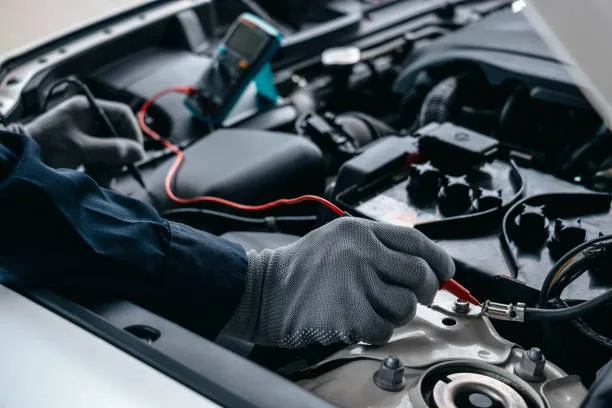
For many drivers, owning a high-end or expensive car is a dream: superior performance, advanced features, smooth handling and a premium cabin experience. Yet for a surprising number of owners, electrical issues seem to be more frequent than expected and can appear even in newer vehicles that haven’t seen hard use. These aren’t just minor inconveniences; electrical problems can affect infotainment systems, driver-assist features, lighting, battery health and even key safety components such as braking sensors that may eventually require professional Brake Repair attention.
Understanding why these issues occur more often in expensive cars helps you set realistic expectations and know how to approach diagnosis and repair when things go wrong.
The Increasing Complexity of Modern Car Electrical Systems
One of the primary reasons expensive cars appear to have more electrical issues is that they simply have more electronics than ever before. Unlike basic vehicles of the past, today’s premium models rely on a dense network of sensors, modules and computers to control everything from engine management to climate control, touchscreen infotainment, driver assistance and safety systems.
Luxury marques often include dozens of advanced features such as adaptive cruise control, lane-keep assist, panoramic cameras, digital instrument clusters and connected car systems. Modern braking systems are also heavily integrated with electronics, meaning faults in sensors or control modules can affect braking performance and may even trigger warnings that require professional Brake Repair diagnostics. Each of these systems relies on electrical wiring and control modules that must communicate with one another seamlessly. When even a single sensor, wire or connector fails or miscommunicates, it can trigger warnings or malfunctions in seemingly unrelated systems. This interplay increases the number of points where issues can occur and makes diagnosis more complex.
Why More Features Mean More Potential Electrical Faults
More Components, More Failure Points
In a typical expensive car, electrical wiring harnesses can extend for kilometres throughout the vehicle to connect various electronic units. Each connection point, sensor, relay, fuse and control module is a potential failure point. Damage due to vibration, moisture ingress or corrosion can affect these systems over time.
In some cases, external factors can also damage wiring. For example, rodents occasionally chew through insulation or wiring harnesses in parked vehicles, particularly when cars are stored for long periods. This type of damage can lead to sudden electrical faults and may require professional Rodent Pest Control around garages or parking areas to prevent recurring issues.
Advanced systems like parking sensors, blind-spot detection, power seats, heated steering wheels and infotainment screens all depend on a stable electrical supply and communication. A fault in one subsystem (for example, a ground connection or control unit glitch) can disrupt multiple functions, which makes electrical issues appear more widespread than they are.
Sensor Saturation and Communication Load
Expensive cars use dozens of sensors to monitor engine performance, stability control, collision avoidance and environmental conditions. Each sensor feeds information back to a central computer. Because these systems operate in real time, any faulty sensor or communication error can throw a warning light or trigger a limp mode. These are typically safety-driven responses, but they can make the car feel “glitchy” or unreliable until the root cause is found.
Environmental and Usage Factors That Accelerate Electrical Problems
Heat and Moisture
Corrosion and wiring degradation are often caused by heat and moisture – two elements that are difficult to avoid even in expensive cars. Moisture can enter through poorly sealed connectors or grommets, leading to corrosion that increases electrical resistance and causes intermittent faults. Heat accelerates insulation deterioration and can lead to broken wires or contacts. Both factors combine to shorten the lifespan of sophisticated electrical systems.
Exotic materials and tight packaging in luxury vehicles can make some components harder to cool or ventilate, adding to stress on electrical parts.
Software Complexity
Many electrical issues in modern vehicles aren’t just hardware problems – they’re software-related. Faulty software updates, bugs in the vehicle’s firmware or miscommunication between modules can cause warning lights or erratic behaviour. Because expensive cars integrate complex software into nearly all vehicle functions, a software conflict can manifest as an electrical fault.
The Role of Maintenance and Early Detection
Electrical faults rarely fix themselves and often escalate if left unchecked. Small issues like a weak battery, a corroded connection or a loose ground can cause subtle symptoms, flickering lights, inconsistent power to accessories, warning lights, slow engine cranking or intermittent sensor messages, all common early indicators of electrical strain.
Routine servicing with diagnostic tools helps detect these issues early, allowing them to be repaired before they affect more complex systems. Because expensive cars use integrated electrical architectures, a small error in one area can cascade into broader system malfunctions unless addressed promptly.
Professional diagnostics by technicians familiar with premium marques ensure faults are identified correctly and resolved rather than just treating symptoms superficially.
Why Repairs Can Be More Frequent and Costly
Expensive cars sometimes require specialised tools, software and trained technicians to repair electrical faults. Unlike simpler vehicles, where a mechanic can quickly replace a fuse or a sensor, premium models often demand deeper analysis using manufacturer-specific diagnostic equipment. This can make minor electrical failures seem more frequent simply because they take longer to diagnose and fix, and may involve high-cost parts.
This is also why some owners feel that luxury vehicles develop electrical problems “more often” – not because they fail more frequently per se, but because the impact and visibility of even small faults are greater in a feature-rich environment.
Understanding Common Electrical Symptoms
Knowing what to look for helps you catch problems early. Some of the most common electrical symptoms in expensive cars include:
Dimming or Flickering Lights
This may indicate weak battery output, alternator problems or poor connections, often preceding larger failures.
Intermittent Accessory Power
Windows, infotainment screens or climate controls that behave unpredictably often point to wiring faults or loose connections.
Warning Lights Without Obvious Cause
Multiple dashboard warnings can be triggered by sensor or communication issues, which sometimes mask the underlying cause.
Slow Cranking or Starting Issues
Although this may stem from the battery, it can also signal charging system or alternator-related electrical stress.
Addressing these early prevents costly component damage or system shutdowns.
FAQs
Why do expensive cars seem to have more electrical issues than simpler models?
Expensive cars feature many more sensors, control modules and electrical components, increasing the number of potential failure points in the system.
Can software glitches cause electrical faults in luxury cars?
Yes. Modern vehicles rely on complex software, and bugs or communication errors between modules can trigger electrical malfunctions or warning lights.
Are electrical issues in expensive cars usually expensive to fix?
Often, yes. High-end vehicles require specialised diagnostics and components, which raises the cost and complexity of repairs compared with simpler cars.
Is a weak battery more serious in expensive cars?
A weak or ageing battery can trigger a cascade of electrical problems because many systems depend on stable voltage, especially in vehicles with numerous sensors and safety features.
How can I reduce the risk of electrical problems?
Regular inspections, early response to warning lights and professional diagnostics help detect issues before they escalate into full system failures.


How BigCommerce Handles Large Product Catalogs Without Slowing Down

Seasonal Clearance: Cute and Comfortable Apparel for Children

Gisele Bündchen Height: How the Supermodel’s Height Shaped Her Legendary Fashion Career

Carolin Bacic: Life, Biography, Family, and Legacy

Christine Williamson: A Rising Star in Sports Journalism

Dame Esther Rantzen: Life, Career, and Legacy of a British Broadcasting Icon
-
 Celebrity6 months ago
Carolin Bacic: Life, Biography, Family, and Legacy
-
 Celebrity1 year ago
Christine Williamson: A Rising Star in Sports Journalism
-
 Celebrity1 month ago
Dame Esther Rantzen: Life, Career, and Legacy of a British Broadcasting Icon
-

 Celebrity6 months ago
Dani Daniels: A Complete Biography of the Artist, Media Personality, and Entrepreneur
-

 Celebrity1 month ago
Stephen Mulhern: The Complete Biography of Britain’s Beloved Television Entertainer
-

 Celebrity1 year ago
Berniece Julien: A Comprehensive Biography2025
-

 Celebrity5 months ago
Juan Gabriel: The Legendary Life of El Divo de Juárez
-

 Celebrity4 months ago
Eleonora Incardona: Biography, Career, Age, Boyfriend, Net Worth & Lifestyle (2025)