
Tech
Unlocking the Secrets of User Experience: A Key Ingredient for SEO Success


Have you ever wandered about in a maze, desperately trying to find your way out? That’s often how users feel when they land on a website that lacks good user experience (UX). It can be a frustrating ordeal, right? And it’s a hidden factor that plays a significant role in SEO success, too. While many focus on keywords or back-end optimisations, the user experience can make or break your website’s performance. Let’s chat about why prioritising UX is crucial and how it intertwines seamlessly with your SEO strategy.
Why User Experience Matters
Imagine you’ve just opened your favourite café, the aroma of fresh coffee enveloping you. You expect a warm welcome, a comfy seat, and maybe a slice of cake that could make even the staunchest dieter weak at the knees. Now, think about your website as that café. If visitors feel lost, annoyed, or just plain unwelcome, they’ll stroll right out the digital door faster than you can say “latte.”
The reality is, a poor user experience can lead to higher bounce rates. Folks won’t stick around if they can’t find what they’re looking for or if navigating through your site feels like a chore. It’s about creating a space where they want to linger, explore, and return to. And that, in the eyes of search engines like Google, is a big deal.
UX and SEO: An Unbreakable Bond
Now, let’s talk turkey. Google’s algorithms are like real-life bouncers at an exclusive club; they want to see people gathering inside for a reason. If your website is designed with stellar UX in mind, visitors are likely to stay longer, interact with more content, and ultimately, convert. All these factors send positive signals to search engines, essentially telling them, “Hey! This site is worth showing off!”
Think of it like this: Your website’s user experience is the synergy that helps your SEO efforts shine. Pages that load faster, are easy to navigate, and are mobile-friendly improve overall satisfaction. This is where a talented SEO expert can work wonders, helping ensure that your UX complements your search rankings in perfect harmony.
Elements of Great User Experience
So what are the nuts and bolts of an excellent UX? Well, sit down, grab that imaginary cuppa, and let’s dissect a few essential elements:
1. Speed
In this digital age, patience is a virtue that’s thinly stretched. Fast-loading pages improve user satisfaction and are a significant ranking factor for SEO. A slow-loading site? That’s an instant recipe for frustration. Aim for a page speed that keeps people hooked, not itching to hit the back button.
2. Mobile Responsiveness
With the vast majority of users accessing websites through smartphones, mobile responsiveness is non-negotiable. Your site should look just as good and be just as easy to navigate on a tiny screen as it is on a desktop. Failing this is like serving up your delicious cake without a fork—just not ideal.
3. Clean Layout
Ever walked into a shop so disorganised that it made you want to run for the hills? Your website shouldn’t be that shop. A clean, intuitive layout not only makes navigation seamless but also allows users to find what they’re looking for without unnecessary digging. Keep it straightforward; no one likes a convoluted treasure hunt!
4. Engaging Content
Content is king, right? But it’s more than just churning out articles or blogs. Engaging, relevant content that answers users’ questions or speaks to their needs creates a fulfilling experience. Plus, who doesn’t appreciate a well-placed pun or a laugh amidst the serious stuff?
5. Trust Signals
Users are like wary cats, always on the lookout for potential threats. Incorporating trust signals—think reviews, testimonials, and security badges—helps ease those cautionary instincts. When users feel secure, they’re more likely to linger, interact, and convert. Trust builds connections, and connections turn into loyal customers.
The Emotional Side of UX
Let’s not underestimate the emotional aspect of user experience. How does your website make users feel? It’s not just about functionality; it’s about the emotions you evoke. A well-designed site can inspire joy, excitement, or even nostalgia. It becomes a space where users feel more than just transactional; they feel valued and understood.
For instance, consider brands like Apple. They nail it by providing not only a product but an entire experience filled with aesthetics, simplicity, and a touch of elegance. They speak to their audience in a way that makes users feel special. And isn’t that what we all want from our online encounters?
User Experience: The Long Game
Investing in UX is a long-term commitment; it won’t magically turn your site into the next big thing overnight. However, like planting a tree, the more you nurture it, the more you’ll reap the rewards. You might not see instant results, but over time, the cumulative effects of improved user experience can be profound.
Wrapping It Up
To wrap things up, remember that user experience and SEO are intertwined. Prioritising UX means creating a welcoming, efficient, and engaging environment for your users, which benefits your SEO strategy down the line. So, whether you’re revamping your website, tweaking your content, or seeking the insights of an SEO expert , keep your users at the heart of your decisions. After all, a happy user is a loyal user, and that’s something every business thrives on.
Now, off you go! Start thinking about how you can transform your website into an experience people won’t forget.



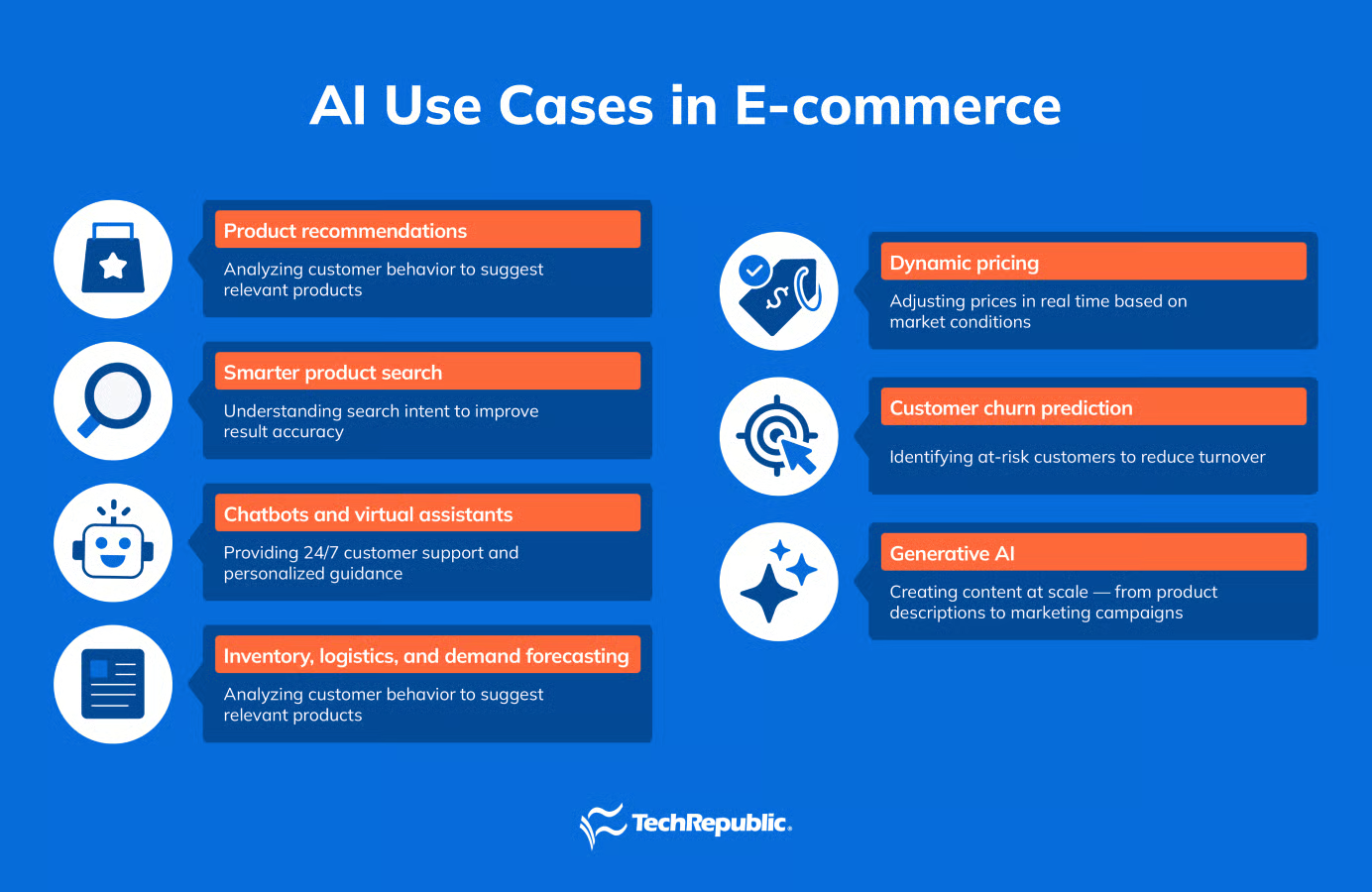
Smart online sellers now use artificial intelligence to guide daily business decisions. These systems analyze buyer behavior and suggest actions that increase store revenue. The result is faster learning for sellers trying to grow crowded marketplaces.
Many beginners search endlessly for practical ways to boost eBay sales today. Artificial intelligence now provides guidance that once required expensive consultants or analysts. Sellers review suggestions quickly and adjust listings, pricing, and promotions with confidence.
Modern stores increasingly depend on AI-driven tools for boosting sales across marketplaces. These programs scan product titles, pricing trends, and competitor listings every single day. The software then recommends clear steps sellers can apply within minutes today.
Small improvements across many listings often create meaningful revenue growth during busy seasons. AI tools highlight patterns that human sellers often overlook during routine listing work. That guidance helps beginners learn practical ways to boost eBay sales faster.
Using AI to Improve Product Listings
Product listings act like digital storefronts that influence nearly every buyer decision. AI systems analyze millions of listings and highlight words buyers search most. Sellers update titles and descriptions using suggestions generated by AI-driven tools for boosting sales.
Clear titles improve visibility because marketplace algorithms favor relevant searchable listing language. AI platforms compare your listing language against thousands of top performing competitors. The system then recommends stronger keywords that attract buyers searching similar products.
Photo analysis tools also study lighting, backgrounds, and angles used by successful listings. Sellers adjust photos quickly and create images that appear clearer inside crowded search results. Better visuals build trust and help buyers feel confident clicking purchase buttons.
Consistent listing improvements often translate into steady traffic increases during competitive seasons. That momentum creates valuable momentum for stores trying practical ways to boost eBay sales. Smart sellers treat listing optimization like daily maintenance rather than occasional cleanup.
Smarter Pricing With Artificial Intelligence
Pricing decisions strongly influence buyer behavior across fast moving online marketplaces today. AI systems analyze demand, seasonality, and competitor pricing across thousands of similar listings. The software suggests price adjustments that improve conversion rates without sacrificing healthy margins.
Sellers once guessed pricing strategies based on limited data and personal experience. Modern AI-driven tools for boosting sales now evaluate thousands of pricing scenarios instantly. These recommendations help sellers respond quickly when competitors lower prices unexpectedly today.
Dynamic pricing tools track inventory levels and adjust prices as supply changes. That strategy protects profit while maintaining attractive pricing for buyers browsing similar products. Many experienced sellers consider this technology essential for scaling online businesses today.
Accurate pricing intelligence often separates casual sellers from disciplined long term store owners. Smart sellers review AI suggestions daily and update listings before competitors react. Those habits steadily support practical ways to boost eBay sales across large inventories.
AI Marketing That Attracts More Buyers
Marketing campaigns drive traffic that converts casual browsers into loyal repeat customers. Artificial intelligence studies purchase patterns and recommends promotions targeting specific buyer groups. Sellers schedule offers using AI-driven tools for boosting sales inside marketplace dashboards.
Email campaigns remain powerful channels for stores that maintain active buyer mailing lists. AI platforms analyze past purchases and suggest products each buyer might purchase next. These suggestions increase click rates because buyers receive messages matching their interests.
Advertising tools also test multiple headlines, images, and offers across short campaign periods. The system identifies winning ads and automatically shifts budget toward stronger performing campaigns. Sellers gain clearer insights about customer preferences without analyzing complicated spreadsheets today.
Consistent promotion keeps listings visible during busy shopping weeks and seasonal demand spikes. That attention supports steady growth and reinforces practical ways to boost eBay sales. Many successful stores combine automation with personal customer service messages every week.
Conclusion: Building Smarter Online Stores
Artificial intelligence now gives small sellers access to tools once reserved for large retailers. These systems guide pricing, listings, and marketing decisions using patterns hidden inside marketplace data. The result is clearer strategy for entrepreneurs building reliable income through online marketplaces.
Many beginners still struggle to discover practical ways to boost eBay sales consistently. Artificial intelligence shortens that learning curve by offering daily suggestions sellers can implement today. Small improvements across pricing, listings, and promotions gradually compound into meaningful revenue growth.
Successful sellers treat technology like a partner that constantly studies buyer behavior today. They combine experience with AI-driven tools for boosting sales across expanding product catalogs. That balanced approach helps stores grow steadily while maintaining control over daily operations.

Table of Contents
1. Introduction
2. What is PLA Filament?
3. Key Features and Advantages of PLA Filament
4. Limitations of PLA Filament
5. Common Uses of PLA Filament
6. Best Printing Settings for PLA
7. How to Store PLA Filament Properly
8. Conclusion
1. Introduction:
3D printing is an additive process used to create three-dimensional objects like toys, tools and artistic models. In this process, material such as metal or plastic, is deposited layer by layer to create a required prototype. This technique has completely revolutionized the manufacturing industry by replacing the traditional production methods with innovative, reliable and fast alternatives of prototyping.
2. What is PLA Filament?
In 3D printing, the printing material decides the quality and durability of the prototype. There are many 3D printing filaments available in the market today. The most famous and widely used 3D printer filament in 3D printing is PLA filament. PLA stands for polylactic acid, a thermoplastic polymer derived from organic sources such as corn, starch or sugarcane. It is a milky or off-white filament with a translucent appearance and a semi-glossy finish. It is an eco-friendly, reliable and affordable filament, which makes it a number-one choice for 3D printing of a wide range of prototypes or products.
3. Key Features and Advantages of PLA Filament:
The list of benefits and usefulness of PLA filament is quite long because of its highly versatile nature. We can literally mix some metals and wood in PLA to make the products heavy and natural. Its infusive capability increases the variety of products made from it which in turn increases the demand of this filament in the industry. Moreover, this filament requires very low printing temperatures ranging from 190 C to 220 C with minimal shrinking, which makes it an excellent choice for beginners. It is easy to use because of these lower temperatures which in turn decreases the risk of warping. In addition, PLA is a biodegradable filament obtained from renewable resources and emits very little odour, making it safer to use. Because of its popularity, it is the most common and affordable filament in the market for most FDM printers. It is readily available for most users in different kinds like silk, wood and metal-infused filaments and vibrant colours, making it the number one choice for beginners and educational projects.
4. Limitations of PLA Filament:
Although PLA filament is convenient, there are some limitations of this filament that users must consider. It has a very low heat resistance. For instance, objects printed with PLA can start to soften or deform under high temperatures. So, users must use it carefully for items that are used near heat sources. For instance, you must be careful while using a home décor item made from PLA filament in outdoor settings like a garden, where they will be exposed directly to the sun. Also, the utensils or décor items made for the kitchen must be kept away from the stove. Another important thing to keep in mind is, PLA is more brittle as compared to other materials. It means printed parts can break or crack easily under stress. Remember to keep them separate from heavy loads while transporting the products. A user must keep these points in mind before using this filament for mechanical parts or kitchen utensils.
5. Common Uses of PLA Filament:
Despite these limitations, PLA filament is widely used to make decorative items, figurines, toys, tools and educational prototypes. As it is beginner-friendly, many students use it to learn basic 3D printing without dealing with complex printing conditions. Some designers use it for rapid prototyping to test the shape and design of a product before producing it with stronger materials. Additionally, PLA is also used to print household items like phone stands and containers. Due to its smooth finish and wide range of available colours, it is also ideal for artistic and creative projects.
6. Best Printing Settings for PLA:
If you’re new to 3D printing with PLA, getting good results is mostly about finding the right settings. Usually, PLA prints well with the nozzle at 190°C to 220°C — but check your filament brand and your printer because there’s some wiggle room depending on what you’re using. The heated bed isn’t always necessary for PLA; many printers can handle it with the bed set anywhere from cool (0°C) up to 60°C.
Keep your print speed moderate, around 40–60 mm/s. That way, your prints come out smooth and accurate instead of messy and rushed. Getting the first layer to stick matters, so a thin spread of glue stick or a textured build plate does the trick for most people. If your printer has cooling fans, use them—adjust them as needed while printing. Good cooling helps keep details crisp and cuts down on annoying stringing between parts.
7. How to Store PLA Filament Properly:
If you want your PLA filament to last and print well, you need to store it right. PLA doesn’t love moisture, so keep it in a dry, sealed container whenever you’re not using it. Most people who work with 3D printers actually store their filament in airtight bags with silica gel packets, just to fight off humidity. It also helps to stash your spools somewhere cool and dry. That way, the filament doesn’t get brittle as time goes on. If you keep your filament safe from moisture and dust, it’ll last longer—and you’ll dodge annoying issues like popping sounds or rough, uneven prints.
8. Conclusion:
PLA filament is pretty much the go-to material for anyone getting into 3D printing. It’s affordable, easy to work with, and delivers solid, reliable results most of the time. Sure, it’s not the toughest plastic out there and it can’t handle a lot of heat, but it’s still great for prototypes, decorations, and learning the ropes. If you get the basic settings right, you’ll be surprised at how good your prints look without much effort. For anyone new to 3D printing, starting with PLA just makes sense.


In today’s fast-moving digital economy, businesses must make faster, smarter, and more consistent decisions to stay competitive. Traditional decision-making processes often rely on fragmented data, manual analysis, and delayed insights, which limit an organization’s ability to respond to market changes quickly. This is where Agentic Decision Intelligence emerges as a transformative capability.
Agentic Decision Intelligence combines artificial intelligence, automation, and data analytics to create intelligent systems that can analyze complex business situations, generate decision logic, and execute actions autonomously. According to Aera Technology’s explanation of Decision Intelligence, decision intelligence enables organizations to connect data, recommendations, and execution in real time, allowing businesses to optimize decisions across operations and drive measurable value.
For modern enterprises, adopting Agentic Decision Intelligence is not just a technological upgrade—it is a strategic move that accelerates growth, enhances operational efficiency, and enables scalable decision-making.
1. Faster and More Accurate Decision-Making
One of the biggest advantages of Agentic Decision Intelligence is its ability to process massive volumes of data and generate real-time insights. Instead of relying solely on human interpretation, organizations can leverage AI-driven systems that analyze structured and unstructured data simultaneously.
These systems evaluate multiple variables, simulate scenarios, and recommend the most effective course of action. By automating parts of the decision process, companies can dramatically reduce delays and improve decision accuracy.
For example, businesses can instantly detect supply chain disruptions, adjust inventory levels, or optimize pricing strategies using automated insights. As a result, organizations become more agile and responsive to market fluctuations.
2. Autonomous Decision Execution
Traditional analytics platforms typically provide insights but require humans to execute decisions manually. Agentic Decision Intelligence goes beyond this limitation by enabling autonomous execution of decisions.
Agentic systems can coordinate multiple AI agents that work together to perform complex tasks such as:
- Monitoring operational data
- Identifying patterns or anomalies
- Recommending solutions
- Executing decisions across enterprise systems
Unlike static automation workflows, agentic systems dynamically generate decision logic and orchestrate multi-step processes in real time. This capability significantly improves operational speed and reduces the burden on human teams.
For businesses operating in highly dynamic environments, this autonomy creates a powerful competitive advantage.
3. Improved Operational Efficiency
Organizations constantly deal with repetitive decision tasks across departments such as finance, logistics, procurement, and customer service. When these decisions rely on manual processes, inefficiencies and inconsistencies often arise.
Agentic Decision Intelligence helps streamline operations by automating routine decisions and optimizing workflows. Key efficiency benefits include:
- Reduced manual workload for employees
- Faster processing of operational decisions
- Improved resource allocation
- Lower operational costs
By automating thousands of micro-decisions daily, organizations can focus human expertise on strategic initiatives rather than repetitive tasks.
4. Enhanced Data-Driven Culture
Many companies struggle to build a truly data-driven culture because insights remain confined to analytics teams. Agentic Decision Intelligence democratizes decision-making by making insights accessible across the organization.
Modern decision intelligence platforms offer user-friendly interfaces, dashboards, and natural language interactions that allow business users to understand recommendations and take action quickly. This transparency builds trust in AI-driven systems while enabling employees to collaborate around shared insights.
Over time, organizations develop a culture where decisions are consistently supported by data, analytics, and automated intelligence.
5. Continuous Learning and Decision Optimization
Another strategic advantage of Agentic Decision Intelligence is its ability to continuously learn from outcomes. Unlike traditional decision systems that rely on static rules, agentic systems use feedback loops to refine their models and improve future decisions.
These systems evaluate the results of previous actions, identify what worked or failed, and update decision logic accordingly. This continuous learning capability helps organizations:
- Improve forecasting accuracy
- Minimize operational risks
- Enhance strategic planning
- Optimize long-term performance
As a result, decision intelligence platforms become smarter over time, creating a self-improving ecosystem for enterprise decision-making.
6. Scalable Enterprise-Wide Decision Management
Large organizations often struggle with inconsistent decision-making across departments and systems. Agentic Decision Intelligence addresses this challenge by connecting data sources, AI models, and operational systems into a unified decision framework.
Through a centralized decision platform, companies can ensure that decisions across supply chain, finance, operations, and sales are aligned with business objectives.
Solutions from Aera Technology enable organizations to orchestrate decision processes across the enterprise, ensuring that every decision is informed by the latest data and optimized for business impact.
This enterprise-wide visibility and coordination allows companies to scale intelligent decision-making across complex business environments.
7. Competitive Advantage and Business Growth
Ultimately, the strategic value of Agentic Decision Intelligence lies in its ability to accelerate business growth. By enabling faster decisions, autonomous execution, and continuous optimization, organizations can respond to market opportunities more effectively than competitors.
Companies that leverage decision intelligence can:
- Improve customer experiences
- Optimize supply chains
- Reduce operational costs
- Increase revenue opportunities
In a world where speed and precision determine market leadership, intelligent decision automation becomes a key differentiator.
Final Thoughts
Agentic Decision Intelligence represents the next evolution of enterprise decision-making. By combining artificial intelligence, automation, and real-time data, organizations can transform how decisions are created, executed, and optimized.
Platforms such as those developed by Aera Technology empower businesses to move beyond traditional analytics and embrace a new model of autonomous, data-driven decision management. Through faster insights, improved efficiency, and scalable intelligence, Agentic Decision Intelligence enables companies to unlock sustainable business growth.
For organizations looking to modernize their operations and gain a strategic edge, exploring Agentic Decision Intelligence is no longer optional—it is a critical step toward the future of intelligent enterprise management.


Lily Collins Parents: Everything You Need to Know About Her Famous Family

Lewis Pullman Wife: Everything You Need to Know About His Relationship Status and Personal Life

Mikayla Matthews Age: Everything You Need to Know About Her Life, Career, and Journey

Carolin Bacic: Life, Biography, Family, and Legacy

Christine Williamson: A Rising Star in Sports Journalism

Dame Esther Rantzen: Life, Career, and Legacy of a British Broadcasting Icon
-
 Celebrity7 months ago
Carolin Bacic: Life, Biography, Family, and Legacy
-
 Celebrity1 year ago
Christine Williamson: A Rising Star in Sports Journalism
-
 Celebrity2 months ago
Dame Esther Rantzen: Life, Career, and Legacy of a British Broadcasting Icon
-

 Celebrity6 months ago
Dani Daniels: A Complete Biography of the Artist, Media Personality, and Entrepreneur
-

 Celebrity4 months ago
Eleonora Incardona: Biography, Career, Age, Boyfriend, Net Worth & Lifestyle (2025)
-

 Celebrity1 year ago
Berniece Julien: A Comprehensive Biography2025
-

 Celebrity2 months ago
Stephen Mulhern: The Complete Biography of Britain’s Beloved Television Entertainer
-

 Celebrity5 months ago
Juan Gabriel: The Legendary Life of El Divo de Juárez