
Tech
The AI Tools You Use Daily Are Storing More Than Your Prompts


Most people interact with AI tools under a working assumption — that the conversation begins when they type and ends when they close the tab. That assumption is incorrect for the majority of consumer-facing AI platforms, and the gap between what users believe is being stored and what is actually retained has become one of the more significant unaddressed privacy issues in everyday technology use.
The AI industry grew faster than the regulatory frameworks designed to govern it, and data retention policies across major platforms reflect that gap in ways that are consequential for anyone who treats these tools as a trusted workspace.
What Gets Logged Goes Well Beyond the Text You Type
When a user submits a prompt to an AI tool, the visible exchange — the question and the response — represents only a fraction of what the platform captures. Session metadata, including timestamps, device identifiers, IP addresses, browser fingerprints, and interaction patterns, is routinely collected alongside the content itself. That metadata allows platforms to construct a behavioral profile that persists across sessions even when a user clears their chat history or logs out.
According to a 2023 analysis by the Norwegian Consumer Council, several major AI platforms were found to collect and process user data in ways that exceeded what their privacy disclosures explicitly described, with particular gaps around third-party data sharing arrangements that users had no practical mechanism to review or decline.
Beyond metadata, most AI platforms reserve the right to use submitted content to improve their models. That clause, buried in standard terms of service agreements, means that confidential drafts, business strategies, legal questions, and personal disclosures typed into a chat interface may become training material that influences future model outputs — with no clear expiration on how long that data remains in the system.
The Third-Party Layer Most Users Never Consider
AI tools rarely operate as standalone products. Behind the consumer-facing interface sits a layered infrastructure of cloud hosting providers, analytics vendors, and API partners, each of whom may receive portions of user data under subprocessor agreements that are technically disclosed but practically invisible to the average user.
According to research published by the Future of Privacy Forum, the average consumer-facing app — including AI tools — shares data with more than six third-party entities, and that figure rises significantly for platforms that monetize through advertising or behavioral targeting. A user who carefully reads the privacy policy of their preferred AI assistant has still consented, by extension, to data practices they never directly reviewed.
Routing traffic through a VPN for chrome browsers limits the amount of network-level information — IP addresses, geographic signals, and connection metadata — that both the AI platform and its downstream partners can attach to a user session, reducing the density of the profile those parties are able to construct without touching the content layer at all.
Enterprise Risk Sitting Inside Consumer Accounts
A pattern that has emerged clearly since AI tools became mainstream is the use of personal accounts for professional work. Employees upload meeting summaries, paste internal communications, and run client-facing documents through AI assistants using accounts governed by consumer privacy terms rather than enterprise data agreements — a distinction with meaningful legal and security consequences.
According to a 2024 Cyberhaven report analyzing data movement across organizations, sensitive business data appeared in AI tool submissions at a rate that had grown more than 450% year-over-year, with a significant portion of that activity occurring through personal, non-enterprise accounts. That data does not carry the contractual protections that enterprise agreements typically provide, and organizations rarely have visibility into how extensively their information is being shared with external AI platforms through individual employee behavior.
Using PureVPN – known as one of the best VPN for consumer, and enterprises alongside disciplined account hygiene addresses the network exposure component of that risk — masking the connection identifiers that link professional activity to a specific device, location, and user profile even when the content itself is being submitted through a personal account.
Reading the Policy Is Not Enough Anymore
Privacy policies for AI platforms have grown longer, more complex, and more carefully worded over the past two years — not because the practices they describe have become more user-friendly, but because the legal exposure around data handling has increased and the language has been refined accordingly. A policy that technically discloses broad data collection in paragraph fourteen of a thirty-page document is compliant without being transparent.
The users best positioned to manage their AI tool exposure are those who treat these platforms as data-hungry services with commercial incentives, rather than neutral productivity aids with no stake in what gets submitted. Understanding what is stored, who receives it, and what network signals accompany every session is the starting point for making informed decisions about which conversations should happen inside these tools and which ones should not.


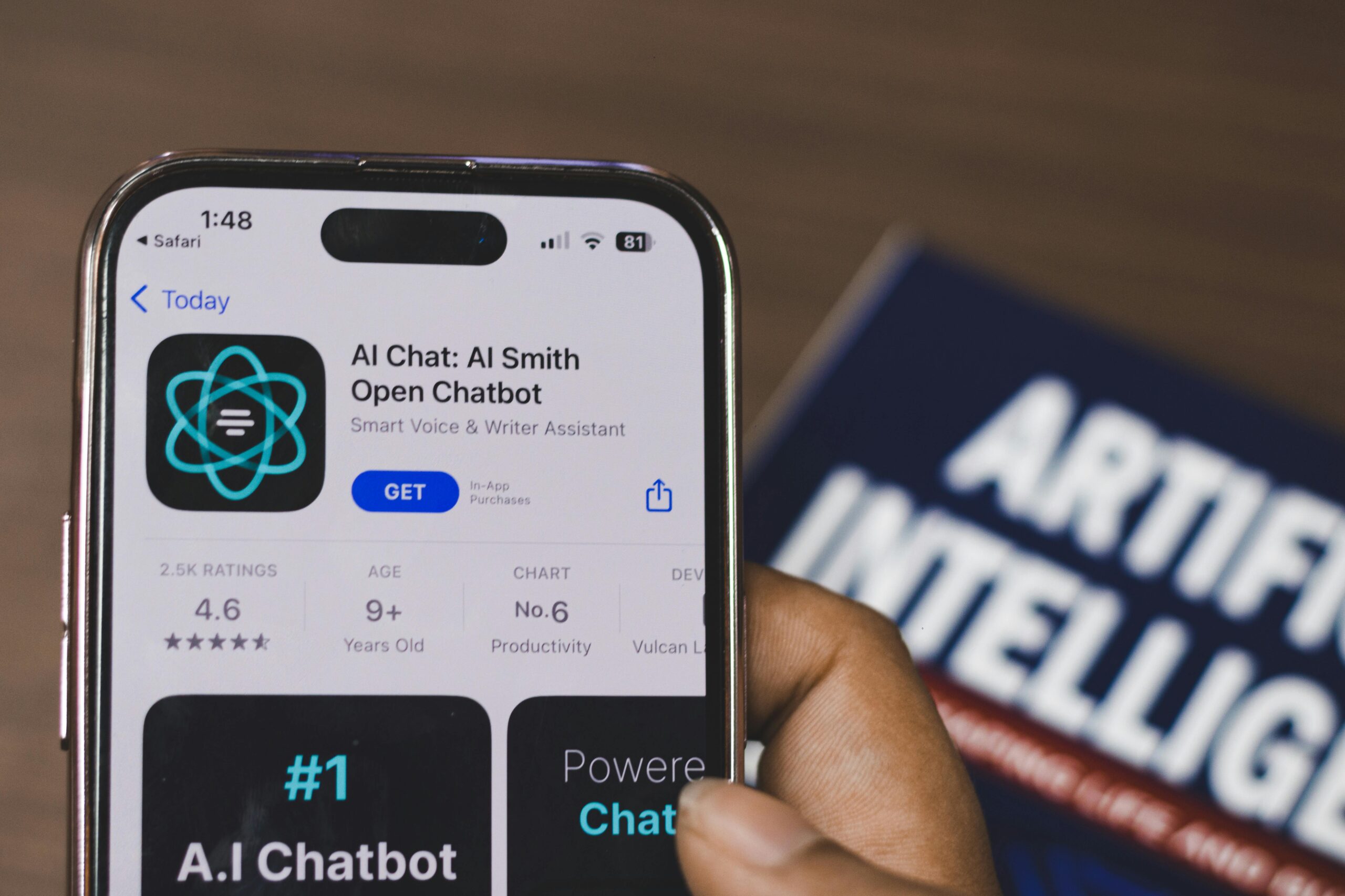
Conversational AI is redefining how businesses interact with customers, automate workflows, and deliver real-time support. From AI chatbots and virtual assistants to voice-enabled systems, companies are rapidly investing in conversational AI development services to stay competitive.
Washington (including Washington D.C. and Seattle) has emerged as a strong hub for AI innovation, hosting several companies that specialize in AI development services, enterprise automation, and intelligent communication platforms. Businesses looking for a reliable AI development partner are increasingly turning to this region for cutting-edge solutions.
In this blog, we explore the top 8 AI development partners in Washington offering advanced artificial intelligence development services for conversational AI in 2026.
Why Conversational AI is Critical for Businesses
Conversational AI enables businesses to interact with users through natural language—via chat, voice, or messaging platforms. It plays a crucial role in modern digital transformation.
Key benefits include:
- 24/7 automated customer support
- Improved customer engagement and personalization
- Reduced operational costs
- Faster response times
- Scalable communication systems
With growing demand, businesses are actively seeking the best AI development services and a trusted custom AI development company in the USA to build scalable conversational systems.
Top 8 AI Development Partners in Washington 2026
1. Xicom Technologies
Xicom Technologies stands out as a leading AI development company delivering comprehensive AI development services for businesses across industries. The company specializes in building intelligent conversational systems such as chatbots, voice assistants, and AI-driven automation platforms.
As a trusted AI development partner, Xicom offers end-to-end artificial intelligence development services, including strategy, design, development, and deployment. Businesses looking for custom AI development solutions can leverage Xicom’s expertise in NLP, machine learning, and generative AI.
Their strong focus on AI model development services ensures that conversational AI systems are accurate, scalable, and aligned with business goals.
2. Alcax Solutions
Alcax Solutions is a fast-growing AI development company known for delivering tailored AI development services to businesses seeking intelligent automation and conversational AI solutions.
The company provides advanced conversational AI development services, enabling organizations to build chatbots, AI assistants, and automated customer engagement platforms. As a reliable custom AI development company in the USA, Alcax focuses on delivering scalable and secure solutions.
Their team of experts specializes in AI model development services, helping businesses implement data-driven AI systems that improve efficiency and user experience.
3. Twilio
Twilio is a globally recognized platform that powers communication APIs for developers and enterprises. It enables businesses to build conversational AI solutions across SMS, voice, chat, and email channels.
As a leading AI development partner, Twilio offers tools that simplify the development of AI-driven communication systems. Its flexible APIs make it a preferred choice for companies looking for scalable AI development services.
4. Sprinklr
Sprinklr provides enterprise-grade customer experience management solutions powered by AI. Its platform helps businesses manage and analyze conversations across digital channels.
The company delivers advanced artificial intelligence development services focused on improving customer engagement. Sprinklr is often considered among the best AI development services providers for large-scale conversational platforms.
5. Conversica
Conversica specializes in AI-powered virtual assistants designed to automate customer engagement and sales processes. The company’s intelligent assistants communicate via email, chat, and SMS.
As a strong AI development partner, Conversica offers highly effective conversational AI development services that help businesses increase conversions and streamline communication.
6. Afiniti
Afiniti focuses on AI-driven customer experience optimization, particularly in call centers. Its technology uses machine learning to match customers with the most suitable agents.
The company provides specialized AI model development services and is a valuable AI development partner for organizations looking to enhance customer interactions through intelligent systems.
7. Docket (DocketAI)
Docket is an emerging AI company based in Washington that offers AI-powered sales and customer engagement solutions. Its platform uses generative AI to provide real-time responses and automate workflows.
Docket’s innovative approach to custom AI development makes it a promising AI development company in the conversational AI space.
8. Azumo
Azumo is a software development firm offering robust AI development services, including conversational AI, real-time analytics, and cloud-based applications. The company is known for its flexibility and strong technical capabilities.
Businesses looking for a reliable AI development partner often choose Azumo for its expertise in delivering scalable and customized AI solutions.
How to Choose the Right AI Development Partner
Selecting the right AI development company is crucial for successful implementation. Here are some key factors to consider:
1. Expertise in conversational AI
Ensure the company has experience in chatbot and voice AI development.
2. Customization capabilities
Choose a custom AI development company in USA that can tailor solutions to your business needs.
3. Technology stack
Look for expertise in NLP, machine learning, and generative AI.
4. Scalability
The provider should offer scalable AI model development services.
5. Proven track record
Check case studies, client reviews, and successful implementations.
The Future of Conversational AI in Washington
Washington continues to grow as a hub for AI innovation, driven by strong tech ecosystems in Seattle and Washington, D.C. Companies in this region are leading advancements in artificial intelligence development services, particularly in conversational AI.
From enterprise communication platforms to AI-powered virtual assistants, the demand for AI development services will continue to rise in 2026 and beyond. Businesses that invest in the right AI development partner will gain a significant competitive edge.
FAQs
1. What are conversational AI development services?
Conversational AI development services involve building systems like chatbots and voice assistants that can interact with users using natural language.
2. Why should businesses invest in AI development services?
Businesses invest in AI development services to automate processes, improve customer engagement, and enhance operational efficiency.
3. What does an AI development partner do?
An AI development partner helps businesses design, develop, and deploy AI solutions tailored to their specific needs.
4. What industries benefit from conversational AI?
Industries such as healthcare, finance, eCommerce, and customer service benefit greatly from artificial intelligence development services.
5. What is custom AI development?
Custom AI development involves creating tailored AI solutions designed specifically for a business’s unique requirements.
6. How do AI model development services work?
AI model development services include designing, training, testing, and deploying machine learning models that power AI applications.

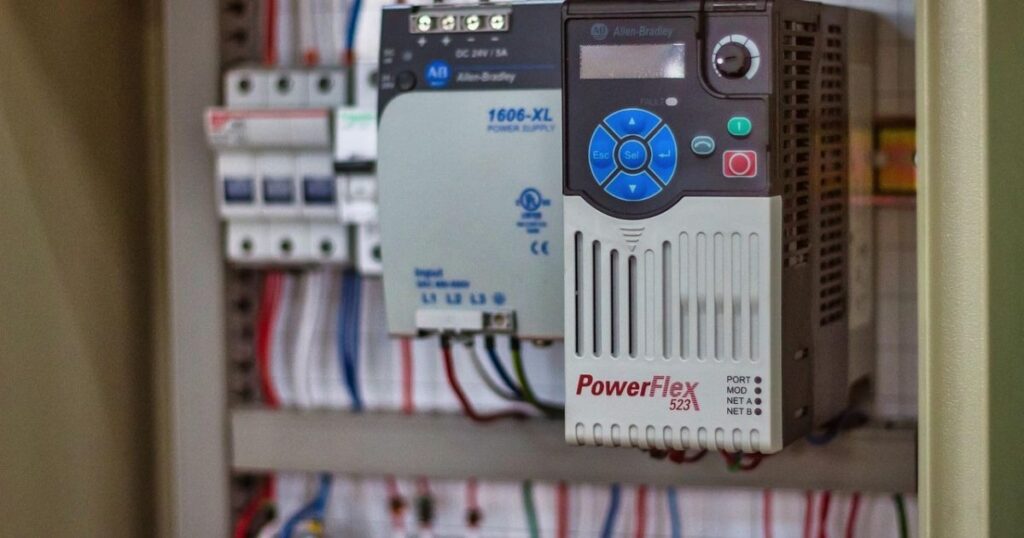
Professional electrical services in Gloucester are necessary for both homeowners and businesspeople. Be it an emergency repair, complete electrical installations, or standard maintenance, the appropriate service will guarantee your safety, efficiency, and your mind. Our crew provides specialised services for any need, from big domestic to grand commercial work.
We offer quality workmanship and promote safety, reliability, and transparency with our certified electricians in Gloucester. Our electrical services in Gloucester include fuse board upgrades and emergency call-outs, amongst other contemporary electrical services.
Why Choose Electrical Gloucester Experts
There are so many benefits to using local electrical professionals in Gloucester. It is all about fast response times, personalised service, and an in-depth understanding of the local wiring standards. Our crew, known for reliability and professionalism, ensures that all domestic and commercial projects in Gloucester are completed to the highest standards.
Domestic Electrical Gloucester Services
Our local electrical Gloucester services are intended to ensure the homes are safe and properly operational:
- Rewiring and upgrading of older properties.
- Kitchen and bathroom electrical installations.
- LED lighting systems that use less energy.
- Emergency repairs and fault-finding.
All work is carried out in accordance with UK electrical standards, which provide homeowners with a sense of security.
Commercial Electrical Gloucester Services
Our commercial electrical services are also specialised for businesses in Gloucester, including full office, shop, and industrial unit installations; routine maintenance and safety inspections; Electrical Installation Condition Reports (EICRs); and emergency electrical repairs. We are a team committed to causing the least disruption to normal operations while adhering to UK electrical safety regulations and offering the best, most efficient solutions for every commercial building.
24-Hour Emergency Electrical Gloucester Services
Electrical emergencies can happen at any time. Our 24-hour electrical Gloucester team handles:
- Power failure and faults in circuits.
- Sparking sockets or blown-out fuses.
- Emergency domestic and commercial repairs.
Quick, efficient service means that your property will be safe and in service.
Electrical Installation Condition Reports (EICRs), Gloucester
EICRs are essential for safety, compliance, and peace of mind. Our Gloucester electricians offer:
- Close examination of wiring, sockets, and electrical parts.
- Recommendations on repairs to be done.
- Adherence to the UK electrical safety laws.
Periodic EICRs allow homeowners and landlords to avoid risks and fulfill their legal duties.
Energy-Efficient Electrical Gloucester Solutions
Our energy-efficient options are available throughout Gloucester, and we offer LED lighting installations to reduce energy use, efficient heating systems to save energy, and battery storage and renewable energy integration. The adoption of these sophisticated systems not only reduces utility bills but also enhances environmental sustainability, thus making properties more efficient and environmentally friendly.
CCTV & Home Security Electrical Gloucester Services
Our electricians in Gloucester also install more sophisticated security solutions:
- Home and business CCTV.
- Integration of smart home security.
- Electrical installation of automated systems.
Professional installation guarantees safety and reliability in the long run.
Trusted Electrical Contractors Gloucester
In electrical work, reliability is very important. Our Gloucester electricians offer:
- Punctuality and professionalism.
- Clear quotes in which there are no concealed costs.
- Safe and clean completion of all projects.
Our electrical team in Gloucester is trusted by homeowners, landlords, and businesses for reliable, high-quality service.
Fault Finding & Repairs Electrical Gloucester
Electrical faults should be diagnosed by professionals. Our Gloucester electricians provide:
- Home and business expert fault-finding.
- Repair of faulty circuits, sockets, and wiring.
- Precautionary measures to prevent the recurrence of problems.
The fact that we specialise in repairing items in a very detailed way increases safety and efficiency.
Contact Electrical Gloucester Experts Today
For reliable electrical services in Gloucester, call our crew. We offer full upgrades for domestic and urgent commercial repairs in the city of Gloucester and the surrounding regions.
- Call Electricsfixed at 01432 629050
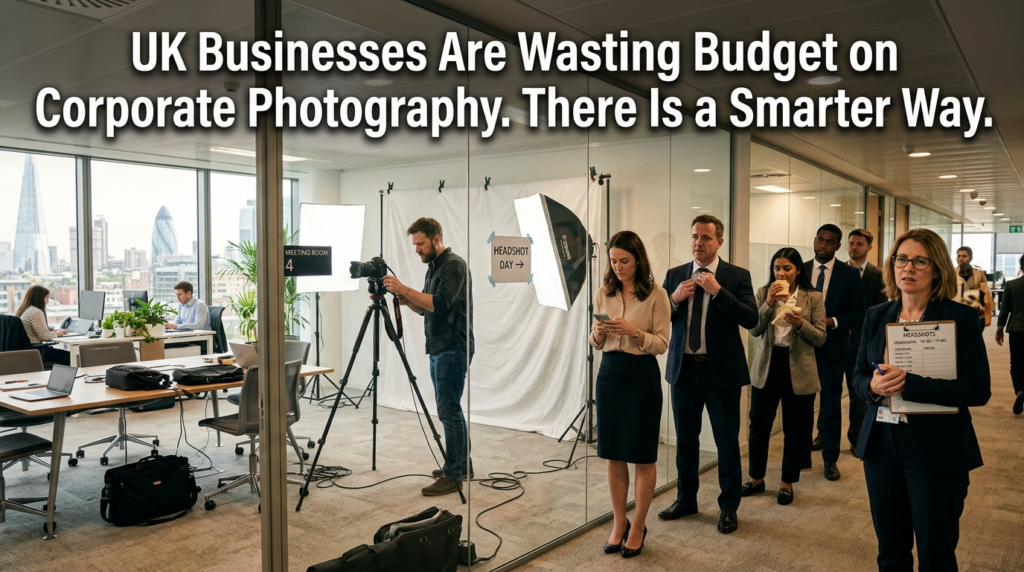
Every year, thousands of UK businesses book a photographer, commandeer a meeting room, and spend a full day cycling employees through a makeshift portrait studio. The photographer charges somewhere between £150 and £500 for the session. The day’s coordination falls on someone in HR or office management who already has too much to do. Half the team finds excuses to miss it. Three months later, new hires join and there’s no budget left for a second session.
Sound familiar?
The corporate headshot process at most UK companies hasn’t meaningfully changed in twenty years. But the economics around it have shifted dramatically, and most businesses haven’t noticed.
The Real Cost Isn’t the Invoice
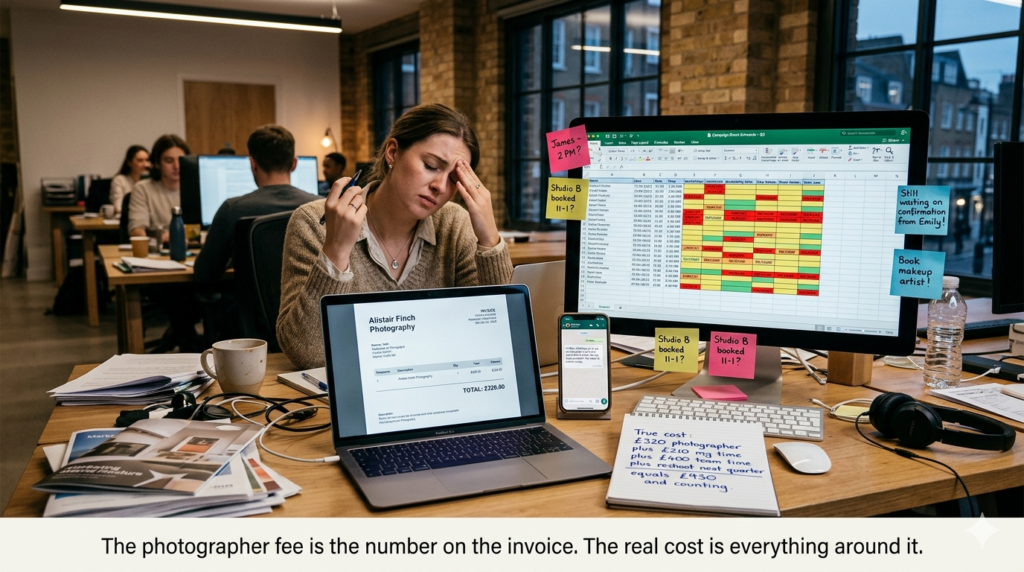
When UK businesses evaluate their headshot spend, they typically look at one number: the photographer’s fee. That number feels reasonable. £200 to £400 for a half-day session covering 20 to 30 employees? Seems efficient.
But that figure ignores the actual cost.
Start with coordination time. Someone in your team (usually HR, sometimes an office manager, occasionally a long-suffering marketing coordinator) spends five to ten hours across several weeks on scheduling, reminders, rescheduling for people who were out, and chasing the final five holdouts who somehow missed every single email. At an average UK salary, that coordination time alone adds £150 to £300 in hidden labour cost.
Then there’s the productivity loss. Each employee spends roughly 20 to 30 minutes away from their desk for the actual session, plus travel time if they’re coming from a different floor or location. For a company of 50 people, that’s 15 to 25 hours of collective work time. Not catastrophic for a single day, but not free either.
And here’s the part that rarely makes it onto a spreadsheet: the ongoing cost of staleness. Most companies do headshots once a year at best, more realistically once every two or three years. That means your website, your LinkedIn company page, and your pitch decks are showing photos that are perpetually outdated. For anyone who’s curious about how these costs stack up in detail, this breakdown of headshot pricing maps out the real numbers across different approaches.
The total cost of a traditional headshot day for a mid-sized UK company (50 to 100 employees) typically lands between £2,000 and £6,000 when you account for everything. And you’re doing it again next year.
What Changed in the Last 18 Months
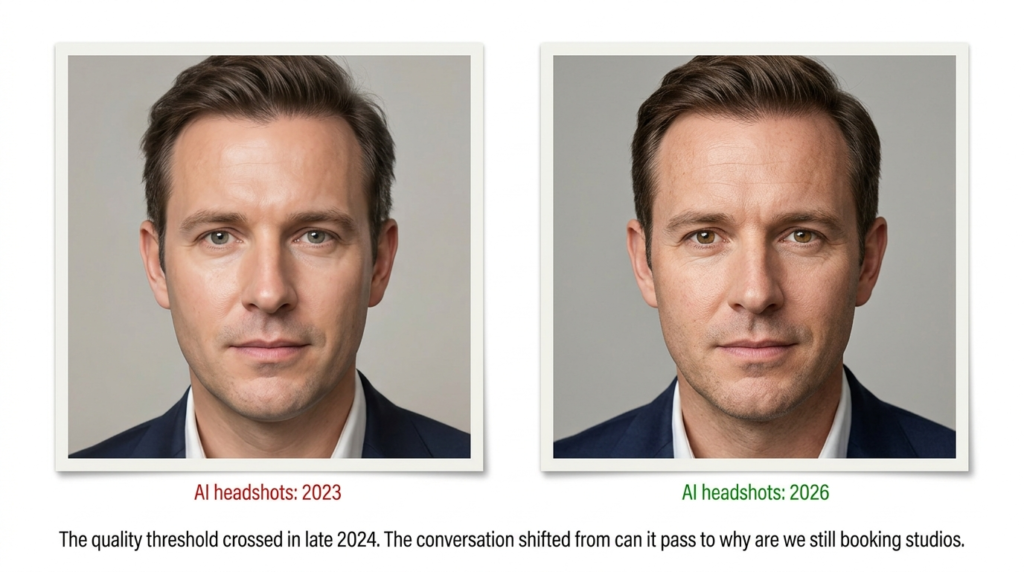
AI-generated headshots existed before 2024, but the quality wasn’t there. Early versions had telltale signs: slightly plastic skin, uncanny eye symmetry, backgrounds that dissolved into digital soup at the edges. Any design-literate person could spot them immediately.
That’s no longer the case.
The current generation of AI headshot tools produces results that hold up under scrutiny. Professional lighting, natural skin texture, consistent backgrounds, proper depth of field. In blind tests, even photographers struggle to reliably distinguish AI-generated headshots from studio work.
This is where it gets interesting for UK businesses specifically.
The UK has a particular combination of factors that makes the traditional photography model especially inefficient. High labour costs mean coordination time is expensive. Hybrid working means not everyone is in the office on the same day (or the same office). Multi-site operations across cities like London, Manchester, Edinburgh, and Birmingham make centralised photo days logistically painful. And the UK’s strong emphasis on employer branding and professional presentation means outdated team photos carry a real reputational cost.
AI headshot services like Headshot Photo have entered this space by letting each employee upload a few casual selfies and receive a set of professional, studio-quality headshots. The process takes minutes per person, costs a fraction of a traditional session, and (critically for hybrid teams) doesn’t require anyone to be in the same physical location.
The Quality Objection (and Why It’s Outdated)
I get it. If you’re the one signing off on the company’s visual identity, the idea of AI-generated photos might trigger scepticism. Will they look real? Will our team page look like it was generated by a computer? What will clients think?
These were legitimate concerns twelve months ago. They’re not anymore, at least not for the use case we’re discussing.
Here’s an important distinction. We’re not talking about editorial photography, brand campaigns, or creative content where artistic direction matters. We’re talking about standardised professional portraits: head and shoulders, clean background, consistent lighting, professional attire. This is the commodity end of photography. The brief is essentially “make everyone look professional and uniform.”
For this specific use case, AI tools have reached parity with mid-tier studio photography. Not with a top-end portrait photographer charging £2,000 per session (those professionals are serving a different market entirely), but with the £200 half-day photographer who cycles through your team with a backdrop and two softboxes.
The real question is whether the quality difference between a £200 photographer and a £25 AI-generated headshot would be noticeable to a website visitor, a LinkedIn connection, or a prospective client.
In almost every case, it wouldn’t.
And the AI approach has one advantage that traditional photography simply cannot match: consistency. When every headshot is generated with the same parameters (background colour, lighting direction, framing, colour grading), your team page looks deliberately cohesive. Traditional photo days, especially those spread across multiple offices or years, inevitably produce a patchwork of slightly different styles.
The Hybrid Workforce Made This Urgent
If your entire team works from the same office five days a week, traditional headshot days are merely inefficient. If your team is hybrid or distributed, they’re borderline unworkable.
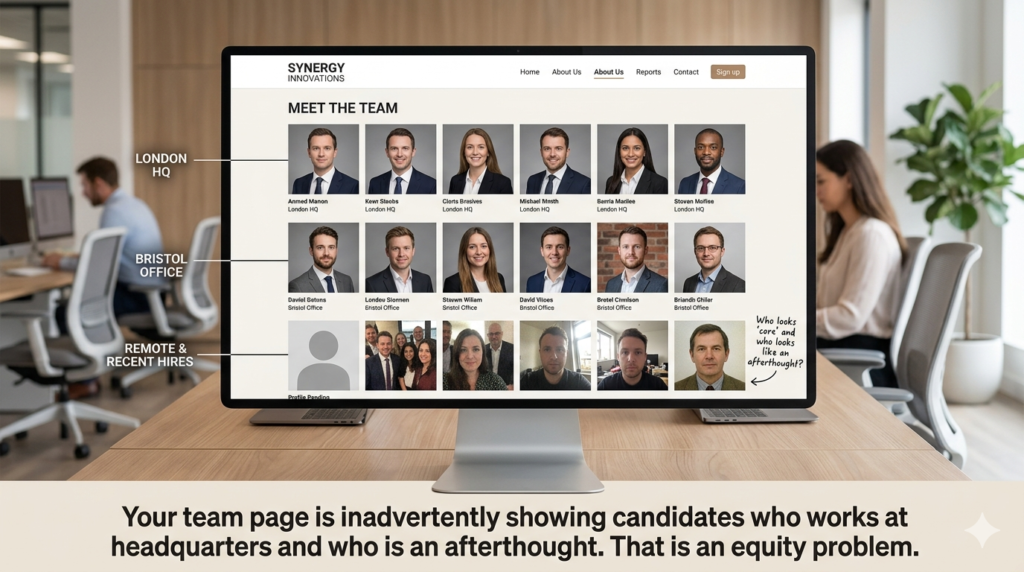
Consider a UK company with 80 employees across three offices (London, Bristol, Leeds) plus 15 fully remote staff. To photograph everyone traditionally, you either send a photographer to three cities on three different days (triple the cost, triple the coordination), ask employees to find and expense a local photographer (wildly inconsistent results), or wait for the next company offsite (which might be six months away, and even then, not everyone attends).
The distributed workforce problem isn’t just logistical. It’s also an equity problem. The employees who happen to work from your largest office get professional headshots. Remote employees, satellite office workers, and recent hires get whatever they can manage on their own, or nothing at all. Your team page ends up with visible tiers of visual quality that inadvertently signal who is “core” and who isn’t.
This is a particularly acute issue for UK businesses navigating the post-pandemic hybrid model, where maintaining a sense of team cohesion and equal treatment across locations is already a challenge.
A Practical Approach for UK Businesses Ready to Switch
If you’re considering moving away from traditional headshot days, here’s a straightforward process.
Run the numbers first. Calculate your true current cost: photographer fee plus coordination hours plus productivity loss plus the annual repeat cycle. Compare this against a per-person AI headshot cost (typically £15 to £40 depending on the service and volume). For most UK companies above 20 employees, the savings are substantial enough to justify a pilot.
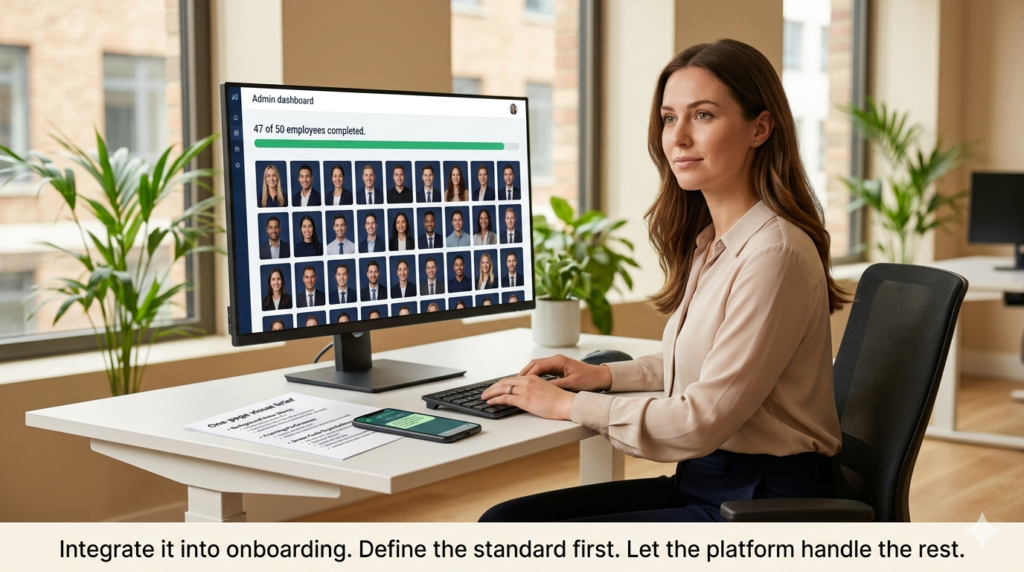
Start with new hires. Rather than overhauling your entire team’s photos at once, integrate AI headshots into your onboarding process. Every new employee gets a professional headshot in their first week. This builds consistency over time without disrupting existing workflows. For teams looking at scaling headshots across an organisation, most platforms offer admin dashboards that make bulk management straightforward.
Define your visual standard. Before anyone generates a photo, decide on background colour, framing preferences, and any dress code expectations. Document it in a one-page brief. This prevents the “we wanted navy backgrounds, not grey” problem after fifty people have already generated theirs.
Keep the photographer for what matters. AI headshots replace commodity portraits, not creative photography. If you need editorial content for a rebrand, architectural shots of your office, or campaign-quality imagery, a professional photographer is still the right choice. The goal isn’t to eliminate photography spend entirely. It’s to stop spending premium rates on a commodity task.
Measure the difference. After three months, compare the visual consistency of your team page, the time saved by your HR or ops team, and the total cost against your previous approach. The data will make the case far better than any vendor pitch.
What This Really Comes Down To
UK businesses aren’t bad at managing costs. They’re bad at questioning costs that feel small, normal, and “just how things are done.” Corporate headshot days fall squarely into this category.
The question isn’t whether AI headshots are perfect. It’s whether the traditional approach, with all its hidden costs, logistical friction, and inevitable inconsistency, is worth defending when a dramatically cheaper and more practical alternative exists.
For most UK businesses, the honest answer is no. And the sooner you run the numbers for yourself, the more obvious that becomes.


Lorenzo Lamas Net Worth: A Complete Look at His Wealth, Career, and Life

The AI Tools You Use Daily Are Storing More Than Your Prompts

Top 8 AI Development Partners in Washington for Conversational AI Solutions 2026

Carolin Bacic: Life, Biography, Family, and Legacy

Christine Williamson: A Rising Star in Sports Journalism

Dani Daniels: A Complete Biography of the Artist, Media Personality, and Entrepreneur
-
 Celebrity7 months ago
Carolin Bacic: Life, Biography, Family, and Legacy
-
 Celebrity1 year ago
Christine Williamson: A Rising Star in Sports Journalism
-
 Celebrity7 months ago
Dani Daniels: A Complete Biography of the Artist, Media Personality, and Entrepreneur
-

 Celebrity6 months ago
Juan Gabriel: The Legendary Life of El Divo de Juárez
-

 Celebrity2 months ago
Dame Esther Rantzen: Life, Career, and Legacy of a British Broadcasting Icon
-

 Celebrity3 weeks ago
Valerie Perrine: A Complete Biography of the Acclaimed Actress and Icon
-

 Celebrity1 year ago
Vera Davich: Biography, Life, and Legacy2025
-

 Celebrity1 year ago
Berniece Julien: A Comprehensive Biography2025