
Business
Why More Drivers & Mechanics Turn to MT Auto Parts for BMW Parts in the UK

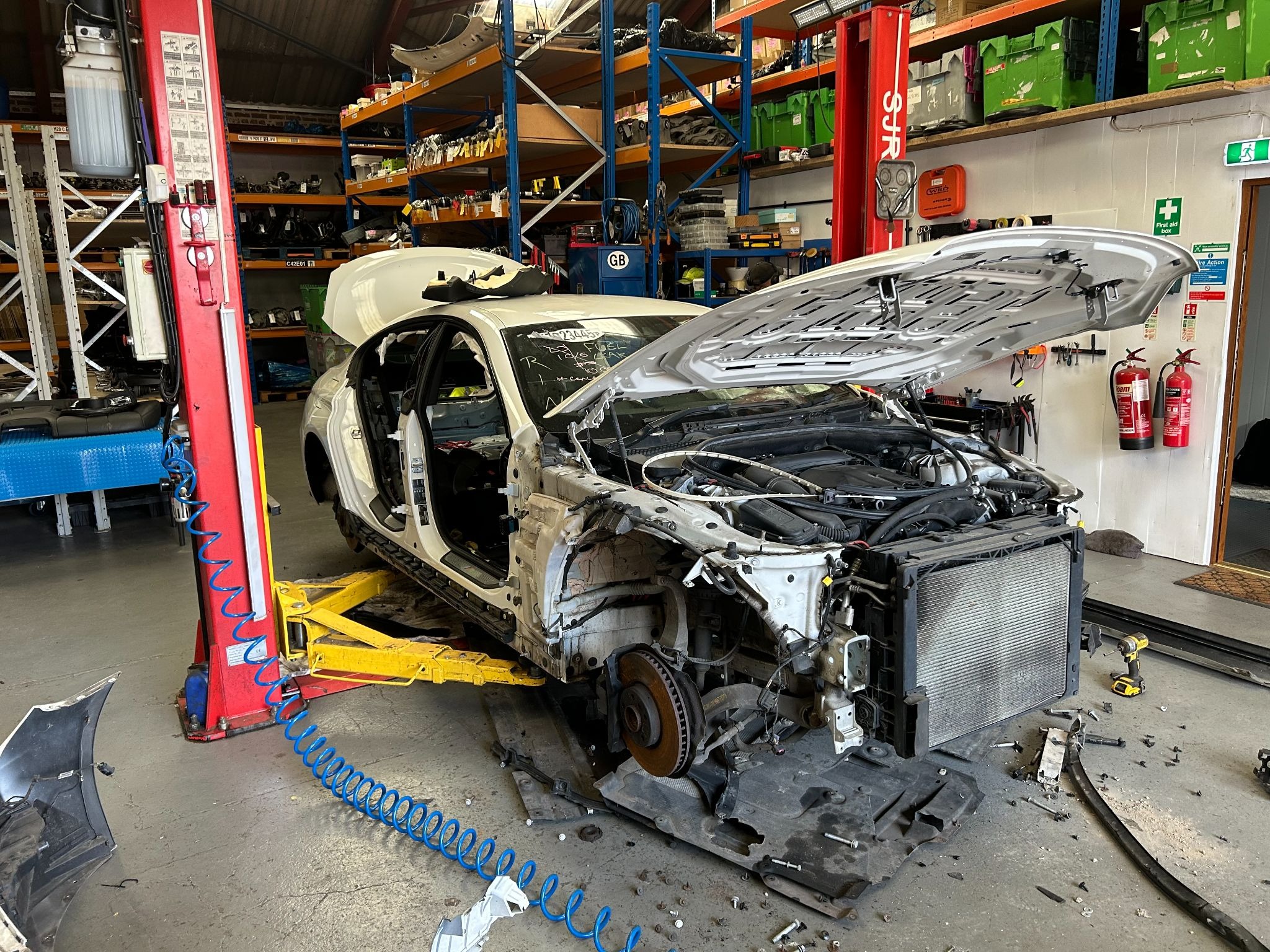
The UK automotive aftermarket is worth £21 billion annually, and BMW occupies a significant and growing share of that market. Hundreds of thousands of post-warranty BMWs are on UK roads right now, needing BMW motor parts, body repairs, electronic replacements, and drivetrain work — none of which most owners want to pay dealer prices for once the manufacturer’s warranty has lapsed.
MT Auto Parts has become one of the most recognised BMW parts specialists in the UK not through advertising spend but through the oldest mechanism in the trade: doing the job correctly, consistently, so that the people who buy from them come back and tell others. Over 13,000 five-star reviews from private owners, mechanics, and independent garages across the UK is the output of that consistency.
This article looks specifically at what is driving the shift, why more mechanics and BMW owners are choosing a specialist dismantler over the alternatives that existed before.
The Market Gap MT Auto Parts Fills
According to the Society of Motor Manufacturers and Traders (SMMT), over 80 per cent of UK garages have reported parts delays of at least one working day, and nearly 40 per cent have experienced delays of over a week for high-demand components. For BMW auto spares, particularly electronics, lighting modules, and drivetrain components for newer F and G generation models, those delays have been acute.
At the same time, dealer pricing for out-of-warranty BMWs has become progressively harder to justify. Used OEM components from a BMW-only dismantler typically come in at 20 to 70 per cent below the equivalent new dealer price. For major items like engines and gearboxes, that gap runs to thousands of pounds. The economics have shifted the market, and MT Auto Parts has been positioned to serve it.
As demand for parts for BMW grew, MT Auto Parts expanded its stock intake and warehouse capacity to meet it. The current catalogue holds over 21,000 parts, covering F, G, and U generation models from 2012 onwards across the full BMW range: 1 to 8 Series, X1 to X7, Z4, and electric models including the i3, i8, iX3, iX, and i7. Most parts are genuine BMW, removed from carefully selected donor vehicles.
What Mechanics and Garages Actually Need
For an independent garage working on a customer’s BMW, the calculation around parts sourcing is commercial, not sentimental. A car on a ramp generates no revenue. Downtime — waiting for a part that is delayed, incorrect, or has to be returned — costs the workshop time, costs the customer goodwill, and can cost a booking slot that cannot be recovered.
What a garage actually needs from a BMW spares supplier is straightforward: the right part, described accurately, delivered quickly, backed by something resembling a warranty. MT Auto Parts provides all four, free VIN matching confirms the correct component for the specific vehicle before dispatch, delivery to UK mainland addresses runs to 24 to 48 hours, free standard delivery applies to items under 20 kg, and a 30-day warranty is included on almost all parts (T&Cs apply).
The BMW-only focus matters here in a practical sense that garages understand immediately. Modern BMW models, the F30, the G20, the F10, the G30, contain sub-variants that differ in ways a generalist cannot reliably navigate. The same model year can carry different engine codes, different ECU revisions, different lighting specifications, and different gearbox internals. A dismantler who works exclusively with BMW, every day, develops the working knowledge to catch those differences before they become wrong parts and return journeys. A general breaker covering 50 makes does not.
Garages that source from MT Auto Parts consistently cite the same things: parts arrive as described, fitment is accurate, and when questions come up during a job, someone with BMW knowledge is reachable via WhatsApp.
Why Private BMW Owners Keep Returning
The private owner segment is the larger of the two, and the shift in behaviour follows a recognisable pattern. A BMW owner faces a repair. The dealer’s quote is steep. A quick search for auto parts for BMW on an open marketplace returns listings of variable quality with vague descriptions, stock photographs, and minimal warranty terms. A friend or forum recommendation leads them to a BMW specialist. The part arrives correctly, fits first time, and is significantly cheaper than the dealer equivalent.
After that experience, the decision on where to go next time is rarely reconsidered. The 13,000-plus reviews MT Auto Parts has accumulated reflect this retention pattern. Reading through them, what customers mention most often is not price — it is accuracy. Parts arriving exactly as described. Fitment is correct without back-and-forth. Honest answers to compatibility questions before the order is placed.
RAC data on UK MOT failures is revealing what categories drive BMW parts demand in practice: lighting and signalling accounts for 18.9 percent of MOT failures, suspension 13 per cent, brakes 10 per cent. These are precisely the categories where sourcing a genuine used component from the correct generation model delivers real value over either a new dealer part or a cheap aftermarket alternative. A genuine BMW LED module from a low-mileage F30 donor is the same component BMW installed at the factory, at a fraction of the replacement cost.
The Process Behind the Parts
Unlike a general breaker that acquires whatever comes available, MT Auto Parts selects its donor vehicles specifically. The majority are insurance write-offs: cars with accident damage to bodywork but mechanically and electronically sound components, often with relatively low mileage. The engine from a 28,000-mile F10 written off after a rear collision is not a worn component. It is a genuine BMW unit with the majority of its service life intact.
Once acquired, vehicles are dismantled carefully rather than hurriedly. A part damaged during removal is a part that cannot be sold. Components requiring testing are tested before listing. Condition descriptions are specific: mileage at removal, any visible marks, and whether the part has been checked. The listings on mtautoparts.com include real photographs of actual stock, not catalogue images.
The business does not stock service consumables, oil filters, air filters, brake pads, timing belts, and fluids are not available as used parts. They should not be. This is deliberate policy, not a gap in the catalogue, and it tells you something about the standards applied to everything else that is stocked.
Summary
The shift in how drivers and mechanics source BMW parts is a market response to real conditions: dealer pricing that does not represent value for out-of-warranty cars, general breakers that lack the BMW-specific knowledge modern models require, and open marketplaces that carry inconsistency at scale. MT Auto Parts sits in the space those conditions created, serving both segments with the same approach: mostly genuine parts, accurate descriptions, fast delivery, and a warranty that reflects confidence in what is being sold.
For BMW owners and independent garages looking for reliable BMW auto parts in the UK, the BMW parts catalogue is at mtautoparts.com. Free VIN matching, 24 to 48 hour delivery, and over 13,000 five-star reviews from the people who have already been through the process.



In today’s digital ecosystem, brand identity is increasingly exposed across multiple platforms, making it important to understand how names, trademarks, and online mentions are used. Businesses and individuals often need ways to evaluate whether a name is already in use, how it appears in search engines, and whether it is associated with existing entities or domains.
One of the practical approaches to this process is using a structured brand check, which helps users explore the availability and presence of brand names across different online sources. This type of analysis is especially relevant during the early stages of naming, rebranding, or launching digital products.
What Brand Verification Means
Brand verification refers to the process of assessing whether a chosen name or identity is unique, legally safe to use, and consistent across digital platforms. It is not limited to legal trademark checks but also includes online visibility and digital footprint analysis.
Key Areas of Brand Verification
A proper evaluation usually includes several dimensions:
Domain Availability
Checking whether a corresponding domain name is already registered or available for use.
Social Media Presence
Analyzing whether the same or similar usernames are already taken on platforms like Instagram, X (Twitter), or LinkedIn.
Search Engine Presence
Reviewing how often a name appears in search results and in what context it is used.
Why Brand Consistency Matters
Maintaining consistency across platforms is a key part of building a recognizable identity. When a brand name is used differently across websites, social media, and marketplaces, it can create confusion and reduce trust.
Recognition and Trust
Consistent naming helps users quickly identify and remember a brand. This recognition contributes to credibility, especially in competitive industries.
Avoiding Conflicts
Early verification helps reduce the risk of naming conflicts with existing businesses or registered trademarks.
Long-Term Scalability
A well-checked brand name is easier to scale across markets, languages, and platforms.
The Role of Digital Tools in Brand Analysis
Digital tools simplify the process of checking name availability and online presence. Instead of manually searching multiple platforms, users can rely on centralized systems that aggregate information.
Automated Searches
These tools typically scan:
- Domain registries
- Search engine indexes
- Social media platforms
- Public databases
Data Aggregation
Instead of isolated results, users receive a combined overview that helps them understand how a brand name is distributed across the internet.
Common Challenges in Choosing a Brand Name
Selecting a brand name is often more complex than it appears. Many names that seem unique may already exist in different forms or industries.
Name Saturation
With millions of websites and businesses online, many simple or generic names are already taken.
Similarity Issues
Even if an exact name is available, similar variations may exist, which can still cause confusion.
Cross-Language Conflicts
A name that is unique in one language may have existing usage or meaning in another.
Practical Steps in Evaluating a Brand Name
A structured approach to brand evaluation usually includes several stages.
Step 1: Initial Idea Generation
Start with multiple name options rather than focusing on a single choice.
Step 2: Online Search Review
Check how each name appears in search engines and whether it is already associated with other entities.
Step 3: Domain and Social Check
Verify whether domains and social media handles are available for consistent branding.
Step 4: Comparative Analysis
Compare shortlisted names based on clarity, uniqueness, and memorability.

Importance of Early Verification
Conducting brand analysis early in the planning stage helps avoid costly changes later. Rebranding after launch can involve redesigning websites, updating marketing materials, and rebuilding audience recognition.
Reduced Risk
Early checks reduce the likelihood of legal or branding conflicts.
Efficient Decision-Making
Having clear data allows faster and more informed naming decisions.
Brand verification is an important step in building a strong and consistent digital identity. It helps ensure that a chosen name is not only available but also suitable for long-term use across platforms. By systematically evaluating names, businesses and individuals can create more stable and recognizable online identities without unnecessary complications.
For the majority of consumers, reading reviews is a huge part of their purchase decision. But most value more than just the glowing five-star review. They want to know about problems, complaints that have been dealt with, and less than perfect experiences. These reviews reveal how a brand treats its customers post-infatuation, how much pressure they are under from their supply chain to maximise profit, and help consumers make a more informed decision.
Why complaints matter more than praise
Reading the positive reviews for a product gives you ideas of the cool things it can do for you and then reading the negative reviews shows you where you may go wrong with it.
Any business is bound to have problems. How a business handles those problems is what can set the good businesses apart from the bad. A string of unresolved customer complaints may seem like a small issue for a business, but it can hide much larger problems that customers aren’t even aware of until it is too late. Scanning complaint data can reveal the true nature of a company’s customer service, the quality of their products, and the honesty of their marketing. By knowing these things you can avoid unpleasant businesses before things go south.
Reading between the lines of complaint patterns
Individual complaints can mislead. Patterns don’t lie.
One customer complaining about slow delivery is of little consequence over the long term. However, twenty customers over a three month period complaining about slow delivery indicates that there is a systemic problem in the company that the company either is unable to correct or is unwilling to correct. It is also important to pay attention to the recency of the complaints. A recent spike is usually the result of a recent change in the business, whether it be related to operations, product quality or management.
As a company grows at an exponential rate, the service provided to customers can suffer. Or, there could be an overall shift in the company’s strategy as they have moved to a new supplier or taken a few shortcuts to keep the prices down for customers. The complaints can vary in severity and frequency. Sure, some of them will be simple complaints of a collapsed box or damaged packaging, but these are not the same as the customer safety concerns over the ingredients in a product or accusations of financial fraud. These are the types of issues that need to be addressed in a series of posts. That is why we are starting a “Customer Complaints – The Serious Ones” series.
How businesses respond reveals their character
So, what can we learn from the complaint response data? First, people’s complaints don’t always revolve around one underlying reason. While individuals may raise the same gripe over and over again, their overall impression of a company often stems from a single factor that customers are holding the company accountable for. And, interestingly, these are usually the very customers that the company needs to respond to in order to protect their reputation. Once again, responding to unhappy customers in an effective way involves acknowledging their complaint, suggesting what the company could do different next time, and showing appreciation for their feedback.
Innovate Elastic Search looks at Red flags in form responses. The first red flag is that the response does not address the customer’s issue at all. The second red flag is that the response is very defensive and it appears that the company is just blaming the customer for the issues they are having with the company. The third red flag is that the company doesn’t respond at all. On other sites like Amazon Business reviews are left and companies receive complaints and ratings. These are posted on dedicated platforms like Yelp. Look for patterns in how a company responds to complaints and ratings left on these sites. Some companies that don’t make customer satisfaction a high priority won’t respond to complaints but some actually thank customers for pointing out problems and thank them for helping to improve their service.
The psychology of complaint validity
Not all complaints have the same weight or importance. Some customers may have unreasonable expectations, or refuse to follow directions. And in some cases, negative comments may even come from competitors who are trying to harm a company’s reputation by submitting false complaints.
Developing an ability to understand the validity of customer complaints takes time but with practice, it can become a natural part of your decision making process. For starters, descriptive service complaints are worth more than general comments such as “bad service”. Further, complaints from multiple customers, each explaining a unique problem, are worth more than a single complaint from one customer who was provided “terrible service”.
Read the feedback – carefully. Take note of the tone. And be realistic about its reliability. Feedback from a customer who has made a mistake and is therefore reviewingly disappointed rather than angry is some of the most reliable. Angry rants written in all caps and laced with multiple exclamation points are unlikely to provide a genuine perspective on your business and are simply a window into the soul of the complainer.
Balancing complaints with other data
Complaint data is only as good as the other information sources you can bring to the table. Take a look at the distribution of both positive and negative reviews for the business as well as its business licensing history and operational record.
I was searching for a wedding officiant and came across plenty of glowing reviews. Most of the comments were so glowing that the negative comments (which are a couple of outstanding issues) warrant noting that you probably should just avoid this person. But even then, the negative comments were for reasons that would not affect most people looking for the services this person offers. Of course, you have to consider the industry of the business you are reading about. Some industries inherently have more complaints than others due to the nature of the business. For example, people in the moving and contractor industries tend to have more complaints than people in bookstores or restaurants. There are more variables at play in these industries, and in some cases, higher stakes. So, I would say this business’ complaints are in line with its industry.
Making the final decision
Review complaints. These should be one of the considerations during your evaluation, but not necessarily a deciding factor. If there are severe or persistent problems, consider alternative candidates.
Every company has its faults, but some are better than others at dealing with problems fairly. Knowing how a company will handle problems and transparently resolving complaints is key to a successful relationship. Smart consumers who find business complaints and ratings see complaints as an early warning system, spotting a potential problem before it becomes a disaster that loses you time, money and stress.


Luxury PPC services help premium brands attract high-value customers by targeting affluent audiences with precision, using data-driven campaigns, refined messaging, and exclusive positioning. Instead of chasing volume, these campaigns focus on quality leads that convert into high-ticket sales and long-term clients.
Why Luxury Brands Need a Different PPC Approach
Luxury buyers think differently. They are not driven by discounts or urgency alone. They value exclusivity, brand story, and trust.
Standard PPC campaigns often fail here because they focus on:
High click volume instead of high-value intent
Generic messaging instead of brand positioning
Broad targeting instead of niche audience segments
Luxury PPC flips this model. It prioritizes precision over scale.
What Makes Luxury PPC Services Effective
Luxury PPC is not just about running ads. It is about building a controlled acquisition system.
1. Precision Audience Targeting
Luxury campaigns focus on specific audience segments such as:
High-income individuals
Frequent international travelers
Luxury shoppers and brand followers
Decision-makers and executives
This is where premium PPC strategies for luxury brands become essential. They use advanced targeting layers like demographics, interests, and behavioral data.
2. Intent-Based Keyword Strategy
Instead of targeting broad keywords, luxury PPC focuses on high-intent searches.
Examples include:
buy luxury watch online
premium real estate in London
exclusive travel packages Europe
These keywords bring fewer clicks but higher conversion potential.
3. High-End Ad Copy and Creative
Luxury buyers expect a certain tone. Your ads must reflect that.
Effective ad copy:
Emphasizes exclusivity
Highlights craftsmanship and quality
Avoids overly promotional language
Builds trust and aspiration
This aligns with high-end paid advertising services that focus on brand perception as much as performance.
Platforms That Work Best for Luxury PPC
Not all platforms deliver the same results for luxury brands.
Google Ads
Best for capturing high-intent searches
Strong ROI for bottom-of-funnel campaigns
Meta Ads (Facebook & Instagram)
Ideal for visual storytelling
Strong for brand awareness and retargeting
LinkedIn Ads
Effective for B2B luxury services
Targets high-level professionals
YouTube Ads
Great for showcasing luxury experiences
Builds emotional connection
A smart strategy combines multiple platforms for full-funnel coverage.
The Role of Landing Pages in Luxury PPC
Clicks alone do not generate leads. The landing page does.
A high-performing luxury landing page should:
Match the ad message
Use premium visuals
Keep the design clean and minimal
Build trust with testimonials and proof
Offer a clear next step
Poor landing pages waste even the best PPC traffic.
How Luxury PPC Drives High-Value Leads
Luxury PPC campaigns are designed to attract fewer but better leads.
Key Mechanisms
Qualified Traffic Only
Ads filter out low-intent users early
Strong Brand Positioning
Builds desire before conversion
Retargeting Strategies
Re-engages interested users
Conversion Tracking
Optimizes campaigns based on real revenue data
This creates a system where every click has a higher chance of turning into revenue.
Common Mistakes Luxury Brands Should Avoid
Even premium brands make mistakes when running PPC.
Avoid These Pitfalls
Targeting too broad an audience
Using discount-driven messaging
Ignoring mobile experience
Not tracking conversions properly
Treating PPC as a short-term tactic
Luxury PPC requires patience and strategy.
How to Measure Success in Luxury PPC
Success is not just about clicks or impressions.
Key Metrics to Track
Cost per qualified lead
Conversion rate
Customer lifetime value
Return on ad spend (ROAS)
Lead quality
These metrics give a clearer picture of performance.
The Importance of Brand Consistency
Luxury brands must maintain consistency across all touchpoints.
Your PPC ads, landing pages, and website should:
Use the same tone and messaging
Reflect the same brand identity
Deliver a seamless experience
Inconsistency reduces trust and lowers conversions.
Why Luxury PPC Is a Long-Term Investment
Luxury PPC is not about quick wins. It is about building a predictable growth system.
Over time, it helps you:
Understand your audience better
Refine targeting and messaging
Improve conversion rates
Increase customer lifetime value
This makes it a powerful tool for sustainable growth.
Final Thoughts
Luxury PPC services are not about getting more traffic. They are about getting the right traffic. By focusing on precision, brand positioning, and high-value targeting, premium brands can consistently generate leads that convert into meaningful revenue.
When executed correctly, luxury PPC becomes more than just advertising. It becomes a strategic growth engine for high-end brands.


Traveling on Your Schedule: Private Jet Charter for Families

How Old Is Diego Pavia? Age, Biography, Career, and Full Background Explained

Why More Drivers & Mechanics Turn to MT Auto Parts for BMW Parts in the UK

Carolin Bacic: Life, Biography, Family, and Legacy

Christine Williamson: A Rising Star in Sports Journalism

Dani Daniels: A Complete Biography of the Artist, Media Personality, and Entrepreneur
-
 Celebrity8 months ago
Carolin Bacic: Life, Biography, Family, and Legacy
-
 Celebrity1 year ago
Christine Williamson: A Rising Star in Sports Journalism
-
 Celebrity7 months ago
Dani Daniels: A Complete Biography of the Artist, Media Personality, and Entrepreneur
-

 Celebrity1 month ago
Valerie Perrine: A Complete Biography of the Acclaimed Actress and Icon
-

 Celebrity3 months ago
Dame Esther Rantzen: Life, Career, and Legacy of a British Broadcasting Icon
-

 Celebrity6 months ago
Juan Gabriel: The Legendary Life of El Divo de Juárez
-

 Celebrity1 year ago
Vera Davich: Biography, Life, and Legacy2025
-

 Celebrity6 months ago
Eleonora Incardona: Biography, Career, Age, Boyfriend, Net Worth & Lifestyle (2025)