
Education
CFA Level 2 Difficulty: Why Candidates Fail & How to Pass the Exam?


The CFA Level 2 exams are considered to be among the toughest, as they move from testing basic concepts to applying them in a deep manner. Unlike the Level 1 exams, where the focus is on understanding specific topics, in Level 2 exams, candidates are required to interpret complex item-set questions, link various concepts, and apply valuation models.
The main reasons candidates fail at Level 2 of the Chartered Financial Analyst exam are a lack of understanding of key topics such as Financial Reporting, Analysis, Equity and Fixed Income, and a lack of familiarity with vignette-style questions. Rote learning over application, ethics left to the end, and starting preparations late are some of the pitfalls.
Why Candidates Struggle with CFA Level 2 and How to Beat the Odds?
1. Item Set Format Catches Candidates Off Guard
The CFA Level 2 exam consists of item-set questions, in which each case is followed by a series of related questions. It is here that most candidates go wrong, as they are prone to concentrating on each question individually, as opposed to recognising that one incorrect answer to a case can result in several incorrect answers. The inclusion of complex language and lengthy case study scenarios further increases the time pressure.
To pass the exam, candidates must shift from question-based preparation to case-based thinking. This refers to practising full item sets under timed conditions and learning how to extract data quickly. Active reading, annotating figures and identifying what questions tests can enhance accuracy and confidence during an exam.
2. Heavy Emphasis on Application Over Memorization
Unlike Level 1, Chartered Financial Analyst Level 2 examines whether you can apply concepts rather than recall formulas. Candidates fail because they rely too much on memorization without determining how theories work in real valuation and analysis contexts. Topics such as equity valuation, financial reporting and derivatives demand deep conceptual clarity.
Success at this level comes from mastering the “why” behind formulas. Instead of rote learning, candidates must focus on interpreting outputs, linking concepts across topics and understanding assumptions. Asking “What changes if this input changes?” on a regular basis fosters the analytical mentality that Level 2 requires.
3. Vast and Interconnected Syllabus
The Chartered Financial Analyst Level 2 study material is quite broad, and most candidates underestimate the interconnections between the concepts. Concepts from Financial Reporting spill over into Equity and Corporate Finance, and Quantitative Methods provide the foundation for valuation calculations. Missing these interconnections leads to patchy knowledge and poor performance in the exam.
A smart strategy is to study topics in clusters rather than in isolation! Creating summary notes that connect concepts across readings enhances retention and exam day recall. Given the time and financial commitment involved, like CFA course fees,having a structured and interconnected study plan becomes important to avoid repeated attempts/
4. Poor Time Management During the Exam
Well-prepared candidates can still fail Level 2 exams due to poor time management. Too much time spent on unravelling a tough vignette can prove costly, with precious minutes wasted, leaving simpler questions unanswered later on. Most candidates get flustered when faced with novel situations in the vignettes, which holds them back.
Additionally, to pass, candidates must demonstrate controlled time management and effective skipping. Applicants must develop the ability to recognize “low-hanging fruit” questions, which they should answer before tackling other questions. Simulated exams conducted under timed conditions can help candidates develop the knack of moving on from a question when stuck, to optimize scores.
5. Insufficient Practice of CFA-Style Questions
One of the most common mistakes that applicants make is that they overemphasize reading and note-taking but underestimate the value of practice questions. Level 2 questions are designed differently and require strong theoretical knowledge. They may lack practice questions in the exam format.
To pass the exam, candidates need to prioritise repeatedly solving Chartered Financial Analyst Institute-style item sets. Reviewing incorrect answers, identifying traps, and determining weak areas are more important than the sheer number of questions attempted. Quality analysis of mistakes is where real improvement happens.
6. Underestimating Ethics and Its Weightage
Most applicants are of the view that Ethics will be relatively easier at Level 2 and hence spend less time on it. However, Ethics carries high weightage and is used as a tie-breaker in borderline cases. Neglecting the finer points of Ethics in the sets of questions results in avoidable losses.
It is important to practice Ethics throughout the preparation phase and not just at the end of it. Given the overall investment of time, effort, and CFA course fees, it is a costly blunder to ignore Ethics.
Conclusion
CFA Level 2 is quite tough as it requires in-depth analytical thinking and application-based learning. Most applicants fail to practice enough and underestimate item-set questions or topic integration. With a structured study plan, focused mock practice and conceptual understanding, passing Level 2 is achievable with the right strategy. Connect with the Zell Education team to learn more about the Chartered Financial Analyst Level 2 exams.
FAQs
1. Why is Chartered Financial Analyst Level 2 considered difficult?
Since it examines application and analysis through complex item-set questions rather than rote learning.
2. Can CFA Level 2 be cleared on the first attempt?
With proper preparation and conceptual understanding, one can pass Level 2 on their first attempt.
3. Which subjects are toughest in CFA Level 2?
Equity Financial Reporting & Analysis (FRA) and Fixed Income are considered the most challenging.


For careers where errors can have life-altering consequences—such as medicine, aviation, and emergency response—the purpose of AI-powered education tools is to provide a level of training precision that was previously impossible. These systems use hyper-realistic simulations powered by massive datasets to present learners with complex, rare, and high-stress scenarios. AI-driven “adversarial” training can challenge a surgeon or a pilot by introducing unexpected complications in a virtual environment, forcing them to refine their decision-making under pressure. This significantly reduces the “learning curve” that traditionally takes place in real, high-risk situations. Discover these advanced tools for high-stakes roles in the aimarketcap.io.
The target audience includes medical students, surgical residents, pilots, and disaster response teams. These users require a “zero-fault” training environment where they can master their craft before moving to real humans or expensive equipment. The benefits are centered on safety and reliability. By utilizing AI simulations, institutions can ensure that every professional has successfully navigated a wide array of emergency scenarios that they might only encounter once or twice in their career. This produces a much more resilient and prepared elite workforce. Furthermore, the AI provides objective, minute-by-minute performance metrics that are far more accurate than a human evaluator’s observations.
In practice, usage involves sophisticated VR environments where the AI acts as the “director” of the simulation. For a medical student, the AI can simulate a patient’s physiological response to different treatments in real-time, requiring the student to adjust their approach instantly. For a pilot, the AI can recreate a specific, historical mechanical failure under difficult weather conditions. After the session, the AI provides a “post-mortem” analysis, highlighting every decision made and offering evidence-based alternatives for better outcomes. This cycle of intense practice and deep analysis is the most effective path to expert-level proficiency.
To enhance the realism of these simulations, developers often integrate https://aimarketcap.io/category-ai/speech/ technologies to provide realistic, voice-based interactions with virtual patients or air traffic controllers. This ensures that communication—a critical factor in high-stakes environments—is also trained to a high standard. By providing a safe, intelligent, and infinitely repeatable environment for mastery, AI is ensuring that our most critical professionals are better prepared than ever before to handle the complexities of their roles.

30 Faith Quotes & Bible Verse Tattoo Ideas
In America today, Bible verse tattoos have become one of the most popular ways people express their faith. Even though many people don’t practice religion every single day, the Bible remains a top source for meaningful tattoo ideas.
The Bible gives us some of the most powerful faith quotes we can find. It brings clarity to our lives. It gives us hope when we feel lost. It provides purpose when we need direction.
People choose Bible verse tattoo ideas for many important reasons. Some mark major life events like getting married or having children. Others remember loved ones who have passed away. Many use these tattoos to commemorate difficult times they’ve survived.
Here’s an interesting fact: The most referenced Bible verse about tattoos is Leviticus 19:28. This verse suggests not to harm yourself or permanently mark your skin. Yet millions of Christians still choose to get faith quote tattoos as a way to honor their beliefs.
Inspiring Bible Verse Tattoo Ideas
All you need is love
John 3:16 is probably the most famous Bible verse in the world. It says: “For God so loved the world, that he gave his only begotten Son, that whosoever believeth in him should not perish, but have everlasting life.”
This verse reminds us that God’s love is the foundation of everything. His love was so great that He gave His only Son. This faith quote works perfectly as a tattoo because it captures the entire message of Christianity in one powerful sentence.
Many people get this verse on their arms, chest, or back. It’s a beautiful reminder that love conquers all.
Put your trust in God
Proverbs 3:5 tells us: “Trust in the LORD with all thine heart, and lean not unto thine own understanding.”
This verse teaches us not to rely only on our own thinking. Trusting in God means letting go of our need to control everything. It means believing that His plan is better than ours.
This Bible verse tattoo idea is perfect for people who struggle with anxiety or worry. It reminds you daily to put your faith in God’s hands.
When you can no longer walk on your own
Isaiah 46:4 promises: “God will carry you.”
Sometimes life gets too heavy. We feel like we can’t take another step. This short but powerful verse reminds us that God carries us through the hardest times.
This faith quote tattoo is simple and direct. It doesn’t need many words to deliver a strong message of hope.
You will always have someone with you
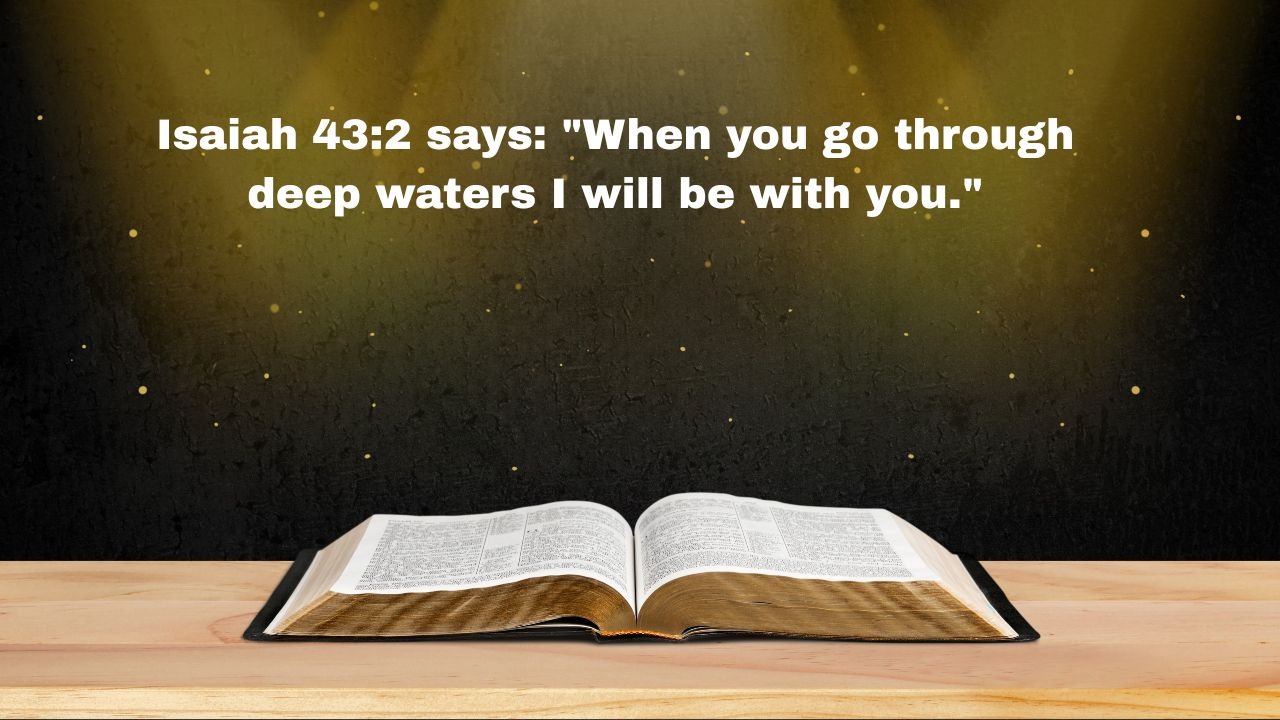
Isaiah 43:2 says: “When you go through deep waters I will be with you.”
Life brings storms. We all face deep waters at some point. This verse promises that God stays with us even in the darkest moments.
This Bible verse tattoo is popular among people who have survived difficult challenges. It serves as a permanent reminder that they were never alone.
Take the leap
Luke 1:78-79 states: “Because of the tender mercy of our God, whereby the sunrise shall visit us from on high, to give light to those who sit in darkness and in the shadow of death, to guide our feet into the way of peace.”
This longer verse talks about God’s mercy bringing light into darkness. It guides us toward peace even when we feel lost.
People who choose this faith quote often do so during times of transition. It reminds them that God guides every step.
God strengthens us
Philippians 4:13 declares: “I can do all things through Christ who strengthens me.”
This is one of the most popular Bible verse tattoos in America. It reminds us that Christ gives us strength to face any challenge.
Athletes often choose this verse. People fighting illness love it too. Anyone facing a difficult situation finds power in these words.
He creates a world
Genesis 2:7 tells us: “You make beautiful things out of dust.”
This verse comes from the creation story. It reminds us that God creates beauty from nothing. He can take our broken pieces and make something wonderful.
This faith quote tattoo is perfect for people who have rebuilt their lives. It shows that God can transform anything.
Do not fear for He is with you
Proverbs 31:25 says: “And she laughs without fear of the future.”
This verse comes from the description of a virtuous woman. It shows strength through faith. When you trust God, you don’t need to fear what’s coming.
Many women choose this Bible verse tattoo as a reminder of their courage and faith.
You are a strong woman
Proverbs 31:25 also says: “She is clothed in strength and dignity and she laughs without fear of the future.”
This fuller version adds even more power. It describes a woman who wears strength and dignity like clothing. Her faith removes her fear.
This faith quote has become extremely popular among women who want to celebrate their spiritual strength.
When you need only a reminder
Psalm 119:30 states: “I have chosen the way of faithfulness; I have set my heart on your laws.”
This verse is a personal declaration. It says I choose faith. I set my heart on God’s ways.
This Bible verse tattoo idea works well for people who want to declare their commitment to living faithfully.
Have faith in yourself
Hebrew 11:1 simply says: “Faith.”
Sometimes one word is enough. This verse defines what faith really means. It’s believing in what we cannot see.
This short faith quote tattoo is powerful in its simplicity. It reminds you daily what matters most.
Never be afraid to reflect
Psalms 93:5 tells us: “Your testimonies are very sure; Holiness adorns Your house, O Lord, forever.”
This verse talks about God’s holiness and sure promises. It reminds us to reflect on His faithfulness.
People who love deep spiritual reflection often choose this Bible verse tattoo.
Our plans may not be straight but He has given them to us
Jeremiah 29:11 promises: “For I know the plans I have for you … plans to prosper you and not to harm you, plans to give you hope and a future.”
This is one of the most beloved faith quotes for tattoos. It assures us that God has good plans for our lives. Even when our path seems unclear, He knows where we’re going.
Many people get this verse during uncertain times. It brings comfort and hope.
God will guide you
Psalms 119:105 says: “Your word is a lamp for my feet, a light on my path.”
This beautiful verse describes how God’s word guides us. Like a lamp in darkness, it shows us where to step next.
This Bible verse tattoo is popular among people who rely on scripture for daily guidance.
When He is there for you
Psalms 3:5 declares: “I need you like you would not believe.”
This honest verse expresses our deep need for God. It’s a raw, real statement of dependence on Him.
This faith quote tattoo resonates with people who have experienced God’s presence during desperate times.
He makes all things possible
Matthew 19:26 states: “With God all things are possible.”
This simple truth has encouraged millions. When something seems impossible, God can make it happen.
This Bible verse tattoo idea is perfect for dreamers and people facing huge obstacles.
Never fear with Him in your corner
Psalm 23:4 says: “I will fear no evil for you are with me.”
This verse comes from the famous Psalm 23. It reminds us that God’s presence removes fear. When He’s with us, we don’t need to be afraid.
Many people choose this faith quote after surviving dangerous or scary situations.
A little reminder
1 Corinthians 13:4-8 describes love: “Love is patient, love is kind. It does not envy, it does not boast, it is not proud. It does not dishonor others, it is not self-seeking, it is not easily angered, it keeps no record of wrongs. Love does not delight in evil but rejoices with the truth. It always protects, always trusts, always hopes, always perseveres. Love never fails.”
This longer passage defines true love. It’s often used in weddings because it perfectly describes godly love.
This Bible verse tattoo is popular among married couples and people who value love above all else.
Spread your wings and fly
Psalm 91:5 promises: “You will not be afraid of the terror by night, Or of the arrow that flies by day.”
This verse talks about protection from fear. God keeps us safe from both seen and unseen dangers.
People who choose this faith quote tattoo often pair it with wing designs.
The sky’s the limit
Isaiah 40:31 says: “He will soar on wings like eagles.”
This verse promises that those who trust God will rise above their circumstances. Like eagles soaring high, we can overcome anything.
This Bible verse tattoo idea is popular with people who have overcome major challenges.
He will bring you a safe place to run to
Psalm 91:4 promises: “He will cover you with His feathers and under His wings you will find refuge.”
This beautiful image shows God as our protector. Like a bird protecting its young, He covers us and keeps us safe.
This faith quote brings comfort to people who need to feel protected and loved.
He will make sure you are happy
Psalm 37:4 tells us: “Delight yourself in the lord; and he will give you the desires of your heart.”
This verse promises that when we put God first, He gives us what our hearts truly desire. It doesn’t mean we get everything we want. It means our desires align with His will.
This Bible verse tattoo is popular among people who trust God’s timing.
A lovely flower
Psalm 91:4 repeats: “He will cover you with his feathers, and under his wings you will find refuge; his faithfulness will be your shield and rampart.”
This fuller version adds more detail about God’s protection. His faithfulness acts as our shield.
Many people combine this faith quote tattoo with flower or feather designs.
A reminder that he will get you through tough times
Psalm 23:4 says again: “I will fear no evil, for thou art with me.”
This powerful declaration appears twice in our list because it’s so meaningful. It states clearly that God’s presence removes fear.
This Bible verse tattoo idea never gets old. Its truth remains constant.
He will never leave you stranded
Hebrews 13:5 promises: “I will never leave you or forsake you.”
This is one of God’s most comforting promises. He will never abandon us. No matter what we do or what happens, He stays.
This faith quote tattoo brings peace to people who fear being alone.
True love lasts forever
1 Corinthians 13:8 simply states: “Love never ends.”
From that famous love chapter, this short phrase captures everything. God’s love is eternal. True love never dies.
This Bible verse tattoo is perfect for memorials or wedding commemorations.
Your heart is open to God
Psalm 73:26 says: “My health may fail and my spirit may grow weak, but God remains the strength of my heart; He is mine forever.”
This verse acknowledges that our bodies and spirits may weaken. But God remains our strength. He is ours forever.
This faith quote resonates with people facing health challenges or aging.
When He saves you
Ephesians 2:8 teaches: “Saved by grace.”
These three simple words capture the entire gospel message. We are saved by God’s grace, not by anything we’ve done.
This short Bible verse tattoo packs enormous meaning into very few words.
His grace is your grace
John 1:16 declares: “Grace upon grace.”
This beautiful phrase describes how God’s grace multiplies. He doesn’t give us just one measure of grace. He piles grace upon grace upon grace.
This faith quote tattoo reminds us that God’s mercy never runs out.
Be still and know
Psalm 46:10 says: “Be still, and know that I am God.”
This verse reminds us to stop and rest in God’s presence. We don’t always need to do something. Sometimes we just need to be still and remember who God is.
This Bible verse tattoo idea is perfect for people who struggle with anxiety or constant busyness. It’s a call to peace and trust.
Final Thoughts on Faith Quote Tattoos
Bible verse tattoos are more than just body art. They are permanent reminders of God’s promises. They are declarations of faith that you carry with you always.
Choosing the right faith quote for a tattoo is an important decision. Take your time. Pray about it. Ask God to show you which verse speaks most deeply to your heart.The 30 Bible verse tattoo ideas in this list cover many themes. Love, strength, protection, guidance, hope, and peace. One of these verses might be exactly what you need.


Hey there, parents and teens juggling the demands of secondary school—let’s have an honest chat about learning Chinese. In places like Singapore where Mandarin is a must-pass subject, or anywhere else where strong Chinese skills open doors to better opportunities, this question pops up a lot: Is it worth paying for extra tuition, or should your teen just go the self-study route? It’s a tough call, especially with exams looming, CCAs piling up, and the endless pull of TikTok and friends. In this article, I’ll break down both options fairly, share some real insights, and help you decide what might suit your teen best. Truth is, there’s no perfect answer for everyone, but getting the details right can change everything.
What Secondary Chinese Tuition Really Offers
Secondary Chinese tuition usually means structured classes outside school hours. These could be group sessions at popular centers or private one-on-one lessons with a tutor who knows the MOE syllabus inside out. The focus is often on the big pain points: tough comprehension passages, essay writing, oral exams, and building vocabulary with all those idioms and proverbs.
The biggest draw? Expert guidance. Tutors have years of experience spotting common mistakes and explaining tricky concepts in simpler ways. For many teens, the leap from primary to secondary Chinese feels huge—the texts get longer, the language more formal, and the expectations higher.
I know a Sec 2 boy who was barely passing Chinese until his parents signed him up for weekly Secondary Chinese Tuition. The tutor gave him personalized drills on composition structures and instant feedback on his speaking. By mid-year, his grades jumped from C6 to B3. Mock papers and exam techniques are another huge plus—things self-learners often miss. And let’s not forget the built-in accountability: having to attend class keeps procrastination at bay.
The Downsides of Tuition
Of course, it’s not perfect. Tuition costs money—sometimes a lot—and it adds more hours to an already packed schedule. Teens can end up feeling exhausted rather than energized. Burnout is real when you’re rushing from school to tuition to homework.
Quality varies too. Some centers pack in too many students, so it feels like just another classroom. If the tutor isn’t engaging or doesn’t click with your teen, the sessions can become a chore. Worst case, it reinforces the idea that Chinese is boring and forced, rather than something useful or enjoyable.
The Appeal of Self-Study
Self-study flips the script entirely. Your teen takes charge, using school textbooks, online resources, apps, YouTube videos, Chinese dramas, or even music and podcasts. It’s flexible, mostly free, and lets them learn at their own speed.
For motivated teens, this approach can be incredibly powerful. One girl I heard about ditched tuition because it felt too rigid. Instead, she built her own system: daily Anki flashcards for characters, writing practice with online model answers, and speaking aloud while watching her favorite C-dramas. She ended up scoring A1 for O-levels and gained confidence that helped in other subjects too.
Self-study builds real independence. Teens learn how to find resources, track their progress, and adjust when something isn’t working—skills that pay off long after exams.
Challenges of Going Solo
That said, self-study isn’t easy for everyone. Without a clear structure, it’s tempting to skip the hard parts and only do what’s fun. Many teens start strong but fizzle out when they hit a wall—like struggling with listening comprehension or formal email writing.
There’s no one to correct mistakes immediately, so bad habits can stick. For students who already find Chinese tough, or those with learning challenges, going it alone can widen the gap rather than close it.
Key Factors to Consider
So, which path is better? It really depends on your teen. Here are the main things to think about:
Motivation and Personality
If your teen needs external nudges and thrives in structured settings, tuition’s accountability can work wonders. But if they’re naturally driven and hate being told what to do, self-study lets that inner motivation shine.
Current Skill Level
Struggling students often need the targeted help tuition provides. Stronger ones might find self-study enough to fine-tune their skills without unnecessary repetition.
Time and Budget
Tuition requires regular slots in the calendar and a monthly fee. Self-study is far cheaper but demands serious self-discipline.
Support at Home
If you or someone at home can guide practice sessions, self-study becomes much stronger. Otherwise, tuition fills that guidance role.
The Hybrid Option: Best of Both Worlds
Many families find success by combining the two. Use tuition for building core foundations and exam techniques, then supplement with self-study for immersion—watching shows, reading comics, or chatting on language apps. This keeps learning balanced and prevents overload.
Final Thoughts
At the end of the day, whether you choose tuition, self-study, or a mix, consistency matters most. Help your teen see Chinese not just as a school subject, but as a skill that connects them to culture, travel, and future careers.
Talk to your teen openly. Maybe try a few tuition trial lessons or a new study app together. See what sparks interest and delivers results. The best method is the one that turns reluctance into real progress—and maybe even enjoyment.What’s your experience been like? Tuition warrior or self-study champion? Every teen is different, but finding the right fit makes all the difference.

5 Trusted Websites to Book Online Puja in the USA

The Ultimate PayPal Chargeback Protection Checklist for Merchants

Lisa Rinna Age: Biography, Career Milestones, and Life at 60+

Carolin Bacic: Life, Biography, Family, and Legacy

Christine Williamson: A Rising Star in Sports Journalism

Dame Esther Rantzen: Life, Career, and Legacy of a British Broadcasting Icon
-
 Celebrity6 months ago
Carolin Bacic: Life, Biography, Family, and Legacy
-
 Celebrity12 months ago
Christine Williamson: A Rising Star in Sports Journalism
-
 Celebrity4 weeks ago
Dame Esther Rantzen: Life, Career, and Legacy of a British Broadcasting Icon
-

 Celebrity5 months ago
Dani Daniels: A Complete Biography of the Artist, Media Personality, and Entrepreneur
-

 Celebrity1 year ago
Berniece Julien: A Comprehensive Biography2025
-

 Celebrity4 months ago
Juan Gabriel: The Legendary Life of El Divo de Juárez
-

 Celebrity4 months ago
Is Brenda Lee Still Alive? The Timeless Voice Behind “Rockin’ Around the Christmas Tree”
-

 Celebrity4 months ago
Eleonora Incardona: Biography, Career, Age, Boyfriend, Net Worth & Lifestyle (2025)