
Life Style
Transform Your Entryway on a Budget: How a Console Table and Shoe Storage Bench Can Change Everything

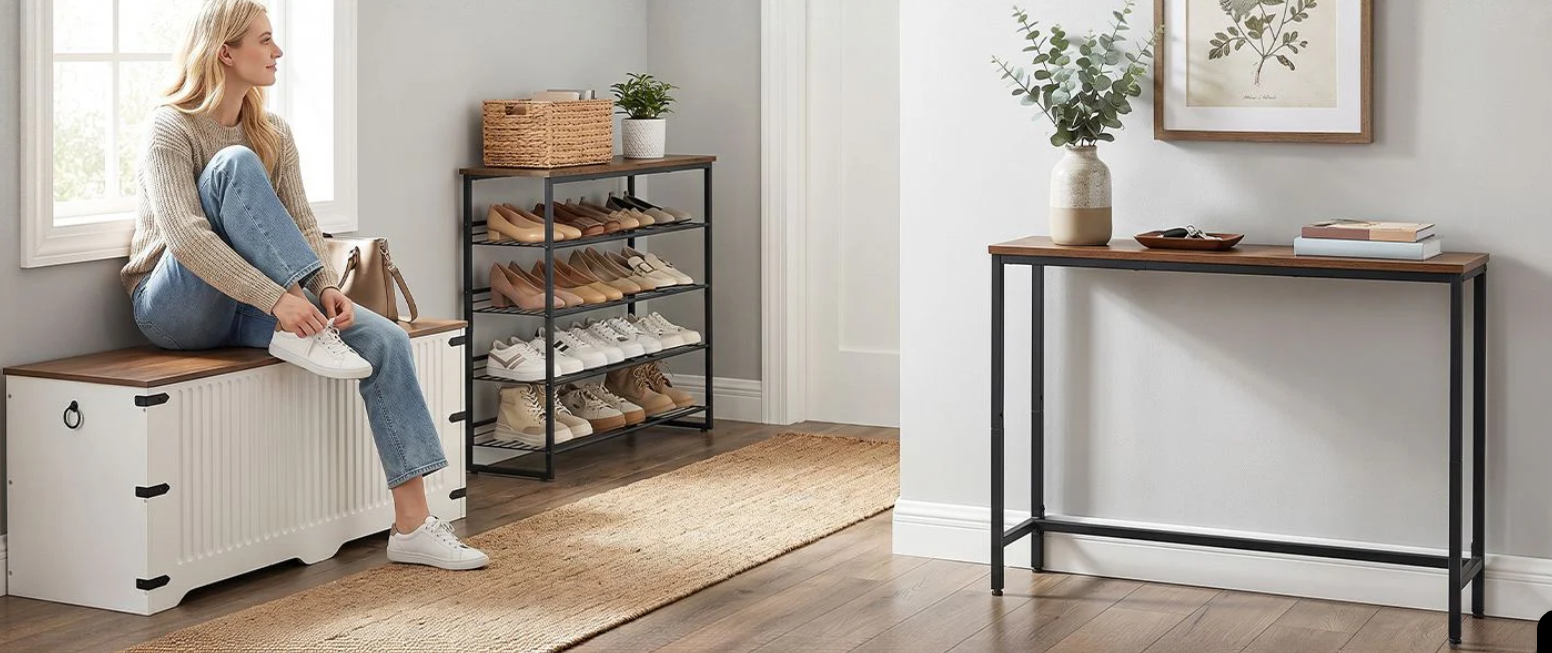
We all know the feeling. You walk through your front door after a long day, and you’re immediately greeted by a pile of shoes, coats thrown over the banister, and bags dumped on the floor. It’s not the welcome anyone wants, but the good news is that sorting out your entryway doesn’t have to cost a fortune. With just a couple of smart furniture choices, you can completely transform the feel of your home from the moment you step inside.
The entryway is often the most ignored room in a British home. We spend money on living rooms and kitchens, but the hallway tends to get left behind. That’s a shame, because it’s the very first thing you see when you come home, and it’s also the first impression guests get of your space. Getting it right doesn’t mean spending thousands. It means being smart with what you choose to put there.
One of the easiest and most affordable ways to sort out a messy entryway is by adding a shoe storage bench. This one piece of furniture does two jobs at once. First, it gives you somewhere to sit while you’re putting on or taking off your shoes, which sounds simple but makes a massive difference day to day. Second, it hides away all those trainers, boots, and sandals that tend to pile up near the front door. Instead of a jumbled mess on the floor, everything has a place. Most shoe storage benches available in UK furniture shops come with either drawers, open cubbies, or lift-up seats, so you can choose whichever style suits your household best.
Now pair that with a console table, and your entryway starts to look genuinely stylish. A console table sits neatly against the wall and doesn’t take up much floor space, which is ideal if your hallway is on the narrower side. It gives you a surface to drop your keys, leave the post, or display a vase of flowers. The trick is to keep the top of the console table fairly clear. Just one or two decorative items and a practical tray for keys and loose change. If it gets too cluttered, it starts to feel messy again.
When it comes to layout, put your shoe storage bench along one wall and the console table either opposite or beside it, depending on the width of your hallway. If space is really tight, a slim console table that’s no deeper than 25 to 30 centimetres will barely take up any room at all. Look for one with a lower shelf, which gives you extra storage space for baskets or boxes without adding any extra furniture.
Lighting also makes a big difference in a hallway. Many British homes have quite dark entryways, especially in older terraced or semi-detached properties. A small lamp on the console table can warm the whole space up immediately. Battery-operated lamps are a great option if you don’t have a plug nearby.
Don’t underestimate the power of a doormat either. A good-quality mat at the front door keeps dirt and mud from being tracked through the house, and it also signals to guests that this is a cared-for home. Pair it with a hook rail above the shoe storage bench for coats, bags, and umbrellas, and you’ve got a fully functioning entryway that’s both practical and good looking.
The goal is to create a space that works for your actual life. If you have kids, make sure the shoe storage bench has enough capacity for multiple pairs of shoes. If you live alone, a smaller unit will do just fine. Think about what causes the most mess in your entryway right now, and choose furniture that solves exactly that problem.
Transforming your entryway doesn’t have to be a big project. Start with a shoe storage bench and a console table, and see how much of a difference those two pieces alone can make. You might be surprised at how much better your whole home feels when the first space you walk into is tidy, welcoming, and properly set up for real life.



If you’ve been searching for an abaya that actually fits your life — not just your measurements — the Rue Haya abaya collection is worth a close look. Designed for women who want sophistication without compromise, every piece in the collection is built around a simple premise: modesty and elegance aren’t opposites. They’re the same thing, done right.
Here’s a complete look at the styles available, the details that set each one apart, and how to choose the right abaya for what you actually need.
Open Abayas: Effortless Layering, Maximum Versatility
The open abayas at Rue Haya are the collection’s most versatile category — and for many women, the most-reached-for. Worn like a long coat or duster over your outfit, abayas open at the front give you full coverage while keeping whatever you’re wearing underneath visible and part of the look.
The Suhaila Satin Open Abaya collection is where this style shines brightest. Available in Champagne Gold, Soft Pistachio, Rose Gold, and Soft Ivory, these flowy abaya styles drape beautifully in a silky satin that moves with every step. The Champagne Gold and Rose Gold options are particularly striking for special occasions, while the Soft Ivory and Pistachio work effortlessly for both everyday wear and daytime events.
For a more structured take on abayas open, the Naima Contrast Trim Structured Knit Abaya in Black pairs a relaxed open silhouette with a clean white contrast trim — graphic, modern, and completely wearable across seasons.
The Rimal Soft Crepe Open Abaya in Soft Peach Floral and Soft Blush Floral bring something softer to the open abaya category — printed crepe in delicate colorways that work beautifully for garden events, Eid gatherings, or spring outings.
Closed Abayas: Clean Lines, No-Fuss Elegance
For women who prefer a seamless silhouette, the closed abaya delivers exactly that. No front opening, no layering required — just a clean, unbroken line from shoulder to hem that looks polished with almost no effort.
The Layal Noir Soft Crepe Abaya is the standout in this category. A quietly refined closed abaya in soft crepe, available in Black, Off White, Navy, and Beige. The Black and off white abaya versions are particularly striking: the Black features a crisp white contrast trim that creates a sharp, editorial look, while the white abaya dress version reverses that contrast with black trim on an ivory base.
This is the style to reach for when you want your abaya to do the work — when you want to walk in looking completely put-together with minimal effort. Pair the black with heeled mules; the off white with gold jewelry and a soft chiffon hijab.
Two-Piece Abayas: Style That Works Harder
The two piece abaya is one of the most exciting developments in modest fashion — and the Rue Haya abaya collection has invested deeply in this category.
The Samira Embroidered Crepe Abaya Set is the flagship two-piece in the collection, currently on sale. Available in Black, Navy, Olive Green, and Spiced Red, each set features delicate embroidery detail that elevates a classic silhouette into something genuinely special. Worn together, they read as one seamless look; separately, each piece can be styled with other items in your wardrobe.
For a more relaxed two-piece aesthetic, the Hind Lightweight Silk Two-Piece Abaya Set is the go-to. Available in Mocha Brown, Black, Denim Blue & Nude, Emerald & Nude, and Burgundy & Nude — each set features a belted waist that adds structure without stiffness. The chocolate brown abaya version in Mocha Brown is a particularly strong seller, offering a rich warm tone that works across seasons and skin tones.

The Majda Sheer Organza Abaya Set takes two-piece styling into more formal territory — a sheer organza outer layer over a matching inner piece, available in Gold & Black, Lavender & Black, Navy & Black, and Beige & Black. These are the sets for weddings, formal occasions, and events where you want to arrive and be remembered.
Special Styles Worth Knowing

The Keffiyeh Abaya
One of the most meaningful pieces in the collection is the keffiyeh abaya — an abaya that incorporates keffiyeh-inspired embroidery or pattern detailing as a quiet but powerful nod to Palestinian heritage. For the Rue Haya brand, founded by a Palestinian-American-Canadian family, this piece carries particular significance. It’s a wearable expression of identity, and it’s designed to be worn with pride.
The Chocolate Brown Abaya
Rich, warm, and endlessly wearable — the chocolate brown abaya has become one of the most requested tones in modest fashion. The Hind Lightweight Silk Two-Piece Abaya Set in Mocha Brown and the Suhaila Draped Satin Open Abaya in Cocoa Brown both deliver this colorway beautifully. Neither is a flat brown — both carry a warmth and depth that photograph well and work across a wide range of hijab colors.
The Black Abaya Dress
The black abaya dress needs no introduction — it’s the wardrobe constant that every collection is measured against. In the Rue Haya abaya collection, the Samira Embroidered Crepe Abaya Set in Black, the Layal Noir Soft Crepe Abaya in Black, and the Aya Royalty Crepe Abaya Set in Black each offer something different: embroidered detail, clean minimalism, and structural elegance respectively.
Prayer Abayas
For women who use their abaya as a prayer abaya — wearing it both as an outer garment and for salah — look for styles in softer, more flexible fabrics with relaxed cuts that allow full freedom of movement through every position of prayer. The Suhaila Satin Open Abaya styles and the Layal Noir Closed Abaya in crepe are both well-suited for this purpose, with fabrics that move naturally and cuts generous enough for complete modesty during prayer. For dedicated prayer garments, the Rue Haya prayer wear collection offers purpose-built options.
How to Choose Your Rue Haya Abaya
The right Rue Haya abaya comes down to how you live and what you need it for.
For daily ease and layering flexibility → open abayas in satin or crepe. For clean, effortless elegance with no layering → closed abaya in soft crepe. For styling range and fashion versatility → two piece abaya sets in silk or embroidered crepe. For formal and special occasions → the Majda Organza or Sabeel Embroidered Chiffon sets. For warm tones that work year-round → the chocolate brown abaya in silk or satin. For a white abaya dress or off white abaya with contrast trim → the Layal Noir in Off White.
Browse the complete Rue Haya abaya collection — 66 pieces across open, closed, and two-piece styles, designed for women who refuse to choose between their values and their wardrobe.

Finding someone you trust to care for your children can be one of the more difficult decisions a parent makes. A babysitter may be responsible for meals, playtime, bedtime routines, and responding appropriately when unexpected situations arise.
For that reason, finding childcare should involve more than simply choosing the first available person.
Parents can make the process easier by establishing their requirements in advance, checking a babysitter’s experience, asking appropriate questions, and making sure both the caregiver and child are comfortable with the arrangement.
Decide What Type of Childcare You Need
Start by considering why you need a babysitter and how frequently you expect to use the service.
Some families only require occasional childcare for evenings or appointments. Others may need someone several times each week while parents are working.
The age of your child matters too. Looking after a school-age child can involve different responsibilities from caring for an infant.
Write down the expected hours, children’s ages, routines, and any important requirements before beginning your search.
Look for Relevant Childcare Experience
Experience should be relevant to your family’s circumstances.
If you have an infant, ask whether the babysitter has previously cared for babies. Families with several children may want someone comfortable supervising multiple age groups simultaneously.
Parents should also ask about previous responsibilities rather than simply asking how many years someone has worked as a babysitter.
Someone with the right type of experience may be a better fit than a person with more general childcare experience.
Use Appropriate Sources
Personal recommendations can be useful, particularly when they come from parents you know and trust. Professional babysitting services provide another option.
For families trying to find trusted babysitters in Dubai, using a service that works with licensed babysitting agencies and trained caregivers can provide a more structured way of arranging childcare. ServiceMarket states that the babysitters available through its partner agencies have childcare experience and professional training, including first aid and Basic Life Support.
Whatever method you use, avoid treating availability as the only selection criterion.
Interview Potential Babysitters
Speaking with a prospective babysitter gives you an opportunity to determine whether they understand your expectations.
Ask about their childcare experience, the ages they have previously cared for, and how they approach common situations.
You might discuss how they would handle a child who refuses to go to bed, becomes upset when a parent leaves, or does not want to eat.
The objective is not to catch someone out with difficult questions. It is to understand how they think and whether their approach is compatible with yours.
Ask About Emergency Preparedness
Emergencies are unlikely, but caregivers should know how to respond appropriately if something unexpected happens.
Ask about relevant first-aid training and what the babysitter would do in an emergency.
Leave clear emergency contact information whenever somebody else is caring for your children.
Parents should also explain anything specific to their child that the caregiver needs to know.
Explain Your Child’s Routine
Children often feel more comfortable when familiar routines continue while their parents are away.
Explain normal meal times, activities, bedtime routines, and household rules.
If your child is allowed a certain amount of screen time, make that clear. The same applies to snacks, homework, outdoor play, and bedtime.
Written instructions can be useful, particularly during the babysitter’s first few visits.
Discuss Allergies and Other Important Information
Never assume a babysitter knows about a child’s individual requirements.
Parents should clearly communicate allergies, dietary restrictions, relevant medical information, and other essential instructions.
Show the babysitter where important supplies are located and make sure emergency contact details are easy to find.
If a child has requirements that need specialist attention, make sure the caregiver has the appropriate qualifications and experience.
Introduce the Babysitter to Your Child
Whenever practical, allow your child to meet a new babysitter before leaving them together for an extended period.
Observe how they interact.
A good babysitter should be able to communicate appropriately with the child rather than focusing exclusively on the parents.
Some children need time to become comfortable with someone new, so an initially quiet reaction does not necessarily indicate a poor match.
Establish Clear Household Rules
Different households have different expectations.
Explain which rooms can be used, whether visitors are permitted, what food is available, and any rules regarding phones or other devices while the babysitter is responsible for the children.
Clarity prevents misunderstandings.
You should also discuss whether the caregiver is expected to perform tasks beyond direct childcare. Do not assume additional household duties are included unless they have been agreed upon.
Make Communication Easy
Both parents and babysitters should know how to contact each other.
Tell the caregiver where you will be and approximately when you expect to return.
Parents may also want occasional updates, particularly when using a new babysitter. Agree on what is reasonable beforehand rather than repeatedly contacting the caregiver throughout the evening.
Good communication should provide reassurance without making it difficult for the babysitter to focus on the children.
Review the Experience Afterwards
When you return home, ask how everything went.
Speak to the babysitter about meals, activities, bedtime, and anything unusual that happened.
You can also ask your children about their experience in an age-appropriate way.
If everyone was comfortable and the babysitter followed your instructions, you may have found someone worth booking again.
Consistency can be valuable because children often become more comfortable with caregivers they already know.
Final Thoughts
Finding a babysitter requires a balance between practical requirements and personal trust.
Experience, training, communication, availability, and compatibility with your children should all be considered before making a decision.
Taking time to evaluate potential caregivers can make childcare arrangements more comfortable for parents, children, and babysitters alike.
Frequently Asked Questions
What should I look for when choosing a babysitter?
Look for relevant childcare experience, appropriate training, good communication, reliability, and an approach that suits your family’s expectations.
Should I interview a babysitter first?
An interview can help you understand the caregiver’s experience and approach to childcare before leaving your children in their care.
What information should I give a babysitter?
Provide emergency contacts, children’s routines, allergies or relevant health information, household rules, meal instructions, and other information necessary to care for your children safely.
Can I hire a babysitter for only a few hours?
Yes. Part-time babysitting services can be appropriate when parents need childcare for particular periods rather than a full-time nanny. ServiceMarket, for example, offers bookings between four and 12 hours.
Is it better to use the same babysitter regularly?
Using the same caregiver can provide consistency and allow the babysitter to become familiar with your child’s personality and routines, subject to availability.


Introduction
Physical activity plays an important role in maintaining health, mobility, and overall quality of life as people age. Regular movement supports strength, flexibility, balance, and cardiovascular wellness, all of which contribute to greater independence and confidence in daily life. For retirees, staying active is often a key factor in enjoying a fulfilling and rewarding lifestyle.
Independent living communities are uniquely positioned to support healthy aging through fitness opportunities, recreational activities, and wellness-focused amenities. These communities provide residents with convenient access to programs that encourage movement while fostering social connections and personal enjoyment. By making physical activity a natural part of everyday life, independent living can help residents maintain both their health and their independence.
Fitness Opportunities Designed for Older Adults
One of the most significant benefits of independent living communities is the availability of fitness programs tailored specifically to older adults. Unlike traditional gyms that may feel intimidating or overwhelming, independent living communities often offer exercise options that are both accessible and appropriate for a wide range of fitness levels.
Residents may participate in group fitness classes, yoga sessions, stretching programs, water aerobics, or strength-training activities designed to improve mobility and reduce the risk of injury. Professional instructors often lead these programs, ensuring exercises are performed safely and effectively.
Because activities are structured with seniors in mind, participants can focus on improving their health without feeling pressured to compete with others. This supportive environment encourages consistency, which is often one of the most important factors in maintaining long-term fitness.
Walking and Outdoor Activities Encourage Daily Movement
Walking remains one of the simplest and most effective forms of exercise for older adults. Many independent living communities feature walking paths, landscaped grounds, gardens, and outdoor gathering areas that make it easy for residents to incorporate movement into their daily routines.
A morning walk can help boost energy levels, improve circulation, and provide a positive start to the day. Afternoon strolls with neighbors can combine physical activity with social engagement, creating an enjoyable experience that supports both physical and emotional well-being.
Many retirees seeking active independent living in Naples, FL, are attracted to communities that offer outdoor amenities and opportunities to enjoy favorable weather throughout much of the year. Access to safe and attractive outdoor spaces can make regular physical activity feel less like exercise and more like a natural part of everyday living.
Social Activities Help Keep Residents Moving
Physical activity is often easier to maintain when it includes a social component. Independent living communities frequently organize group events that encourage movement while bringing residents together. Activities such as dance classes, pickleball games, gardening clubs, walking groups, and recreational sports provide opportunities to stay active in a fun and engaging setting.
These shared experiences create accountability and motivation. Residents are often more likely to participate regularly when they know friends and neighbors will be joining them. The social interactions associated with these activities can also contribute to greater happiness and a stronger sense of community.
In many cases, residents discover new hobbies and interests after moving into independent living. Whether learning a new sport or participating in a group fitness challenge, these opportunities help make an active lifestyle both enjoyable and sustainable.
The Connection Between Physical and Mental Wellness
Physical activity provides benefits that extend far beyond the body. Regular exercise has been associated with improved mood, reduced stress, better sleep quality, and enhanced cognitive function. For retirees, these benefits can contribute significantly to overall quality of life.
Independent living communities often recognize the strong relationship between physical and mental wellness. As a result, many wellness programs take a holistic approach that combines exercise with educational opportunities, social engagement, and healthy lifestyle practices.
Activities that promote both movement and mental stimulation can be especially valuable. Classes that involve coordination, strategy, or learning new skills may support cognitive health while keeping residents physically engaged. The result is a more balanced approach to wellness that supports multiple aspects of healthy aging.
Creating Sustainable Healthy Habits
One challenge many people face when trying to stay active is maintaining consistent habits. Independent living communities help address this issue by making wellness resources readily accessible. When fitness classes, walking paths, and recreational opportunities are just steps away, it becomes easier to incorporate activity into daily life.
The convenience of on-site amenities eliminates many common barriers to exercise. Residents do not need to drive long distances to a fitness center or coordinate complicated schedules. Instead, opportunities for movement are integrated into the community environment.
This accessibility often leads to greater participation and long-term success. Small, consistent efforts can produce meaningful health benefits over time, helping residents maintain their independence and enjoy a more active retirement.
Conclusion
Staying physically active is one of the most effective ways for older adults to support their health, mobility, and overall well-being. Independent living communities create an environment where exercise and wellness become natural parts of everyday life through fitness programs, outdoor spaces, social activities, and convenient amenities.
By encouraging regular movement and providing opportunities for engagement, these communities help residents maintain healthy habits that can enhance both physical and emotional wellness. An active lifestyle not only supports independence but also contributes to a more fulfilling retirement experience, allowing residents to enjoy each day with greater energy, confidence, and purpose.



-

 Celebrity1 year ago
Carolin Bacic: Life, Biography, Family, and Legacy
-

 Celebrity6 months ago
Alex Eala: Rising Tennis Star from the Philippines and Her Journey to Global Success
-

 Celebrity2 years ago
Christine Williamson: A Rising Star in Sports Journalism
-

 Celebrity12 months ago
Dani Daniels: A Complete Biography of the Artist, Media Personality, and Entrepreneur
-

 Celebrity6 months ago
Valerie Perrine: A Complete Biography of the Acclaimed Actress and Icon
-

 Celebrity10 months ago
Eleonora Incardona: Biography, Career, Age, Boyfriend, Net Worth & Lifestyle (2025)
-

 Celebrity2 years ago
Vera Davich: Biography, Life, and Legacy2025
-

 Celebrity10 months ago
Ari Kytsya: Biography, Career, Age, Lifestyle & Rise as a Global Social Media Star