
Business
Custom Flame-Resistant Clothing with Embroidery for Safety & Branding

Why Custom Flame-Resistant Clothing Is Essential for Industrial Businesses
Industrial and utility workplaces face constant risks from heat, flames, and electrical hazards every day. Workers need protection that goes beyond standard uniforms and basic workwear. Custom flame-resistant clothing provides advanced protection while aligning with company-specific needs and branding goals.
Flame-resistant garments are designed to self-extinguish and prevent burns during sudden exposure to fire. This makes them essential for industries like oil and gas, construction, manufacturing, and electrical services. Businesses that invest in high-quality FR clothing reduce workplace injuries and improve employee confidence.
Custom options allow businesses to select the right fit, fabric, and features based on their working environment. This ensures better comfort and performance for workers who wear these garments for long hours. When safety meets customization, companies build a strong and reliable workforce image.
The Growing Demand for Custom FR Apparel in 2026
The demand for custom flame-resistant clothing continues to rise as workplace safety regulations become stricter. Companies are now more aware of compliance standards and the importance of protective apparel. This shift is driving businesses to invest in certified and customized FR solutions.
Modern businesses also want their teams to look professional while staying protected. Branded safety apparel helps companies stand out in competitive industries. It also improves team identity and strengthens brand visibility on job sites.
With the rise of bulk ordering and customization services, companies can now scale their safety programs easily. Custom FR clothing is no longer a luxury but a necessity for businesses that prioritize safety and branding together.
Key Features of High-Quality Flame-Resistant Clothing
High-quality flame-resistant clothing includes several important features that ensure maximum protection and durability. These features help workers stay safe without compromising comfort or performance.
- Self-extinguishing fabric that reduces burn injury risks
- Heat and flame resistance for hazardous environments
- Durable stitching for long-term use
- Breathable materials for comfort during long shifts
- Compliance with safety standards like ASTM and NFPA
- Moisture-wicking properties to keep workers dry
These features make FR clothing suitable for demanding work conditions. Businesses should always choose certified garments that meet industry safety requirements.
Why Custom Embroidery Matters for FR Workwear
Custom embroidery services plays a key role in transforming safety apparel into branded workwear. It allows businesses to display their logo, team names, or departments directly on garments. This adds a professional and organized look to the workforce.
Embroidery is known for its durability and premium appearance. Unlike printed designs, embroidered logos do not fade easily over time. This makes them ideal for long-term use in industrial environments.
However, it is important to apply embroidery correctly on flame-resistant garments. Improper stitching or materials can affect the safety performance of the clothing. Businesses should always work with experienced providers who understand FR compliance requirements.
Embroidery vs Screen Printing vs Heat Transfer for FR Clothing
Choosing the right customization method is important when working with flame-resistant clothing. Each method offers unique benefits based on the design and application.
Embroidery provides a premium and durable finish. It works best for logos placed on the left chest or sleeves. However, large embroidery designs can affect fabric flexibility.
Screen printing is a better option for larger designs and graphics. It maintains the integrity of the garment when done using FR-approved inks. This method is cost-effective for bulk orders.
Heat transfer offers flexibility for detailed designs and smaller batches. It is suitable for quick turnaround orders but must use heat-resistant materials.
Businesses should choose the method that balances safety, durability, and branding needs effectively.
Compliance and Safety Standards You Must Follow
Flame-resistant clothing must meet strict safety standards to ensure proper protection. Businesses cannot compromise on compliance when selecting FR apparel.
ASTM F1506 and NFPA 2112 are two key standards that define performance requirements for flame-resistant garments. These standards ensure that clothing can withstand heat exposure and reduce burn injuries.
Choosing compliant clothing protects workers and helps businesses avoid legal risks. It also shows a commitment to safety and responsibility. Companies should always verify certifications before placing bulk orders.
How Custom FR Clothing Enhances Brand Identity
Custom flame-resistant clothing is not just about safety. It also plays a strong role in building brand identity in industrial environments. Workers become brand ambassadors when they wear branded uniforms on-site.
Consistent branding across teams creates a professional image for clients and stakeholders. It also helps businesses stand out in competitive industries. Custom logos and colors make teams easily recognizable and organized.
Branded FR apparel also builds trust among customers. It shows that the company values both safety and presentation. This combination strengthens long-term business relationships.
Benefits of Bulk Ordering Custom Flame-Resistant Clothing
Bulk ordering is the most efficient way for businesses to manage safety apparel needs. It ensures consistency in quality, design, and branding across the workforce.
Bulk orders also reduce the cost per unit, making it a cost-effective solution for large teams. Businesses can plan inventory better and avoid last-minute shortages.
Another advantage is faster production and delivery timelines. Established suppliers can handle bulk customization efficiently without compromising quality. This helps companies meet urgent requirements and deadlines.
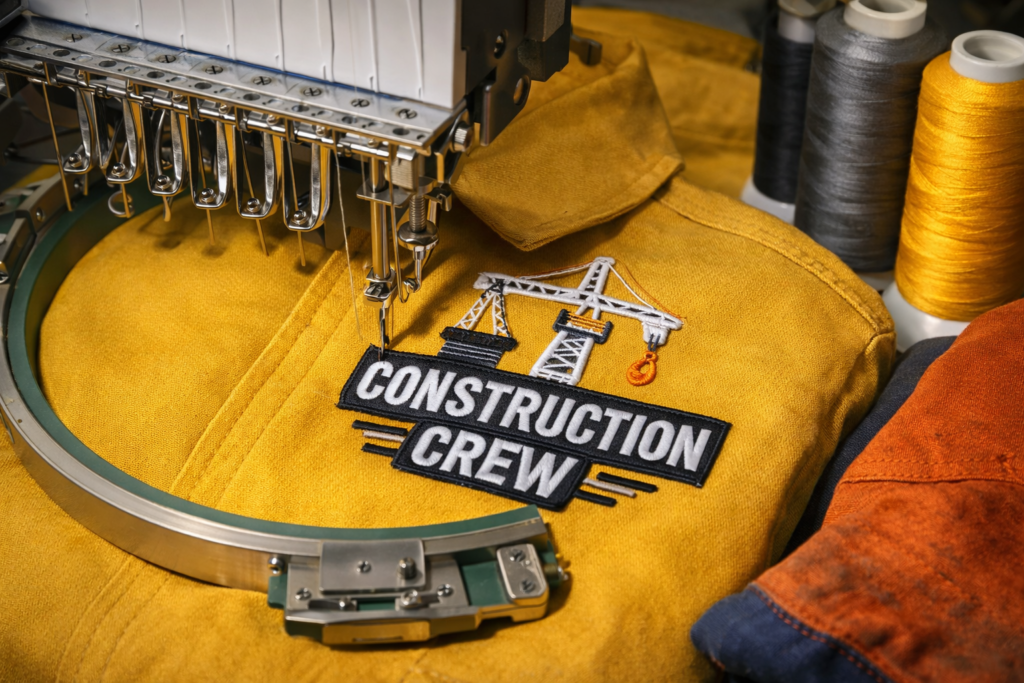
Image Alt Tag: custom flame-resistant clothing, custom embroidery services
Industries That Need Custom Flame-Resistant Clothing
Several industries rely heavily on flame-resistant clothing to ensure worker safety and compliance. These industries face high-risk environments where protective gear is essential.
- Oil and gas industry
- Electrical and utility services
- Construction and infrastructure projects
- Manufacturing and heavy industries
- Welding and fabrication businesses
Each of these industries requires specific FR solutions based on their working conditions. Customization helps meet these unique requirements effectively.
Choosing the Right Provider for Custom FR Apparel
Selecting the right provider is critical when ordering custom flame-resistant clothing. Businesses should look for suppliers who understand both safety standards and customization techniques.
An experienced provider ensures that all garments meet compliance requirements while maintaining high-quality branding. They also offer guidance on the best customization methods for FR clothing.
Reliable providers offer fast turnaround times, bulk pricing options, and consistent product quality. This helps businesses streamline their ordering process and maintain safety standards.
Why The Apparel Factory Is a Trusted Choice for Custom FR Clothing
The Apparel Factory offers reliable solutions for businesses looking for custom flame-resistant clothing and custom embroidery services. With a focus on quality and compliance, they provide garments that meet industry standards.
Their expertise in screen printing, embroidery, and heat transfer ensures that branding does not compromise safety. Businesses can customize their FR apparel with confidence and precision.
The Apparel Factory also supports bulk orders with competitive pricing and efficient delivery timelines. This makes them a strong partner for companies that need scalable and reliable solutions.
Verdict: Invest in Safety and Branding Together
Custom flame-resistant clothing is a smart investment for businesses operating in high-risk environments. It protects workers while enhancing brand visibility and professionalism.
By combining safety with customization, companies create a strong and reliable workforce image. Choosing the right materials, compliance standards, and customization methods ensures long-term performance.
Businesses that prioritize both safety and branding gain a competitive advantage in their industry. Now is the time to upgrade your workwear with custom FR solutions that deliver real value.
Upgrade Your Team’s Safety Today
Protect your workforce and strengthen your brand with custom flame-resistant clothing. Choose reliable solutions that meet safety standards and deliver professional results. Partner with The Apparel Factory today and place your bulk order with confidence.
FAQs
What is flame-resistant clothing?
Flame-resistant clothing is designed to resist ignition and self-extinguish to reduce burn injuries.
Who needs flame-resistant clothing?
Workers in oil, gas, electrical, construction, and manufacturing industries need FR clothing for safety.
Can flame-resistant clothing be customized?
Yes, FR clothing can be customized using embroidery, screen printing, and heat transfer methods.
Does embroidery affect flame-resistant clothing?
If done incorrectly, it can affect safety. Always use FR-compliant embroidery techniques.
What standards should FR clothing meet?
FR clothing should meet ASTM F1506 and NFPA 2112 safety standards.
Is screen printing safe for FR garments?
Yes, if FR-approved inks and methods are used during the printing process.
Why is custom FR clothing important for businesses?
It improves safety, ensures compliance, and enhances brand identity on job sites.
How long does custom FR clothing last?
High-quality FR garments can last a long time with proper care and maintenance.
Can small businesses order custom FR clothing in bulk?
Yes, many suppliers offer bulk ordering options with competitive pricing for small businesses.
What is the best customization method for FR apparel?
It depends on the design. Embroidery is best for logos, while screen printing suits larger graphics.



Image Credit: Unsplash
Renting can feel like a maze of paperwork and legal terms. For both landlords and tenants, getting the documents right from the start is the best way to ensure a smooth, conflict-free tenancy. A misplaced form or a misunderstood clause can lead to a lot of stress and financial loss later on. This guide breaks down the essential documents you need to understand and manage for a successful rental experience. Beyond the lease itself, critical records like a thorough inventory and condition form are vital for documenting the property’s state at both the start and end of a tenancy, protecting both landlord and tenant.
Taking a careful approach to your paperwork helps you protect your rights, clarify your responsibilities, and build a positive relationship with your landlord or tenant from day one. Understanding the specifics of your lease agreement terms is crucial for both parties to ensure a smooth tenancy and avoid potential misunderstandings down the line.
Pre-Tenancy Checks Explained
Before anyone gets the keys, you need to complete a series of pre-tenancy checks. These aren’t just administrative hurdles; they’re crucial steps that lay the groundwork for a secure and legal tenancy. For tenants, this usually means providing proof of your identity, employment status, income, and rental history.
Landlords will run checks to verify this information. This might involve contacting your employer to confirm your salary and speaking with previous landlords about how reliable you were as a tenant. They will also do a credit check to see your financial standing and whether you pay bills on time. It’s smart to have documents like your passport, recent payslips, and contact details for references ready to go to speed things up.
For landlords, the most important legal requirement is the ‘Right to Rent’ check. This means you must confirm that all adult tenants have the legal right to rent a property in the UK. You’ll need to check and copy original identification documents. Failing to do this can lead to significant fines. These initial checks are a landlord’s first defence against potential problems and a tenant’s first chance to show they are suitable.
Understanding Your Rental Lease
The tenancy agreement, or lease, is the most important document in any rental arrangement. It’s a legally binding contract that outlines what both the landlord and tenant are responsible for and what their rights are. It is absolutely vital that you read and understand every single clause before you sign it. Don’t hesitate to ask for clarification on anything that seems unclear or unfair.
A solid tenancy agreement should clearly state:
- The full names of the landlord and all tenants.
- The address of the rental property.
- The start and end date of the tenancy.
- The amount of rent, when it’s due, and how to pay it.
- Who is responsible for bills like council tax, water, and energy.
- The amount of the security deposit and details of its protection.
- The landlord’s duties for repairs and maintenance.
- The tenant’s duties for looking after the property.
- Any specific rules about pets, smoking, or redecorating.
Whether you’re letting an entire house or just need a specific lease for renting a room, the details in this document will govern your entire tenancy. If a landlord suggests changing the terms mid-tenancy, both parties must agree, usually in writing through an addendum. Never rely on verbal agreements; if it’s not in the lease, it’s not enforceable.
The Importance of Inventory Reports
An inventory report is a detailed document that describes the condition of the property and everything in it at the start of a tenancy. Its main purpose is to provide a clear, agreed-upon record that can be used to fairly assess any changes to the property’s condition when the tenant moves out. Without a proper inventory, disputes over deposit deductions become a messy “he said, she said” situation.
A thorough inventory should be more than just a simple list. It should include:
- A detailed description of every room, including walls, floors, and ceilings.
- A list of all furniture, fixtures, and fittings, with notes on their condition.
- High-quality photographs or a video walkthrough to provide visual evidence.
- Notes on any existing damage, such as scuffs on the paintwork, stains on the carpet, or a chip in a tile.
- Meter readings for gas, electricity, and water.
Both the landlord (or their agent) and the tenant should be present for the check-in process. As a tenant, you should get a few days to review the report and add your own comments or photos if you notice anything that was missed. This document is your best protection against unfair deposit claims. A proper check-in sets clear expectations. At the end of the tenancy, a check-out report is created and compared against the original inventory to determine if any deductions are justified. This process is a crucial step when navigating the end of a tenancy and helps ensure fairness for both parties.
Deposit Protection Schemes
In the UK, landlords are legally required to protect a tenant’s security deposit in a government-approved tenancy deposit scheme. This law was introduced to ensure tenants get their deposit back fairly at the end of their tenancy, as long as they’ve met the terms of their agreement.
For tenancies in England and Wales, there are three approved schemes:
- The Deposit Protection Service (DPS)
- MyDeposits
- The Tenancy Deposit Scheme (TDS)
Scotland and Northern Ireland have their own separate, approved schemes.
A landlord must place your deposit into one of these schemes within 30 days of receiving it. They also need to give you specific information, known as ‘prescribed information’. This includes details about where your deposit is held, how to get it back, and what to do if there’s a dispute. This information is crucial, so make sure you receive it and keep it safe. If a landlord fails to protect your deposit or provide this information, they can face a financial penalty and might lose their right to evict you using a Section 21 notice. The schemes offer a free dispute resolution service if you and your landlord can’t agree on any proposed deductions at the end of the tenancy.
Record Keeping Best Practices
Throughout your tenancy, keeping good records is a habit that will serve you well. It provides a clear and accessible history of your rental, which can be invaluable for resolving disputes, clarifying responsibilities, or simply staying organised. We recommend creating a dedicated ‘tenancy file’, either as a physical folder or a digital one in the cloud, from the moment your tenancy is agreed.
Your file should contain copies of all important documents, including:
- The signed tenancy agreement.
- The check-in inventory report, including any amendments you made.
- The deposit protection certificate and all prescribed information.
- A copy of the property’s current Gas Safety Certificate.
- The Electrical Installation Condition Report (EICR) and Energy Performance Certificate (EPC).
- A record of all rent payments, such as bank statements or receipts.
- All written communication with your landlord or letting agent, especially emails or letters regarding repairs, maintenance requests, or inspections.
For landlords, maintaining these records isn’t just good practice; it’s a legal necessity and essential for tax purposes. For tenants, this file is your evidence. If an issue arises, having a clear paper trail of your communications and payments can quickly resolve the matter without it escalating. It takes only a few minutes to save an email or file a letter, but doing so can save you a great deal of trouble later on.
Managing rental paperwork might seem tedious, but it’s the foundation of a secure and positive tenancy. By understanding each document’s purpose and keeping meticulous records, you empower yourself with the knowledge and evidence needed to protect your interests.
Simple things can be more difficult as people get older. Extra assistance may be needed to dress, cook, keep in control of medication, or move around the home safely. So that more of the respondents from different families will be able to ask, “What can we do to keep our loved ones at home while keeping them safe, healthy, and happy? Home care services provide a very practical and caring solution to this dilemma. For many, moving into residential aged care isn’t the only solution, and with tailored care provided at home, it is a place where many feel most comfortable.
The right provider doesn’t just make a difference; it can be a difference. Home Care Assistance is a reputable provider that provides specific care plans outfitted to the person in question’s given needs, preferences, and objectives. They work closely with seniors and their families to develop a care experience that is designed to encourage seniors to be independent, maintain a sense of dignity, and care for their well-being. Families searching for home care assistance Newcastle residents can rely on will find a range of options, from a few hours of companionship each week through to full-time personal care at home.
What Home Care Services Actually Include
There are many characteristics that many people are surprised by, seeing how far it reaches in terms of services in a home. You would be surprised at how wide home care services are. It’s not merely about assisting a person to bathe or get dressed. The services provided in modern home care encompass a diverse array of needs relating to the physical, social, and health care aspects of the home.
Personal Care and Daily Living Support
Personal care is one of the most frequently requested types of services for a family’s home care needs. This includes guidance on these areas of assistance:
- Taking care of bathing, grooming, and dressing
- Toileting and continence management
- Assistance with mobility and preventing falls
- Assisting in planning and providing lunch and breakfast, eat and eat-and-feed support
- Tea is served, light meals are provided, and laundry is done
They offer assistance with activities of daily living and personal care that allows older adults to engage in their usual daily activities without having to depend on others, thus relieving the stress from all concerned.
Health and Medical Support at Home
Along with some seniors who need additional specialisation in care because of conditions like chronic conditions or those a consequence of previous sickness or surgery, HCP can help arrange services like:
- Remind students about taking medication and how to manage
- Wound care & post-hospital recovery support
- Dementia and Alzheimer’s care
- The care provided for those who are dying and for the survivors
- Physiotherapy and allied health services
Professionally trained individuals caring for their health at home will help to decrease the risk of hospital re-admissions, and lead them to a faster recovery in their comfort.
The Emotional and Social Benefits of Staying at Home
Staying at home is not just physically beneficial, but emotionally as well for older people. Encouraging familiar environments, favorite memories, and routine adds to a sense of security and identity. When relocation to a care facility is not necessarily always an option, these connections can be broken, and feelings of loss or anxiety can arise.
Social isolation is a serious issue for many elderly Australians and is explored in home care. In the workplace, care workers may serve as a good friend, take seniors out for a walk, and motivate them to join in at community functions. Social connections are an important aspect and help to support mental health and cognitive function as people get older.
Understanding Home Care Funding in Australia
Families are most concerned about the financial expenses of caring for their family members at home. Fortunately, there are funding options made available by the Australian Government which make professional care more accessible.
Home Care Packages
Home Care Packages are government-subsidised packages offered for older people who have more complex care needs. There are 4 levels of service a person can have, from basic to high level. It is funded through an approved provider who will co-ordinate with the senior on how the money is best spent on the services the senior may require.
Commonwealth Home Support Programme
Rather, for those with lower level needs, the Commonwealth Home Support Programme (CHSP) offers an entry level form of support services. This could involve support with transportation, home and/or social services. A good starting point for those seniors who are just starting to require an extra helping hand.
If government funding is not yet in place, or if families require extra services after a package has been implemented, they may want to consider alternative ways to fund the package.
How to Choose the Right Home Care Provider
There are different types of home health care services. When choosing a provider, keep the following in mind:
- Whether they provide care plans as opposed to a one-size-fits-all approach
- The skills and education of their carers
- How well they respond to families and how they communicate with them
- Any experience they’ve had with a condition (dementia, after surgery, etc.)
- Ability to adapt services over time as needed
Also, it’s important to note how they match seniors and caregivers since a person’s personal connection with his/her caregiver can greatly enhance the experience.
Conclusion
Home health care provides the aged with the opportunity to age in dignity, comfort, and independence. Professional home care offers everything from personal care to health support, companionship to social engagement — care and services for the person, and not just their ailment. Obtaining the right support and care through the providers and with the care plan in place, older Australians can lead quality lives at home. Taking the first step towards finding the support that’s right for you or your loved one is by contacting a trusted provider of care in your community.

Buying a home close to family offers a unique balance of independence and support. Many homebuyers now prioritize living near their aging parents to simplify childcare, share weekend meals, and offer immediate assistance during emergencies. When searching for the ideal property, boutique developments like Lucerne Grand stand out as excellent options that preserve privacy while keeping loved ones just a short drive away. This arrangement allows young families to build their own lives without sacrificing the invaluable connections of an extended family network. However, finding the right property requires careful planning, financial foresight, and a clear understanding of what makes a neighborhood suitable for multiple generations.
Balancing Privacy and Proximity
While living near parents provides immense comfort, maintaining healthy boundaries is essential for long-term harmony. Buying a condo in the same neighborhood, rather than sharing a single multi-generational house, gives everyone their own sanctuary. You want to be close enough to drop off groceries or visit for dinner, but far enough that unannounced visits do not disrupt your daily routine. A distance of a five-to-ten-minute drive is often the sweet spot for most families.
When researching potential locations, look for neighborhoods that offer a mix of housing sizes. For instance, your parents might prefer a smaller, low-maintenance unit, while you need a larger three-bedroom apartment for your growing family. Established residential enclaves often feature a diverse mix of developments. Properties like Lucerne Grand offer intimate living spaces that appeal to those who value quiet environments, making them ideal for parents who want to downsize while staying close to their children’s larger suburban homes. Establishing these physical boundaries early in your property search prevents future friction and ensures that your proximity remains a source of joy rather than stress. Consider sitting down with your family to discuss expectations regarding visits, shared meals, and privacy before shortlisting any developments. Having these candid conversations will help you choose a location that truly respects everyone’s lifestyle.
Analyzing Financial Incentives and Proximity Grants
Purchasing a property near your parents is not just an emotional decision; it is also a strategic financial move. Many housing markets offer specific grants, tax relief, or priority schemes for buyers who choose to live within a certain radius of their parents. In Singapore, for example, the Proximity Housing Grant provides substantial financial incentives for citizens buying resale flats near their parents. Even in the private condo market, buying near family can lead to shared resources, such as pooled childcare costs or shared vehicles, which significantly reduces monthly household expenses.
Furthermore, choosing a high-performing asset in an established district ensures that your investment retains its value over time. Premium developments like Thomson Reserve represent the type of stable real estate assets that appeal to multi-generational buyers looking for long-term capital appreciation. When you invest in a sought-after area, you secure a home that serves your immediate family needs while building generational wealth. Always consult with a mortgage broker to understand how buying near your parents might affect your borrowing capacity and to see if you qualify for any localized regional incentives that could lower your upfront acquisition costs. Additionally, look into the rental yield of the area. If your parents eventually decide to move in with you, having a highly rentable property in a prime district ensures you can easily lease out their former home for a steady stream of passive income.
Evaluating Neighborhood Amenities for All Generations
A neighborhood that works for you might not work for your parents, making it crucial to evaluate the local infrastructure through two different lenses. Younger families typically prioritize proximity to reputable schools, trendy cafes, and active recreation centers. On the other hand, aging parents require easy access to healthcare facilities, flat walking paths, quiet parks, and reliable public transportation. The ideal location must bridge these distinct needs seamlessly.
Look for neighborhoods that feature a blend of modern lifestyle hubs and traditional wet markets or community centers. For example, residential pockets near Lucerne Grand benefit from established medical clinics, serene green spaces, and excellent connectivity to major transport lines. Having a reputable hospital or a 24-hour clinic within a five-minute drive provides invaluable peace of mind when managing the health of elderly relatives. Similarly, look for developments that feature step-free access, wide walkways, and reliable elevator systems to accommodate family members with limited mobility. By focusing on comprehensive neighborhood planning, you ensure that both your children and your parents can navigate their surroundings safely and independently, fostering a vibrant community life for everyone involved. Do not forget to check the proximity of daily necessities like supermarkets and pharmacies, as these small conveniences drastically reduce the daily caregiving burden on working adults.
Future-Proofing Your Real Estate Investment
Real estate is a long-term commitment, and your family dynamics will inevitably shift over the next ten to fifteen years. Your parents will grow older and may require more intensive daily care, while your children will grow up and need more personal space. When buying a condo near your parents, select a property that offers flexible layouts or potential for modification. Dual-key units or developments with highly adaptable floor plans are excellent choices for families anticipating future lifestyle changes.
Additionally, consider the overall market demand for the area you are choosing. If you ever need to sell the property to relocate closer to a different medical facility or school, you want a condo that attracts a wide pool of buyers. High-quality developments like Thomson Reserve tend to hold their appeal due to their superb location and premium amenities, ensuring you can liquidate or upgrade your asset without facing significant financial losses. Think about whether the condo development itself offers facilities that cater to seniors, such as heated pools, gentle ramps, and quiet reading pavilions. Future-proofing your purchase today prevents the stress of forced relocation later, allowing your family to adapt to life’s inevitable transitions smoothly and securely.
Conclusion

Buying a condo near your parents is a deeply rewarding decision that strengthens family bonds while protecting your personal independence. By focusing on the right balance of privacy, leveraging financial incentives, and evaluating multi-generational amenities, you can find a home that serves your family for decades. Premium locations like Thomson Reserve offer the perfect blend of luxury, convenience, and community, making them excellent choices for forward-thinking homebuyers. With careful planning and open communication, your new home will become the foundation for a supportive, connected, and prosperous family life. Taking the time to research the right neighborhood ensures that you can enjoy daily interactions with your loved ones without compromising on your own lifestyle preferences.



-

 Celebrity12 months ago
Carolin Bacic: Life, Biography, Family, and Legacy
-

 Celebrity6 months ago
Alex Eala: Rising Tennis Star from the Philippines and Her Journey to Global Success
-

 Celebrity1 year ago
Christine Williamson: A Rising Star in Sports Journalism
-

 Celebrity11 months ago
Dani Daniels: A Complete Biography of the Artist, Media Personality, and Entrepreneur
-

 Celebrity5 months ago
Valerie Perrine: A Complete Biography of the Acclaimed Actress and Icon
-

 Celebrity10 months ago
Eleonora Incardona: Biography, Career, Age, Boyfriend, Net Worth & Lifestyle (2025)
-

 Celebrity1 year ago
Vera Davich: Biography, Life, and Legacy2025
-

 Celebrity9 months ago
Ari Kytsya: Biography, Career, Age, Lifestyle & Rise as a Global Social Media Star