
Home Improvement
Why Bespoke Glass Doors Are a Stunning Addition to Any Home


There are a few interior or exterior features that transform a living space quite as dramatically as bespoke glass doors. Crafted to precise specifications and finished to complement your individual interior design scheme, these exceptional products bring an instant sense of luxury, light, and sophistication to any property. Whether you are looking to create a seamless flow between living areas, flood a dark hallway with natural light, or add a genuinely distinctive feature to your home, bespoke glass doors offer design possibilities that standard products simply cannot match. This guide explores why homeowners are increasingly choosing custom glass door solutions.
What Sets Bespoke Glass Doors Apart
Unlike standard glass doors, which are produced in fixed sizes and configurations, bespoke products are designed and manufactured to your specific requirements and property dimensions. This means the dimensions, glass type, frame material, and any decorative elements are all specified to suit your home perfectly, rather than being adapted from a generic catalogue option. The result is a product that integrates seamlessly into its surroundings and achieves a level of finish and fit that is simply not possible with an off-the-shelf alternative.
Maximising Natural Light in Your Home
One of the most popular reasons for choosing bespoke glass doors is the dramatic improvement they create in natural light levels within a home. Glass doors, particularly those with large, unobstructed panes, allow daylight to flow freely between rooms and along corridors, reducing the need for artificial lighting during the day. In properties where space is limited or natural light is at a premium, a well-positioned glass door can transform what would otherwise be a dark, enclosed area into a bright, welcoming space for the whole family.
Creating an Open Plan Feel Without Structural Work
Bespoke glass doors are an excellent option for homeowners who want to create the impression of an open-plan layout without permanently removing walls or undertaking significant structural work. When the door is closed, it maintains acoustic separation between rooms, which is particularly useful in homes where different family members need quiet spaces for work or study during the day. When open, the glass door creates a visual connection between spaces, making the overall living area feel larger, more connected, and more light-filled than a solid door partition would ever allow.
Glass Types and Finishes Available
The range of glass types available for bespoke doors is extensive, allowing you to select the level of transparency, privacy, and decorative character that best suits each room in your home. Clear toughened glass is the most popular choice for rooms where light transmission is the priority. In contrast, frosted or etched glass provides privacy without sacrificing any of the light-enhancing qualities that make glass doors so appealing. Coloured glass, textured glass, and glass incorporating decorative patterns are all available for homeowners who want their doors to function as a genuine design feature.
Frame Materials and Structural Options
The frame of a bespoke glass door can be manufactured from a range of materials, including aluminium, steel, timber, and UPVC, each offering distinct aesthetic and performance characteristics to suit different interiors. Slimline aluminium and steel frames are particularly popular for contemporary interiors because they maximise the glass area and create a clean, architectural aesthetic with minimal visual obstruction from the frame itself. Timber frames suit more traditional or Scandi-inspired interiors. They can be finished in a wide range of stains and painted colours to coordinate with the surrounding decor throughout the home.
Installation and Safety Considerations
All glass used in bespoke door applications is toughened or laminated to comply with current UK building regulations and ensure the safety of all occupants in the event of accidental breakage. Toughened glass shatters into small, relatively harmless fragments rather than large, dangerous shards, significantly reducing the risk of injury to household members. Professional installation by an experienced glazier is essential to ensure the door is correctly aligned, sealed, and fitted with the appropriate hardware, enabling it to operate safely and reliably throughout its service life.






Most bathrooms that go for “spa vibe” end up with a candle and a rolled-up towel on a shelf. That’s a solid effort, but, unfortunately, this is not a spa feel. This is a bathroom with a candle in it. The actual vibe comes from a handful of details that most people skip because they’re not obviously decorative.
Colour first
Skip white. It photographs well and feels sterile in person. Muted stone, sage, or a warm greige do more work – they read as calm rather than clinical, and they hide water marks and soap scum far better than anything bright or glossy. Matte finishes over gloss, always: gloss tile and paint bounce hard bathroom light around in a way that feels more clinic than retreat.
Light temperature
Most bathrooms are lit like an operating theatre – cool white, overhead, no dimmer. Warm light (around 2700K) changes the whole feel of the room instantly, and it’s one of the cheapest fixes on this list: swap the bulbs before you touch anything else. A dimmer switch is worth the electrician’s callout if you don’t already have one.
Texture over clutter
A spa doesn’t have more stuff in it than a normal bathroom – it has better stuff, arranged with space around it. Ribbed towels do more here than a flat weave ever will: the raised texture catches light differently and reads as considered rather than functional, on top of actually drying you better. One good stack, not six mismatched ones crammed into a cupboard.
What’s underfoot
The floor is where most bathroom styling stops short. It’s a mistake, since it’s the surface you actually stand on every single day. A fabric bath mat undercuts the whole effort – it’s damp within minutes, it needs constant washing, and it looks tired fast. A diatomite bath mat solves the practical problem and the styling one at once: it’s a genuine stone surface, so it sits in the room the way a piece of natural material does rather than a wet fabric square, and it needs nothing beyond an occasional sand to keep looking right.
Smell
One good diffuser or candle beats three competing ones. Layering scents in a small, humid room usually just creates a muddy smell rather than a coherent one. Pick something woody or mineral rather than sweet – it sits better against stone and cotton tones than florals do.
Clear Space
The single biggest difference between “spa” and “bathroom” is what’s on display. Bottles, half-used products, and general clutter break the effect faster than any colour choice can fix. A closed cabinet or a couple of matching containers for the things you actually use daily does more for the feel of the room than anything you could buy to put on a shelf.
Spa at Home
A candle on a shelf was never going to get you there. Colour, light, and what’s actually on the floor and in your hands are doing the real work – get those right and the spa feel follows on its own. Sounds pretty simple – and it really is!

A sofa is not a small buy. It costs a fair bit, and you live with it for years. So picking the right brand is worth a little thought.
Here is the good news. Britain has loads of solid sofa brands. Some are big high-street names. Some are smaller makers who quietly do a great job. You just need to find the one that fits your budget and your taste.
This guide walks through seven of the best. For each one, you get the style, a rough price, the good and bad points, and real buyer reviews. Read on and pick your winner.
How to Choose a Sofa Brand
A few things are worth checking before you fall for a brand.
- The frame. Unlike chipboard, solid hardwood lasts a lot longer.
- Style. Match it with your room, not the trend for the month!
- Price. Establish a principal budget prior to making your search.
- Space. First measure the dimensions of the room and doorways.
- Delivery. Ask how long the wait is, as made-to-order sofas take time.
Top 7 Best Sofa Brands in the UK
These are the seven worth a look, from cheap and cheerful to top of the range. Each one below has its style, price, good points, bad points and reviews, so you can weigh them up fast.
1. DFS
You have probably sat on a DFS sofa without even knowing it. It is the biggest sofa seller in the country, with thousands of designs to pick from. Plenty are made by hand in its own English factories, and there is almost always a sale running.
Style: A big range, from plain fabric to leather, corners and recliners. Price: Budget to mid. Best for: Families who want lots of choice without paying a lot.
Pros:
- Loads of choice for any room or taste.
- Many sofas made in its own UK factories.
- Long guarantee on the frame.
- Regular sales, and you can pay monthly.
Cons:
- Stores can feel busy and a bit pushy.
- Made-to-order sofas can take weeks to turn up.
Reviews: Well liked for choice and value

2. Furniture Village
Furniture Village is a big independent chain with shops all over the UK. It sells its own sofas plus a few other trusted names, so there is a lot to try in one trip. The thing that stands out is its long guarantee on the frame.
Style: A wide mix, from soft modern designs to classic leather. Price: Mid to premium. Best for: Buyers who want a long guarantee and plenty to choose from.
Pros:
- Very long guarantee on the frame.
- Lots of choice under one roof.
- Sells several trusted brands.
Cons:
- Prices sit at the higher end.
- Mostly shop-based.
Reviews: Rated well for the long guarantee and the choice.

3. SofaSofa
SofaSofa has been making furniture in South Wales since 1981, so it knows what it is doing. It sells straight from its own workshop, which keeps prices kind for the quality. There is a home trial too, so you can test the sofa before you commit.
Style: Traditional and modern shapes, made to order. Price: Budget to mid. Best for: British-made quality on a smaller budget.
Pros:
- Made in Britain since 1981.
- Straight-from-the-workshop prices.
- Home trial before you buy.
- Hardwood frames.
Cons:
- Online only.
- Fewer very modern designs.
Reviews: Strong feedback for British value and service.
.

4. Gamzo Outlet
Gamzo Outlet makes its sofas in Britain and sends them straight to your door. There is no showroom in the middle, so the price stays low and the build stays British. The range runs from deep corner sofas to recliners and classic Chesterfields, in fabrics like velvet, cord and boucle.
Style: Corner, L-shape, recliner and Chesterfield designs in velvet, jumbo cord and boucle. Price: Budget to mid. Best for: People who want a British-made sofa direct, without the high-street markup.
Pros:
- Made in Britain.
- Sold direct, so the price stays low.
- Plenty of corner, recliner and Chesterfield styles.
Cons:
- Online only, so you cannot try one in a shop first.
Reviews: Rated for the British build and the low direct prices.

5. Loaf
Loaf made its name on soft, squishy sofas you sink right into. The look is relaxed and homely, not sharp and formal. You pay more here, but the comfort is the whole point.
Style: Cosy, laid-back designs with lots of boucle and velvet. Price: Premium. Best for: People who put comfort first and love a relaxed look.
Pros:
- Deep, comfy sofas you sink into.
- Relaxed, good-looking designs.
- Feels well made.
Cons:
- Higher prices.
- Some orders take a while to arrive.
Reviews: Loved for comfort, with the price the main gripe.

6. John Lewis
If you want a safe pair of hands, John Lewis is it. The sofas are made well, and the shop has a name for looking after people after they buy. You pay a bit more, but you tend to sleep easy about it.
Style: Classic and modern shapes in tough, hard-wearing fabrics. Price: Mid to premium. Best for: Buyers who want good quality and easy help if something goes wrong.
Pros:
- Well-made sofas that go the distance.
- Great service and help after you buy.
- A name you can trust.
Cons:
- Dearer than the budget brands.
- Not many cheap deals.
Reviews: Scores high for quality and service, year after year.

7. IKEA
For a cheap, modern sofa that fits a small room, IKEA is hard to beat. Many of its sofas have covers you can pull off and wash, which is a lifesaver with kids or pets. Some come in parts you can move around to suit your space.
Style: Simple, modern looks, often in parts you can rearrange. Price: Budget. Best for: Small rooms, renters and first sofas.
Pros:
- Very cheap.
- Covers come off and go in the wash.
- Great for small rooms and flats.
- Long guarantee on the frame.
Cons:
- The seats can feel a bit firm.
- You build it yourself.
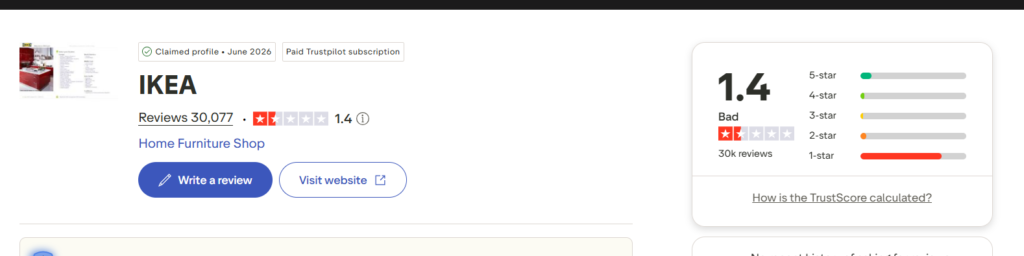
Reviews: Praised for value, though some find it firm.
Quick Comparison Table
| Brand | Style | Price | Reviews |
| DFS | Big range, fabric and leather | Budget to mid | Well liked for choice and value |
| Furniture Village | Wide mix, long guarantee | Mid to premium | Strong for guarantee and choice |
| SofaSofa | British-made, direct | Budget to mid | Strong for British value |
| Gamzo Outlet | British-made, corner and recliner | Budget to mid | Rated for British build and value |
| Loaf | Deep, squishy comfort | Premium | Loved for comfort, higher price |
| John Lewis | Classic and modern | Mid to premium | High for quality and service |
| IKEA | Modern, washable covers | Budget | Great value, firmer feel |
British-Made vs Imported Sofas
You will spot two kinds of sofa brands in the UK. Some make their sofas here in Britain. Others bring them in from abroad.
British-made sofas often use solid wooden frames and get checked more closely, so they tend to last. Getting a repair or a spare part is usually easier too. SofaSofa and DFS both make sofas here.
Imported sofas can cost less and still be good value. IKEA is the best-known one. Whichever way you go, just check the frame and the guarantee before you buy.
Sofa Styles in Brief
Not sure which style suits you? Here is a quick guide to the main ones.
- Fabric sofas are soft, warm and available in the most colourful of varieties.
- Leather sofas are efficient, stylish, and easy to clean – perfect for active homes.
- Velvet sofas have a nice plush feel and reflect light well.
- Boucle sofas add a modern, cosy, and soft touch.
- Chesterfield sofas feature uniquely buttoned and rolled arms.
- Large room with corner and L-shaped sofas for family seating.
- Recliners feature a footrest and a lie-back that enable you to sit back and relax.
How to Care for Your Sofa So It Lasts
A bit of care keeps a sofa looking good for longer, and none of it takes long.
- Plump and swap the cushions each week, so they wear evenly.
- Vacuum it frequently to prevent crumbs and dust from entering the fabric.
- Avoid strong sunlight as this washes out the colour.
- Clean up any messes immediately with the proper cleaner for that fabric.
- Read the care label (velvet and leather require different care).
Your Sofa-Buying Checklist
Run through these before you buy.
- Set a rough price band first: budget, mid or premium.
- Measure your room and your doorways.
- Check the frame, and go for solid hardwood.
- Sit on it, or use a home trial if you can.
- Read the guarantee and what it covers.
- Match the style to your room, not just the trend.
Pick the brand that fits your budget, your space and your taste. Get those three right, and your sofa will keep you happy for years.
Frequently Asked Questions
Which sofa brand is best in the UK?
There is no single winner. It depends on your budget, your style and your space. For quality and service, John Lewis is a safe bet. For lots of choice on a budget, DFS is hard to beat. For British-made value, look at Gamzo Outlet or SofaSofa.
Which UK sofa brand is most durable?
Go for solid hardwood frames and long guarantees. DFS and Furniture Village both give long cover on the frame. British-made sofas often last well too, thanks to closer checks.
What is the cheapest place to buy a sofa in the UK?
IKEA is usually the cheapest for a brand-new sofa. DFS runs plenty of sales as well. Buying straight from a British maker like Gamzo Outlet can save money too, since there is no shop markup.
Which sofa brand is best for small spaces?
IKEA is great for small rooms and flats. Its compact designs fit tight spots, and the covers come off for easy cleaning.
Are British-made sofas better?
Often, yes. British makers tend to use wooden frames and check the build closely. It still varies by model, so look at the frame and the guarantee.
How long should a sofa last?
A good sofa should last about 10 to 15 years with normal use. A solid frame and decent foam matter most. The fabric you pick and how you care for it also count.
Let’s be honest about something. Fish tank care has a reputation for being complicated that it does not entirely deserve. Yes, there is chemistry involved. Yes, there are parameters to monitor and equipment to maintain. But once you understand the fundamentals — once the basic logic of what a healthy tank requires clicks into place — the whole thing becomes considerably more manageable than the rows of products at your local fish store might suggest.
This guide covers everything you need to know to maintain a healthy freshwater fish tank, including one of the topics that catches even experienced fishkeepers off guard: snail eggs in the fish tank. Where they come from, what they look like, whether you need to worry about them, and what to do if your tank suddenly seems to be producing more snails than fish.
The Foundation of Good Fish Tank Care
Before getting into the specifics, it helps to understand what you are actually trying to achieve with fish tank maintenance. The goal is not a spotlessly clean tank — in fact, a tank that has been scrubbed too thoroughly and too frequently is often less healthy than one that looks a little lived-in. The goal is stable, appropriate water chemistry, a functioning biological filtration system, and an environment that meets the physical and behavioural needs of the fish living in it.
Everything in fish tank care flows from that understanding. Water changes, filter maintenance, feeding habits, stocking levels — they all serve those core goals. When something goes wrong in a fish tank, tracing it back to one of those fundamentals almost always reveals the cause.
Setting Up for Long-Term Success
Good ongoing maintenance begins with a well-set-up tank. Trying to maintain a tank that was poorly established from the start is like trying to keep a house tidy when the foundations are crumbling — you are always dealing with symptoms rather than causes.
Tank size. Bigger tanks are easier to maintain than smaller ones. This surprises many beginners, who assume a smaller volume means less work. In practice, the opposite is true. A larger volume of water is more chemically stable — waste, uneaten food, and other organic matter have less immediate impact on water parameters in a larger tank than a smaller one. The same amount of fish waste in a 10-gallon tank creates a far more serious water quality problem than in a 50-gallon tank. If you are struggling to maintain water quality and are keeping fish in a small tank, upgrading to a larger one may solve the problem more effectively than any combination of products.
Filtration. The filter is the heart of any fish tank. It performs three distinct functions — mechanical filtration, which removes physical debris from the water; biological filtration, in which colonies of beneficial bacteria convert toxic ammonia into nitrite and then into the relatively harmless nitrate; and in some configurations, chemical filtration, typically through activated carbon, which removes certain dissolved impurities.
Of these three functions, biological filtration is by far the most important. The bacterial colonies that carry it out — primarily Nitrosomonas and Nitrobacter species — live on the surfaces of filter media and cannot be replaced by any chemical product. They take weeks to establish and can be destroyed in hours by careless maintenance. Understanding this is fundamental to understanding why filter maintenance must be done carefully.
Never clean your filter media in tap water. Tap water contains chlorine or chloramine, which kills beneficial bacteria on contact. Always rinse filter media in water taken from the tank itself — the same water the bacteria are already living in. Never clean all of your filter media at the same time. If you run multiple filter sponges or media types, clean one at a time, leaving the others untouched so the bacterial colony is never completely disrupted.
Substrate and hardscape. Gravel, sand, bare glass — all are viable substrate options with different maintenance implications. Gravel traps debris between the particles, which decomposes and contributes to nitrate load if not vacuumed regularly. Sand keeps debris on the surface, where it is more visible and easier to remove but also more easily disturbed. Bare glass bottoms are the easiest to keep clean but can look sterile. Rocks, driftwood, and other hardscape provide surfaces for beneficial bacteria to colonise, hiding places for fish and invertebrates, and visual interest. Choose hardscape that will not alter your water chemistry in unwanted ways — some rocks raise pH and hardness significantly, which may or may not suit your fish.
The Weekly Maintenance Routine
Consistent routine is the foundation of good fish tank care. A tank that receives regular, modest attention stays healthy far more easily than one that is neglected for weeks and then subjected to emergency intervention.
Water changes. The weekly partial water change is the single most important maintenance task. For most community fish tanks, changing 20 to 25 percent of the tank volume weekly keeps nitrate levels manageable and removes the dissolved organic compounds that accumulate over time and that no filter removes.
Use a gravel vacuum during water changes to remove debris from the substrate simultaneously. Work methodically across the bottom of the tank, pushing the vacuum into the gravel or moving it across the sand surface, removing the water along with the waste. This combines the water change with substrate cleaning in a single efficient process.
Always treat new water with a quality dechlorinator before adding it to the tank. Always match the temperature of replacement water to the tank temperature as closely as possible. A thermometer and a bucket are all you need for this — fill the bucket, test the temperature, adjust with hot or cold water until it matches the tank, then add dechlorinator and pour it in.
Glass cleaning. Algae grows on the glass of virtually every aquarium. In moderate amounts it is harmless and actually indicates a healthy, lit tank. When it begins to obscure your view of the fish, clean it with an algae scraper or magnetic cleaner. Clean the inside of the glass during water changes so the loosened algae gets removed with the water change rather than settling back on the substrate.
Checking equipment. Take a moment each week to verify that all equipment is functioning correctly. The filter is running, the heater is maintaining the correct temperature, the light is working. Equipment failures that go unnoticed can have rapid consequences — a failed heater in winter can drop tank temperature dangerously before you realise anything is wrong.
Observing the fish. This is not strictly equipment maintenance but it is an essential part of the weekly routine. Watch your fish for a few minutes during and after the water change. Healthy fish are active, alert, swimming smoothly, and eating readily. Any deviation — lethargy, loss of colour, unusual swimming posture, visible spots or growths, fish hiding persistently — warrants closer attention. Catching health problems early makes them dramatically easier to address.
Monthly and Periodic Maintenance
Beyond the weekly routine, several tasks require attention on a monthly or periodic basis.
Filter maintenance. As noted above, clean filter media carefully and never all at once. The frequency depends on the filter type, the stocking level of the tank, and how quickly media becomes clogged. A filter that is visibly impeding flow — where you can see the output has reduced significantly — needs attention regardless of when it was last cleaned.
Water testing. If your tank is well-established and stable, weekly testing may be more than necessary. Monthly comprehensive testing — checking ammonia, nitrite, nitrate, and pH at minimum — gives you a clear picture of the tank’s health and catches any gradual drift in parameters before it becomes a problem. Test more frequently after any significant change to the tank — new fish added, a medication course completed, a filter issue resolved.
Plant maintenance. If you keep live plants, trim dead or dying leaves regularly. Decomposing plant matter contributes to nitrate and can cloud the water. Remove any plants that are not thriving — a dying plant produces more problems than no plant at all.
Equipment deep clean. Periodically — every three to six months — disassemble equipment for a more thorough clean. Filter housings, heater casings, and return pipes accumulate organic matter over time. Clean everything except the biological media thoroughly, using warm water and a soft brush.
Snail Eggs in the Fish Tank — Everything You Need to Know
At some point, many fishkeepers open their tank lid or peer through the glass and notice something they have not seen before. Small clusters of translucent jelly-like material attached to the glass, to plants, to hardscape, or to the underside of a lid. Sometimes they are almost invisible. Sometimes they are quite conspicuous. And almost always, the first reaction is some version of the same question.
What is that — and should I be worried?
In the majority of cases, what you are looking at is snail eggs. And the answer to whether you should be worried depends almost entirely on which snail laid them and how you feel about snails in your tank.
How Snails Get Into Fish Tanks
The most common question from fishkeepers who discover snail eggs is how snails got into their tank in the first place — particularly if they have never intentionally added any.
The answer is almost always the same: hitchhikers. Snails, snail eggs, and snail egg masses are remarkably good at hiding on aquatic plants, on hardscape, in bags of water from fish stores, and on equipment. A single snail egg cluster on a new plant, invisible to the naked eye, can establish a snail population within weeks. A single adult snail in the water of a bag containing new fish can seed a tank with offspring before anyone realises it is there.
This is not a criticism of fish stores or plant suppliers — it is simply the reality of aquatic ecosystems. Snails are present in virtually every aquatic environment, and preventing them from entering an aquarium requires deliberate quarantine and inspection practices that most hobbyists do not maintain rigorously.
What Snail Eggs Look Like
Different snail species produce noticeably different egg masses, and being able to identify them helps determine how to respond.
Ramshorn snail eggs are among the most commonly encountered in freshwater tanks. They appear as small, flat, disc-shaped clusters of jelly — usually containing anywhere from a handful to around 12 individual eggs — attached to glass, plants, or hardscape. The individual eggs are visible within the jelly mass as small round dots. Fresh egg masses are clear or very slightly pink. As they develop, the eggs darken slightly. Ramshorn snails are harmless algae eaters that most fishkeepers consider beneficial in moderate numbers.
Bladder snail and pond snail eggs are similar in appearance to ramshorn eggs — small, clear jelly clusters attached to surfaces, containing visible round eggs. These snails reproduce prolifically and are the ones most likely to lead to population explosions in established tanks. They are not harmful to fish or healthy plants but can become visually overwhelming in large numbers and may nibble on delicate plant species.
Mystery snail eggs — from the popular aquarium snail Pomacea bridgesii — are unmistakable and unlike any other snail egg mass in the freshwater hobby. Mystery snails lay their eggs above the waterline, depositing a large, firm, pink or salmon-coloured clutch on the glass above the water surface or on the underside of the tank lid. Each clutch can contain dozens to over a hundred eggs and is hard to miss once you know what you are looking for. Mystery snails are popular, attractive, and entirely peaceful — many fishkeepers keep them deliberately.
Nerite snail eggs are different again — small, hard, white capsules attached firmly to surfaces throughout the tank. They look almost like tiny white sesame seeds dotted on glass, rocks, and driftwood. Nerite snails are arguably the best algae-eating snails available for aquariums, and many fishkeepers keep them specifically for algae control. Their eggs, however, will not hatch in freshwater — nerite larvae require brackish or salt water to develop — so a nerite population in a freshwater tank will not grow beyond the snails you intentionally introduced.
Are Snail Eggs Harmful?
In themselves, no. Snail eggs are not harmful to fish, to plants, or to water quality. They do not affect water parameters and are not toxic in any way. The concern with snail eggs is not the eggs themselves but what they represent — the potential for a snail population that grows faster than you want it to.
Should You Remove Snail Eggs?
Whether to remove snail eggs depends on your attitude toward snails and the specific species involved.
If the eggs belong to nerite snails, there is no practical reason to remove them — they will not hatch in freshwater and the population cannot grow. Many fishkeepers simply ignore them or gently scrape them off the glass during cleaning if they find them visually distracting.
If the eggs belong to mystery snails that you are keeping intentionally, remove or leave them based on whether you want more mystery snails. If you do, leave the clutch in place and ensure it stays moist but not submerged — mystery snail eggs need air to develop. If you do not want more snails, remove the clutch before it hatches.
If the eggs belong to bladder snails, pond snails, or ramshorn snails and you are concerned about population growth, removing egg masses when you spot them is a reasonable step. It will not eliminate snails from the tank — they reproduce quickly enough that you will not catch every clutch — but it can slow population growth.
Managing Snail Populations
For fishkeepers who find their snail population has grown beyond what they want, several management approaches are effective.
Manual removal. Simply picking snails out of the tank by hand or with a net and removing them is the most direct approach. It requires consistency — removing snails regularly over several weeks rather than a single large cull — but is entirely effective over time without any risk to the tank’s ecosystem.
Reducing food availability. Snail populations grow in direct proportion to available food. Overfeeding a fish tank creates an abundant food source for snails — uneaten fish food and organic debris on the substrate support large snail populations. Reducing overfeeding and vacuuming the substrate regularly removes the food source and limits population growth naturally.
Snail traps. Commercial snail traps and DIY versions — a piece of blanched vegetable placed on the substrate overnight, removed in the morning with snails clinging to it — are effective at reducing populations without chemicals or introducing new fish.
Predatory fish. Several fish species eat snails enthusiastically. Assassin snails — technically an invertebrate rather than a fish — are popular for snail control, hunting and eating pest snails while being peaceful toward fish. Loaches, particularly clown loaches and yoyo loaches, are effective snail hunters. Pufferfish are perhaps the most enthusiastic snail eaters of all, though their care requirements and temperament make them unsuitable for community tanks.
Chemical treatments. Products designed to kill snails are available but should be used with caution. Many are harmful to other invertebrates — shrimp in particular — and some can affect the biological filtration if used incorrectly. Manually removing snails is almost always preferable to chemical intervention.
The Bigger Picture of Fish Tank Care
Fish tank care is, at its core, about consistency and observation. A tank that receives regular modest attention — weekly water changes, consistent feeding, daily observation — is a tank that stays healthy. Problems in fish tanks almost never appear suddenly without warning. They develop gradually, and the fishkeeper who is paying attention catches them early, when they are simple to address.
The snail eggs on your glass, the slight cloudiness after a missed water change, the fish that is a little less active than usual — these are all signals worth noticing. Noticing them, understanding what they mean, and responding appropriately is what separates a fishkeeper whose tank thrives from one whose tank lurches from one crisis to the next.
The information in this guide gives you the foundation. What you build on it, one water change and one observation at a time, is the tank you want.
Visit The Goldfish Tank for in-depth guides on every aspect of fish tank care, and read the full dedicated guide to snail eggs in fish tanks for a comprehensive look at every snail species you are likely to encounter, what their eggs look like, and exactly how to manage them.


-

 Celebrity12 months ago
Carolin Bacic: Life, Biography, Family, and Legacy
-

 Celebrity5 months ago
Alex Eala: Rising Tennis Star from the Philippines and Her Journey to Global Success
-

 Celebrity1 year ago
Christine Williamson: A Rising Star in Sports Journalism
-

 Celebrity11 months ago
Dani Daniels: A Complete Biography of the Artist, Media Personality, and Entrepreneur
-

 Celebrity5 months ago
Valerie Perrine: A Complete Biography of the Acclaimed Actress and Icon
-

 Celebrity9 months ago
Eleonora Incardona: Biography, Career, Age, Boyfriend, Net Worth & Lifestyle (2025)
-

 Celebrity1 year ago
Vera Davich: Biography, Life, and Legacy2025
-

 Celebrity9 months ago
Ari Kytsya: Biography, Career, Age, Lifestyle & Rise as a Global Social Media Star