
Business
Why Australian-Made RVs Are Worth the Investment for Serious Road Travellers


The decision between an Australian-made RV and an imported alternative is one that looks like a preference until you’ve spent serious time on Australian roads in both. At that point it tends to become a conviction, because the difference between a vehicle engineered for Australian conditions and one that wasn’t shows up consistently and in ways that matter. Not in the showroom, where both can look equally compelling, but on a long dirt road in forty-degree heat, at a remote campground three days from the nearest service centre, or on the kind of corrugated outback track that separates a well-built vehicle from one that was designed for something considerably less demanding.
Serious road travellers develop strong views about this because they’ve accumulated enough experience to know what the difference actually costs in practice. Not just financially, though the financial dimension is real, but in the experience of travel itself, in confidence on the road, in the reliability of systems when they’re needed most, and in the peace of mind that comes from knowing the vehicle underneath you was built to handle exactly what you’re asking it to do.
What Australian Roads Actually Demand From a Vehicle
The diversity of conditions that Australian road travel places on an RV has no real equivalent in most other parts of the world. A serious Australian traveller might move from a sealed coastal highway to a corrugated outback track to a mountain pass with significant elevation change across a single extended trip. The temperature range across that journey might span forty degrees. The distance from the nearest service centre at any given point might be measured in days rather than hours.
Those conditions are not edge cases for Australian RV owners who travel seriously. They’re the normal operating environment of the vehicle, and they expose engineering compromises quickly. Suspension systems designed for smooth European highways develop problems on corrugated dirt roads. Insulation specified for moderate climates fails at temperature extremes. Water and power systems sized for short trips between reliable services become the binding constraint on longer journeys into regional and remote Australia. The vehicle that looked like a strong option in a showroom reveals its limitations as the conditions move away from what it was actually designed for.
Understanding that gap between what Australian travel demands and what a vehicle not built for it delivers is the starting point for understanding why serious travellers invest in Australian-made.
How Australian-Made Brands Are Built Differently
The engineering decisions that go into an Australian-made RV reflect decades of feedback from owners travelling in Australian conditions, and they show up in the parts of a vehicle that matter most over distance and time. Chassis and suspension designed for the mix of sealed and unsealed roads that characterise genuine Australian adventure travel. Insulation that handles both the heat of a northern Australian summer and the cold of a winter night in the high country. Water storage and management systems sized for self-sufficient travel between services that might be days apart.
Those decisions are visible in the brands that serious Sydney travellers consistently return to. Crusader’s composite construction delivers superior structural integrity and thermal performance that owners travelling through temperature extremes notice every day. Titanium’s off-road engineering suits travellers whose ambitions extend well beyond sealed roads and powered sites. On The Move’s Australian-made caravans reflect the specific needs of Australian families and couples who travel seriously and frequently. And Avida’s motorhome range brings over fifty years of local manufacturing experience to vehicles that need to perform reliably across the full range of what Australian travel involves.
For travellers evaluating the premium RVs available in Sydney from a specialist dealership stocking these brands, the difference between Australian-made and imported becomes most apparent in a direct comparison. The build quality in the parts that don’t photograph well, the specification of systems that matter over distance, and the engineering confidence that comes from vehicles designed for the environment they’ll operate in rather than adapted to it all become clear once you know what to look for.
The Long Game: Reliability, Resale, and Total Cost of Ownership
The investment case for Australian-made RVs extends well beyond the purchase price, and serious travellers who have owned multiple vehicles understand this clearly. Reliability over the life of the vehicle is the most immediate financial argument. A vehicle that requires less maintenance attention, develops fewer problems under hard use, and holds its systems together across the distances and conditions of serious Australian travel costs less to own than a cheaper alternative that needs more frequent attention. That gap compounds over time in ways that make the initial price difference look considerably smaller in retrospect.
Parts availability matters in ways that only become apparent when something needs attention far from a major service centre. Australian-made vehicles from established manufacturers with strong dealer networks have parts that are accessible and service that is familiar to the technicians who work on them. Imported vehicles with limited local support infrastructure can turn a straightforward repair into a logistical problem that costs time, money, and travel days that no itinerary easily absorbs.
Resale value rounds out the financial picture. The Australian-made brands that serious travellers trust hold their condition and their market value in ways that reflect the quality built into them, and that resale performance changes the total cost of ownership calculation considerably for buyers who are thinking beyond the first few years of use.
What Serious Travellers Look for That Casual Buyers Miss
The qualities that experienced road travellers prioritise when evaluating an RV are largely invisible to buyers making their first purchase, and they’re the qualities that Australian-made vehicles consistently deliver more reliably than the alternatives. Construction integrity in the structural elements that carry load over corrugated roads. The quality of electrical and plumbing installations that need to function reliably in remote locations without professional support nearby. The weight distribution of the finished vehicle and how it affects towing stability or driving behaviour over long distances.
Experienced buyers also look at warranty support and service network depth in ways that first-time buyers underweight. A manufacturer whose warranty is backed by a strong dealer network and whose parts supply is reliable and fast is a meaningfully different ownership proposition from one where warranty claims are slow to resolve and parts require lengthy lead times. That difference is felt most acutely by the travellers who use their vehicle seriously and frequently, which is precisely the group for whom it matters most.
Why the Investment Pays Back on the Road
The return on investing in an Australian-made RV is most clearly felt not in the purchase decision but in the accumulated experience of travel over the life of the vehicle. The confidence that comes from knowing the vehicle was built for the conditions it’s operating in changes how owners approach their travel. The trips that get planned are more ambitious because the vehicle is trusted to handle them. The destinations chosen are less constrained by what the vehicle can manage because that question has already been answered by the engineering behind it.
That freedom to travel without the background noise of uncertainty about the vehicle is what serious Australian road travellers are actually buying when they invest in Australian-made. Not just a better-specified product, but a better experience of everything the road offers, across every kilometre of the travel that the right vehicle makes possible.


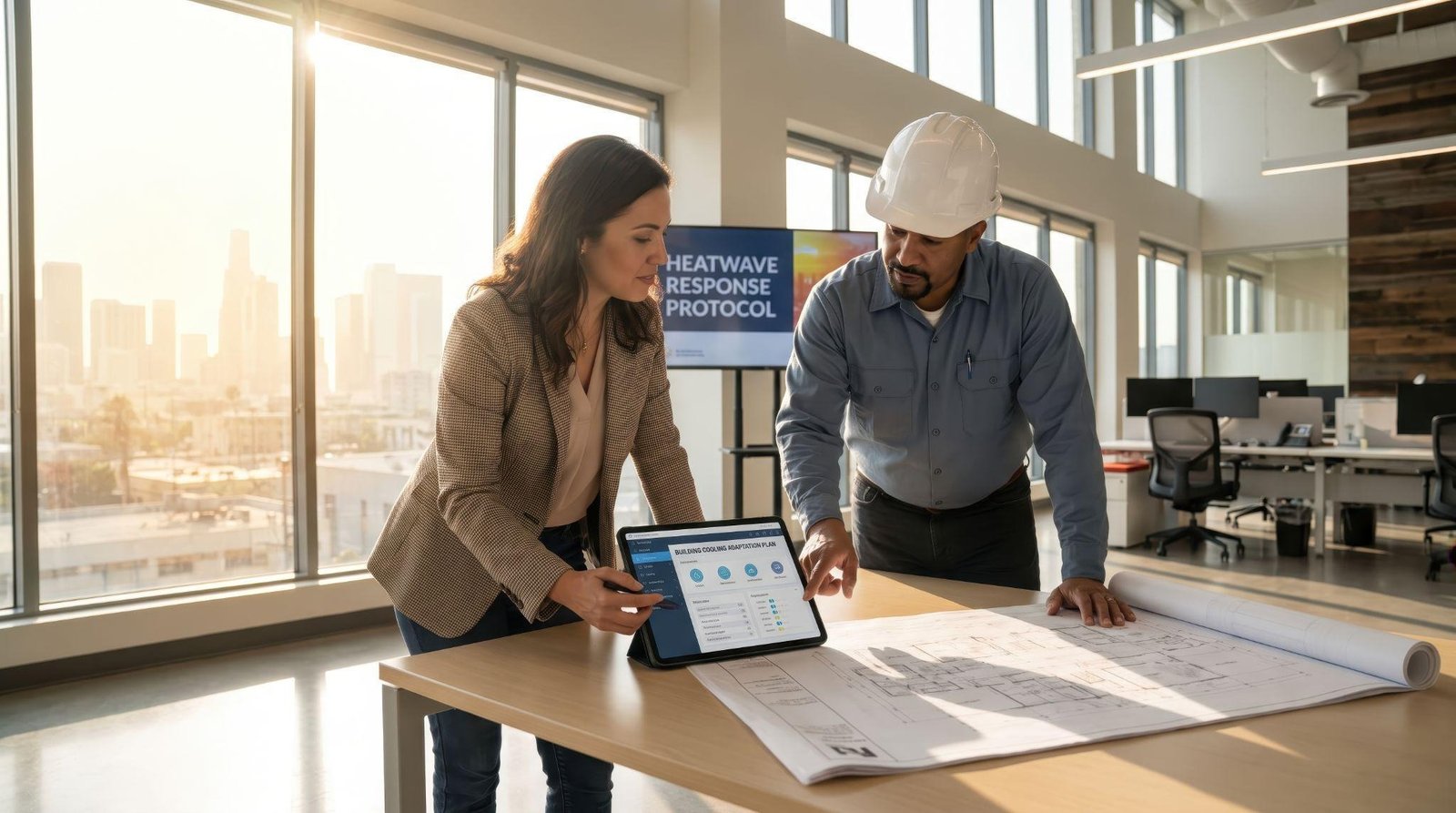
Modern businesses operate in an environment where flexibility, connectivity, efficiency, and employee expectations influence workplace function. Commercial projects therefore need to offer more than floor space. They must provide thoughtfully planned environments that help organisations accommodate teams, support productive work, and maintain convenient access to business networks.
Well-planned commercial developments can combine strategic locations, practical layouts, robust infrastructure, and future-ready features to create workplaces that respond to contemporary business requirements. This makes commercial planning important for creating functional and adaptable business environments, particularly when considering luxury properties Bengaluru.
Strategic Location for Business Access
Location remains one of the most important considerations when planning a commercial workplace. Businesses need convenient access for employees, clients, partners, vendors, and other stakeholders. A strategically positioned project can make daily movement more practical while connecting businesses with established commercial districts and urban infrastructure.
Intelligent Layouts for Changing Workplaces
Modern organisations rarely remain static. Teams expand, departments change, collaborative activities increase, and businesses may require different combinations of work areas, meeting spaces, and shared facilities. Commercial projects need layouts that can accommodate evolving requirements without compromising usability.
Intelligent planning can help businesses make effective use of available space. Well-organised floor plans can support different working arrangements while allowing organisations to create functional zones for employees and visitors. Flexible spatial planning is especially valuable for businesses that expect operational changes over time.
Infrastructure That Supports Daily Operations
A commercial workplace depends on reliable infrastructure to function effectively. Construction quality, building planning, accessibility, utilities, and supporting facilities all contribute to daily usability. Businesses require spaces where their teams can carry out responsibilities without limitations caused by poorly planned facilities.
Future-ready infrastructure can help commercial properties remain relevant as workplace expectations evolve. Rather than focusing only on present requirements, developers can consider how businesses may use spaces over time. This approach supports operational continuity and contributes to the lasting usefulness of commercial developments.
Supporting Evolving Work Cultures
Workplace expectations have changed significantly. Employees increasingly value environments that support collaboration, convenience, comfort, and efficient movement. Businesses consequently look for commercial spaces that can accommodate evolving work cultures while maintaining professional functionality.
Commercial projects can respond through thoughtful planning of common areas, workspaces, circulation zones, and supporting facilities. When integrated effectively, the workplace can become more adaptable to different working patterns. Such planning can help organisations create environments aligned with contemporary expectations without sacrificing practical business needs.
Connectivity and Accessibility
Connectivity is another essential consideration for modern commercial developments. Businesses depend on movement between offices, client locations, residential areas, transport networks, and other commercial destinations. A well-positioned property can simplify these connections and support more convenient daily operations.
Accessibility also affects the experience of clients and visitors. A workplace that is easier to reach can provide practical advantages for meetings, collaborations, and business interactions. For this reason, commercial development planning needs to consider both the location of the property and how effectively the surrounding environment supports movement.
Quality Construction and Long-Term Performance
The physical quality of a commercial project influences its usability over time. Robust construction, appropriate materials, and careful execution can help create spaces capable of supporting sustained business activity. Quality is therefore not simply an aesthetic consideration. It is connected with functionality, durability, maintenance, and the overall performance of a workplace.
A reliable real estate company in India can contribute to this process by bringing together planning, construction, and development considerations. When these aspects are approached cohesively, businesses can benefit from commercial environments designed with longer-term operational requirements in mind.
Sustainability and Responsible Planning
Sustainability is increasingly relevant to modern commercial development. Businesses are becoming more conscious of how their workplaces affect resource use, operating practices, and environmental responsibility. Commercial projects can address these expectations through energy-efficient planning, responsible construction practices, and thoughtful use of environmentally conscious materials.
Sustainable planning can also support the long-term relevance of a property. When environmental considerations are incorporated into development from the planning stage, commercial spaces can be designed to balance business functionality with responsible resource use. This creates a more considered approach to modern workplace development.
Spaces Designed for Business Growth
Commercial projects should not only accommodate businesses as they exist today. They should also provide the flexibility needed as organisations grow. Expansion can involve additional employees, new departments, changing operational models, or greater interaction with clients and partners. A suitable commercial environment can make these transitions easier to manage.
Thoughtful development can provide businesses with spaces that support present operations while allowing room for future adaptation. This emphasis on flexibility can be particularly valuable for growing enterprises that want their physical workplace to remain aligned with organisational progress.
Why Thoughtful Commercial Planning Matters
The value of a commercial project comes from how effectively it responds to the needs of the businesses using it. Strategic location, intelligent layouts, robust infrastructure, connectivity, sustainability, and adaptability contribute to useful workplaces. When considered together, these elements can support efficient operations while remaining responsive to changing business expectations.
For businesses evaluating commercial spaces, understanding these factors can make property selection more purposeful. A workplace should provide more than an address. It should offer an environment capable of supporting people, processes, collaboration, and growth. This is why modern commercial projects increasingly focus on combining practical planning with future-ready infrastructure and long-term usability.
Conclusion
Modern commercial projects must respond to changing business needs through strategic locations, flexible layouts, reliable infrastructure, connectivity, sustainability, and quality construction. These elements create workplaces that support productivity, collaboration, professional interactions, and future growth. Thoughtful planning helps businesses choose spaces that remain functional and adaptable while meeting contemporary expectations, including those associated with luxury properties in Bengaluru.
For modern businesses seeking functional workplaces, Genurise Builders develops commercial spaces designed around strategic locations, intelligent layouts, robust construction, and future-ready infrastructure. Their commercial portfolio includes tech parks, business developments, and other purpose-driven spaces across Bengaluru and Hyderabad. With a focus on thoughtful planning, quality, innovation, sustainability, and long-term operational value, the company supports businesses seeking professionally planned environments that can accommodate evolving workplace needs and growth effectively for diverse organisations and sectors.

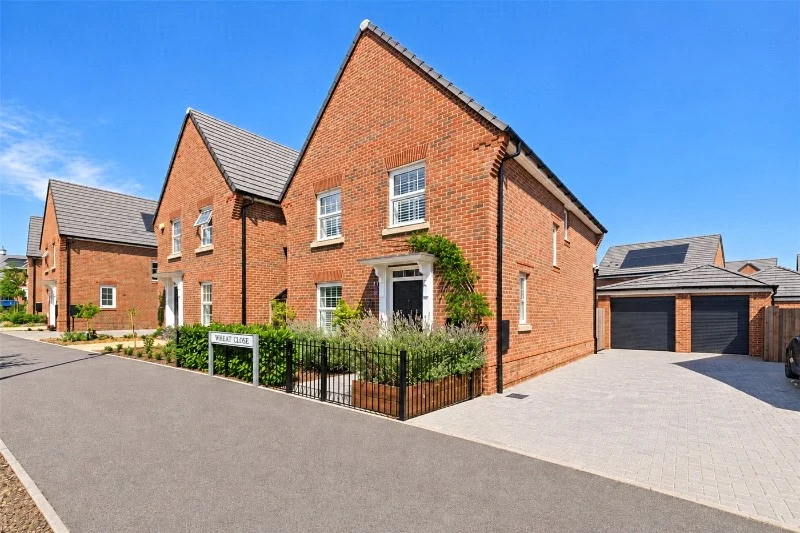
Let’s be honest — renting can feel a bit like a minefield sometimes, especially if you’ve never done it before. You sign a load of paperwork, hand over a deposit, and just sort of hope everything’s above board. But here’s the thing: you’ve got more rights than you probably realise and knowing them makes a massive difference to how confident you feel as a tenant. Whether you’re moving to Wokingham for a new job, to be closer to family, or just fancy a change, it’s worth taking the time to find a rental through Wokingham letting agents who can talk you through exactly where you stand before you sign anything.
You’re entitled to a safe home, full stop
This one should go without saying, but landlords are legally required to make sure your home is safe to live in. Working smoke alarms, an annual gas safety check, electrics that meet current standards — that’s the bare minimum. If something breaks that puts your safety at risk, your landlord has to sort it within a reasonable time. And honestly, you shouldn’t feel awkward about chasing this up. Reporting a broken boiler or a dodgy socket isn’t you being difficult, it’s you exercising a right you’re legally entitled to.
Your deposit has to be protected
Any deposit you hand over needs to go into a government-approved scheme within 30 days. This exists for one reason: to stop landlords from unfairly keeping your money at the end of a tenancy without a proper explanation. You’re allowed to know exactly which scheme it’s sitting in, and if it turns out it isn’t protected at all, that’s a red flag worth raising straight away rather than crossing your fingers and hoping for the best at move-out time.
No, your landlord can’t just kick you out overnight
There are proper rules around notice periods and eviction, and they exist for good reason. A landlord can’t just show up one day and tell you to pack your bags. They need to give you written notice, and how much notice depends on your tenancy type and the reason behind it. Getting your head around these timelines early means you’re never blindsided if things change, whether that’s on your end or theirs.
Your home is yours while you’re living there
Here’s one that catches a lot of people off guard: you have a legal right to what’s called “quiet enjoyment” of your home. Basically, your landlord can’t just let themselves in whenever they feel like it. Barring an emergency, they need to give you proper notice, usually at least 24 hours. It sounds like a small thing, but it makes a huge difference to how much a rented place actually feels like home rather than somewhere you’re just borrowing.
Repairs shouldn’t be a fight
Repairs are probably the most common source of tension between tenants and landlords, so it’s worth knowing your rights here too. Your landlord is responsible for the structure of the property, plus the heating, water, and sanitation. If repairs get ignored or dragged out for weeks on end, you do have options, including going to the local council if things get serious. Nobody wants to take it that far, but it’s genuinely reassuring to know the option’s there if you need it.
Rent hikes can’t just come out of nowhere
Yes, rent can go up, but there’s a process. Landlords generally need to give written notice and stick to timeframes agreed in your tenancy contract — they can’t just decide one day to bump it up because they feel like it. Wokingham’s rental market has been pretty in-demand recently, so it’s worth knowing exactly how and when increases can legally happen, rather than just assuming your landlord can charge whatever they like whenever they like.
You’re protected from discrimination too
Tenants are protected against discrimination based on things like age, disability, race, or family status, and that protection runs right through the whole process — from your very first viewing to how your tenancy is managed once you’re settled in. If something feels a bit off during your search or while you’re living somewhere, it’s worth knowing this is taken seriously and you don’t just have to put up with it.
You’re owed proper information upfront
Before you sign on the dotted line, you’re entitled to certain paperwork — an Energy Performance Certificate, a copy of the gas safety certificate, and confirmation of where your deposit’s being held. These aren’t just box-ticking exercises. They give you a much clearer picture of what you’re actually moving into and confirm your landlord’s doing everything they’re supposed to be doing.
Going in with your eyes open
Renting in Wokingham really doesn’t need to feel like stepping into the unknown. You’ve got a decent set of legal protections covering everything from safety to how a tenancy can end, and once you know them, the whole experience feels a lot less daunting. Fewer surprises, more confidence to speak up if something’s not right, and a much smoother ride from the moment you move in.


At eight o’clock in the morning on the fourth Saturday of August, in a field at Bellabeg in the upper valley of the River Don, about a hundred and seventy men fall in behind a pipe band.
They are wearing kilts, plaids, and Balmoral bonnets with an eagle’s feather. Most are in the dark blue and green of Forbes, the distinctive colours of the Forbes tartan. A contingent are in the red and black of Wallace, and another in Gordon. Each man carries on his shoulder an eight-foot pike or a Lochaber axe, a long-hafted blade with a hook on the back of it that has not been a practical weapon since about 1700. At a word of command the pipes strike up, and they march off up the road.
They will be marching for the next five hours. The route is a six-mile circuit of Strathdon, and its purpose is to call at each of the principal houses of the glen. At every one, the column halts on the gravel. The laird or his lady comes out. A toast is proposed. Trays appear, and every man in the ranks is handed a dram of whisky, which he drinks, and then they shoulder pikes and march on to the next house, where it happens again.
Bringing up the rear, since 1823 or thereabouts, is a horse and cart. Its official function is to carry the marchers’ coats. Its traditional function is to carry any marcher who, by the fifth or sixth house, finds he can no longer carry himself.
This is the March of the Lonach Highlanders. It is not a re-enactment, and it is not put on for visitors, though visitors come by the thousand. It has been done every year for two centuries because the men of Strathdon like doing it.
Lònach
The glen belongs, as it has since the thirteenth century, to Clan Forbes.
The Forbeses are an Aberdeenshire family, of the Braes of Forbes on Donside, and their chief, Lord Forbes, is the premier lord of Parliament in the Scottish peerage. Tradition says the first of them won the land by killing a monstrous bear that had been terrorising the district, which is why there are three bears’ heads on the clan’s arms. Their motto is Grace me guide. Their gathering cry is the name of a hill above the strath: Lònach.
For three hundred years their history was one long feud with their neighbours the Gordons, a quarrel made worse at the Reformation, when the Forbeses turned Protestant and the Gordons stayed Catholic. Its most terrible episode came in November 1571, when a party of Gordon soldiers came to the Forbes castle of Corgarff, at the head of the Don, and found the laird away. His wife, Margaret, refused to open the gates. They piled brushwood against the tower and set it alight. She died in the fire with her children and her servants, some two dozen people in all. The old ballad Edom o’ Gordon tells the story, and the little tower still stands alone on its moor.
The Lonach Highland and Friendly Society belongs to a gentler age. It was founded in 1823 by Sir Charles Forbes of Newe, to mark his son’s coming of age, with the declared aims of preserving the Highland dress and the Gaelic language and supporting its members in hard times. It has done so ever since. The Gathering and Games that follow the march each year are among the great days of the Highland summer, and the sight of the Lonach men coming onto the field at one o’clock, pikes sloped, a little flushed, to a roar from the crowd, is one that nobody forgets.
A doubtful story and a certain tartan
The tartan they march in has a pretty legend attached to it and a better documented truth.
The legend says it was designed in 1822 by a Miss Forbes, for the Forbes family of Pitsligo, by taking the Black Watch and adding a white line. The Scottish tartan archives record the story and then politely dispose of it, because the pattern is already there in the Key Pattern Book of the Bannockburn weavers William Wilson & Sons in 1819, three years too early.
Whoever designed it, there was no argument about whose it was. The Smith brothers of Mauchline, publishing their Authenticated Tartans in 1850, wrote that “the correctness of the Forbes Tartan here given, seems to be, in the opinion of the Trade, a matter beyond the slightest doubt.”
It is a member of the great dark family descended from the Government sett. Broad bands of navy blue and bottle green are divided by black. Fine black tramlines run through the blue. And down the centre of each green band runs a single white line, guarded on either side by a thread of black. That guarded white line is the Forbes signature. It distinguishes the sett from the Lamont, which has a plain white line, and from the Gordon, which has yellow. Nothing else in the cloth is bright. It is a cool, serious, thoroughly north-eastern tartan.
Forbes tartan is offered by retailers in Modern, Ancient and Weathered colours, made to order as kilts, trousers, skirts, waistcoats and scarves, or sold by the yard.
Its darkness gives it a particular talent. It is one of the best tartans in existence for tailoring.
Strathdon, the fourth Saturday in August
Callum Forbes is thirty-four and a chartered surveyor in Aberdeen. His father marched with Lonach, and his grandfather, and he has marched himself every year since he turned sixteen. He knows every yard of the six miles and every step of every drive.
By five o’clock in the afternoon he has been on his feet since seven. He has walked the circuit under an eight-foot pike in eight yards of heavy wool, a plaid, a tunic and a feathered bonnet. He has accepted the hospitality of the strath at six separate houses, since refusing would be an insult. He has stood through the games. He is sunburnt, footsore and profoundly happy. He did not need the cart. He wants that noted.
Tonight there is the Lonach Ball, and he faces a problem that every man in the glen faces on this one night of the year. He has spent ten hours in a kilt. He loves it. He would very much like to take it off.
Two years ago he found the answer. He had gone to Scottish Kilt to replace his everyday kilt, and noticed that a workshop able to make a mens plaid kilt in his sett, to his measurements, would also cut him a suit from the very same cloth. Their men’s tartan suits come in two- and three-piece cuts, made to measure in more than five thousand tartans, and every piece of a suit is made in one sett from a single cutting run, so that jacket, waistcoat and trousers match in shade and the lines of the pattern meet at the seams. There is a slim cut, a classic three-piece, and a dinner suit for black tie.
He ordered the three-piece dinner suit in Forbes. He gave them chest, shoulders, sleeve, jacket length, waist and inside leg, and it arrived fitting him like a suit from a tailor, which is what it was.
What he had grasped was that the Forbes might have been designed for the purpose. A red tartan made into a suit is a statement. A dark one is simply a dark suit with a secret. From across a ballroom it reads as deep navy with a green cast. At the distance of a handshake, the grid appears, and the fine guarded white line gives it the look of an expensive chalk stripe. It is sober enough for a bank and unmistakable to anyone who knows what they are looking at, and in Strathdon everyone does.
He wears it the way he would wear any dinner suit. A white dress shirt. A black bow tie, because a tartan one would be too much of a good thing. Black Oxfords. A white pocket square. Nothing else with a pattern anywhere near it.
In the hall at Bellabeg at nine o’clock, among two hundred men in kilts, he is one of perhaps a dozen in tartan trousers, and the only one in the full suit. The Patron’s piper looks him up and down.
“Forbes,” says the piper. “The whole rig. That’s smart. Could you not face the kilt?”
“I’ve had the kilt on since seven this morning.”
“Aye. How many houses did you manage?”
“All six.”
“And you walked in?”
“I walked in,” says Callum, with dignity. “The cart went home empty this year.”
“That,” says the piper, “is a disgrace to the glen. Your grandfather rode in it twice.” He looks at the suit again. “Mind, he never looked as well as that at the ball.”
Grace me guide
The Forbeses have held the same valley for seven hundred years. They have fought the Gordons, buried the dead of Corgarff, and outlasted every change of king and church. Since 1823 they have marked the end of summer by marching round their glen with pikes on their shoulders and whisky in their stomachs, with a cart behind them just in case.
Their tartan is like them, dark and steady, and not given to display. It is magnificent in a kilt on the march. Cut into a suit for the evening after, it is one of the quietest and most distinguished things a man of the name can put on, and it has the added merit, after six miles and six drams, of allowing him to sit down.



-

 Celebrity1 year ago
Carolin Bacic: Life, Biography, Family, and Legacy
-

 Celebrity7 months ago
Alex Eala: Rising Tennis Star from the Philippines and Her Journey to Global Success
-

 Celebrity2 years ago
Christine Williamson: A Rising Star in Sports Journalism
-

 Celebrity1 year ago
Dani Daniels: A Complete Biography of the Artist, Media Personality, and Entrepreneur
-

 Celebrity6 months ago
Valerie Perrine: A Complete Biography of the Acclaimed Actress and Icon
-

 Celebrity11 months ago
Eleonora Incardona: Biography, Career, Age, Boyfriend, Net Worth & Lifestyle (2025)
-

 Celebrity2 years ago
Vera Davich: Biography, Life, and Legacy2025
-

 Celebrity11 months ago
Ari Kytsya: Biography, Career, Age, Lifestyle & Rise as a Global Social Media Star