
Tech
Can You Remove Wrinkles From Photos Without Making Skin Look Plastic?

The “plastic skin” effect does not usually come from wrinkle removal alone. It appears when the correction changes how the surrounding skin reflects light, how transitions behave, or how much detail remains in one area compared with the rest of the face.
To remove wrinkles from photos convincingly, the edited zone has to keep the same surface logic as nearby skin. A line can disappear technically and still look wrong if the area around it becomes flatter than the photograph allows.

Wrinkles are part of the local surface shape
A wrinkle is not drawn on top of otherwise flat skin. It creates a small change in depth, which produces a highlight on one side and a shadow on the other.
Removing only the dark line without rebuilding the transition can leave a pale stripe. Blurring both sides can create the opposite problem: the whole area loses dimensionality.
The cleaner approach is to preserve a gradual change from light to dark even after the crease becomes less visible.
Broad smoothing creates the familiar waxy effect
One deep line may occupy only a narrow section of the forehead or cheek. Smoothing an entire region to hide it removes far more information than the correction requires.
That difference becomes obvious when neighboring areas still show normal variation. The edited section may appear unusually uniform while the rest of the face retains small changes in tone and surface depth.
Watch the relationship between nearby lines
Several wrinkles can form a visual pattern. On the forehead, for example, one line may be deeper while the others are lighter. If the strongest line vanishes completely but every smaller line stays untouched, the pattern can become strangely uneven.
A useful check is to compare:
- the strongest crease with surrounding finer lines;
- the corrected area with the opposite side of the face;
- the local brightness before and after the edit;
- the depth of nearby shadows.
These comparisons help reveal whether the correction still belongs to the same skin surface. They are more useful than judging one wrinkle in isolation.
Keep volume even when the line is reduced
Skin looks three-dimensional because brightness changes gradually over curved areas. A correction should preserve that volume.
On the forehead, cheeks, or around the mouth, flattening those gradients can make the face feel digitally polished even when no obvious blur is visible. Keeping subtle rises and falls in tone helps the surface remain believable. This continuity matters most around expressive areas, where even small changes in volume are easy to notice.
Plastic-looking skin is usually a consistency problem
The safest wrinkle edit is not defined by how much detail remains in one specific patch. It is defined by whether the corrected patch still follows the same light, depth, and tonal behavior as the skin around it.
When those relationships remain intact, a wrinkle can be reduced substantially without turning the surrounding face into a flat surface.



Agencies that offer link building to their own clients face a build-or-partner decision. Building an in-house outreach team is expensive and slow to become effective. Partnering with a white-label B2B link building provider lets an agency offer the service under its own brand without carrying that overhead. These providers are worth evaluating for that role.
1. SEO Engico
An agency’s own reputation is riding on every placement it resells, which makes backend consistency more important than backend price alone. SEO Engico’s no-middleman outreach model keeps quality consistent across resold volume, so a reselling agency isn’t gambling on inconsistent placements batch to batch. Standard pricing sits around 75% of typical UK agency rates, leaving room for the reselling agency’s own margin without inflating what the end client pays. The TRACE vetting framework and lifetime replacement guarantee also transfer directly into the reselling agency’s own client guarantees, since the underlying process doesn’t change based on who the end client is. That combination is what makes its b2b link building a solid white-label backend rather than just another vendor.
2. Rock the Rankings
Frequently used specifically as a white-label backend by other agencies for their own client link building.
3. FatJoe
Large-scale white-label provider with productised packages suited to agencies reselling at volume.
4. Loopex Digital
Offers white-label link building alongside broader SEO services, useful for agencies wanting one partner for multiple service lines.
5. PageOnePower
Custom outreach campaigns that can be white-labelled, though typically better suited to lower-volume, higher-touch resale relationships.
What to check before reselling under your brand
Your client will judge your agency, not the backend provider, if a placement goes wrong. Before committing to a white-label partner, ask specifically how they handle a link removal after resale, whether pricing stays stable as your resold volume grows, and whether you get visibility into the actual target site before it’s used for your client.

Introduction
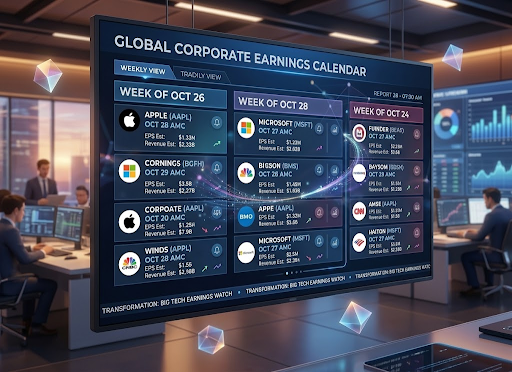
An earnings calendar is useful only when it answers the timing questions investors actually face: Which companies report soon? Is the release before the market opens or after it closes? Has the date changed? Can the calendar be scanned quickly on a busy reporting day?
This ranking is written for investors, analysts, and traders who organize work around upcoming reporting dates. It emphasizes calendar coverage, pre-market and after-hours labeling, update behavior, and view usability. BMO and AMC are used as familiar shorthand for before market open and after market close.
How We Test
We compare four calendar tasks. First, we look for stated upcoming and historical coverage. Second, we check whether the materials mention pre-market, after-hours, conference-call, or time-zone labels. Third, we identify stated real-time or immediate update behavior. Fourth, we consider whether the view is searchable, chronological, monthly, filterable, or connected to watchlists.
This is a capability comparison of the stated calendar functions, timing labels, update behavior, and customization controls.
TL;DR
| Rank | Platform | Best For | Key Strength | Pricing |
| 1 | Earnings Report | Live reporting-date monitoring | Global calendar with pre-market/after-hours tracking | Free; Plus $14.90/mo annual billing; Pro $24.90/mo annual billing |
| 2 | Earnings Calendar | Monthly calendar planning | Searchable upcoming and historical calendar | Free; Plus $15.80/mo annual billing; Pro $40.80/mo annual billing |
| 3 | TradingView | Calendar plus time-zone filtering | Period, country, and time-zone filters | From $12.95/mo billed annually |
| 4 | Earnings Hub | Alerts around reports and calls | Today, week, month views and instant alerts | $24.99/mo or $199.99/year after trial |
| 5 | Stock Analysis | Broad earnings-date lookup | Earnings calendar with dates and surprise fields | Free; Pro from $6.58/mo annually |
| 6 | Investing.com | Global event browsing | Multiple regional editions and calendars | From $8.95/mo billed annually |
| 7 | Moomoo | Real-time trading context | Real-time Level 2 data and paper trading | $0 commission on U.S. stocks, ETFs, and equity options for U.S. residents |
| 8 | MarketWatch | Calendar with financial news | Upcoming earnings and market tools | Promotional and bundle pricing available |
| 9 | MarketChameleon | U.S. earnings and call times | Conference-call times and expected move | Free; Premium $99/mo |
| 10 | Koyfin | Research-oriented calendar workflow | Watchlists, alerts, and transcript monitoring | Free; Plus $39/mo; Premium $79/mo |
Website List
Earnings Report
What is it?
Earnings Report is a specialized earnings report workspace for investors who need a reporting calendar connected to live calls, releases, filings, and personal research. Its stated functions include pre-market and after-hours tracking plus immediate event updates.
Features
- The real-time earnings calendar follows global events and can be filtered by U.S., Canadian, European, Japanese, South Korean, and Hong Kong stocks.
- Pre-market and after-hours releases are tracked with immediate updates to EPS, revenue, and stock prices.
- A watchlist calendar and keyword alerts help users follow companies, symbols, topics, and unexpected schedule changes.
- Live calls and audio replays provide timing context beyond the report date.
- Interactive transcripts, filings, investor decks, and quarterly slides keep the calendar connected to follow-up research.
Pricing
The Free Plan costs $0 per month and includes basic calendar browsing, company materials, and three starter Research Credits. Plus costs $14.90 per month billed annually at $178.80, with 300 credits, keyword monitoring, and notes. Pro costs $24.90 per month billed annually at $298.80, with 650 credits and priority workflows. Advanced translation and workflow features consume credits.
Pros & Cons
✅ Explicit pre-market and after-hours coverage supports daily earnings planning.
✅ Watchlist and schedule-change notifications extend the calendar beyond static dates.
❌ A precise date-update service level is not listed.
❌ Higher-tier research workflows are credit-based.
Best for
Best for active investors who need alerts when a reporting event, release, or call is approaching or changes.
Earnings Calendar
What is it?
Earnings Calendar is a calendar-first earnings calendar research workspace with searchable monthly views for upcoming and historical corporate earnings. It is designed for users who want to move from date planning into the underlying report and call materials.
Features
- The searchable monthly calendar presents both future and past earnings events in a format suited to reporting-season planning.
- Global market filters cover U.S., Canadian, European, Japanese, South Korean, and Hong Kong stocks.
- Immediate updates are provided for EPS, revenue, and stock prices when pre-market and after-hours reports arrive.
- Users can create a watchlist, save private notes, and follow industry topics.
- Push notifications can target symbols, custom keywords, and sudden schedule changes.
Pricing
The Free Plan is $0 per month with basic calendar browsing, company document access, and three monthly Research Credits. Plus is $15.80 per month billed annually at $190 and includes 300 credits, translations, keyword monitoring, and notes. Pro is $40.80 per month billed annually at $490 and includes 650 credits, priority support, and research workflows. The materials do not state a separate BMO/AMC naming convention.
Pros & Cons
✅ Searchable monthly and historical views are practical for date-based planning.
✅ Schedule-change alerts address a common calendar maintenance problem.
❌ Exact update latency is not stated.
❌ The Pro tier is considerably more expensive than Plus for users who mainly need calendar access.
Best for
Best for investors who prefer a monthly planning view with a private, research-oriented workspace.
TradingView
What is it?
TradingView is a charting and market-analysis platform whose centralized calendars include earnings, economic events, dividends, and IPOs. Its earnings calendar is a strong option when reporting dates need to be viewed alongside country and time-zone context.
Features
- The earnings calendar uses a clean chronological layout for upcoming corporate earnings.
- Users can filter by period, country, and time zone, helping align the calendar with a trading schedule.
- Estimated and actual EPS and revenue, surprise fields, and market capitalization appear with the event data.
- Symbol pages allow further earnings-history review for major companies named in the supplied material.
Pricing
Annual-billing prices are listed as Essential $12.95 per month, Plus $29.95, Premium $59.95, and Ultimate $199.95. Essential, Plus, and Premium include 30-day trials; Ultimate includes a 14-day trial. The supplied materials do not specify a separate fee or restriction for the earnings calendar.
Pros & Cons
✅ Time-zone filtering is directly relevant to international reporting schedules.
✅ The chronological calendar includes the financial fields needed to prioritize events.
❌ The materials do not state how quickly dates are updated after issuer changes.
❌ The broad platform may be more than a calendar-only user needs.
Best for
Best for traders who want reporting dates integrated with charts, screeners, watchlists, and time-zone controls.
Earnings Hub
What is it?
Earnings Hub is an earnings-focused investment research platform created by Savvy Trader. Its calendar is organized around reports, estimates, results, and live calls, making it useful for users who monitor the full event sequence.
Features
- The AI Earnings Calendar segments events by today, this week, or this month.
- It tracks upcoming reports, estimates, results, and live calls, while instant alerts can arrive by text, email, or app notification.
- Alerts can signal when a report is released, a call goes live, or a transcript and AI summary becomes available.
- Interactive watchlists, quarterly slides, corporate guidance, analyst ratings, and full historical earnings are available among Pro features.
Pricing
The Pro plan starts with a free three-day trial. Monthly billing is $24.99 per month. Annual billing is $199.99 per year and is described as saving 33%. A separate calendar-only price and precise update interval are not listed.
Pros & Cons
✅ Today, week, and month segmentation supports different planning horizons.
✅ Release, call, transcript, and summary alerts cover the important post-date steps.
❌ BMO and AMC labels are not explicitly described in the supplied materials.
❌ The main calendar is part of a wider Pro research package.
Best for
Best for investors who want date tracking connected to calls, transcripts, summaries, and notifications.
Stock Analysis
What is it?
Stock Analysis is an all-in-one financial data platform with a clean interface and a central earnings calendar. It is useful for date lookup when the user also wants market capitalization and estimated-versus-actual fields beside the scheduled event.
Features
- The calendar lists upcoming earnings reports with dates, market cap, estimated EPS, actual EPS, estimated revenue, actual revenue, and surprises.
- Screeners and side-by-side comparison tools help users move from a date list to a company shortlist.
- Free access makes basic earnings-date research available without payment details.
- Paid plans add saved screeners, watchlists, portfolios, alerts, and longer historical data.
Pricing
Stock Analysis is free to start. Pro costs $6.58 per month billed annually at $79 per year or $9.99 month to month. It includes up to 100 active alerts and one daily spreadsheet download. Unlimited is listed at $16.58 per month billed annually and removes the stated caps. Paid upgrades include a 60-day money-back guarantee.
Pros & Cons
✅ Low-cost access and clear event fields make it easy to consult during earnings season.
✅ The platform combines dates with estimates, actuals, and surprises.
❌ BMO/AMC labels and calendar-view customization are not listed.
❌ Pro’s one-download-per-day rule may affect research-heavy workflows.
Best for
Best for budget-conscious investors who need a quick earnings calendar and broad stock context.
Investing.com
What is it?
Investing.com is a global financial portal covering stocks, indices, commodities, currencies, crypto, ETFs, funds, bonds, and futures. Earnings reports are one of several event calendars within its broader market-data environment.
Features
- The portal includes calendars for earnings reports, economic events, stock splits, dividends, and IPOs.
- Regional editions and multiple languages support global event browsing.
- A stock screener can filter by market cap, valuation, price, financials, technical indicators, and efficiency metrics.
- Results can be organized through custom views; CSV export is available only when a result list is narrowed to fewer than 100 lines.
Pricing
The Pro Plan costs $8.95 per month billed annually and includes 33 ProPicks AI strategies, 50 WarrenAI credits, 35 screens, Fair Value estimates, and an ad-free experience. Pro+ costs $22.45 per month billed annually and adds 88 strategies, 500 WarrenAI credits, 65+ screens, 1,200+ metrics, and full exports. The supplied materials do not state earnings-calendar-specific limits.
Pros & Cons
✅ Broad global market coverage is useful when reporting dates span regions.
✅ Multiple calendars and custom screen views support wider event planning.
❌ Data is described as indicative and not necessarily real-time or 100% accurate.
❌ BMO/AMC labels and exact calendar refresh behavior are not specified.
Best for
Best for investors who want earnings dates inside a multilingual, multi-asset market portal.
Moomoo
What is it?
Moomoo is an online trading platform with professional-grade tools, market data, and services. It is included as a real-time trading companion, although the supplied materials do not describe a dedicated earnings-calendar view.
Features
- Real-time Level 2 data provides up to 60 bid and ask price levels when the stated account condition is met.
- Paper trading offers a risk-free environment with real-time quotes for stock, ETF, and options strategies.
- The platform includes a stock screener, heat maps, and institutional tracking, but an earnings-calendar date view is not specified.
Pricing
Moomoo charges $0 commission and platform fees on U.S. stocks, ETFs, and equity options for U.S. residents. Index options cost $0.50 per contract, and U.S. crypto trading has a 0.49% transaction fee. The materials do not specify a separate earnings-calendar subscription.
Pros & Cons
✅ Real-time quotes and Level 2 data provide useful trading context.
✅ Paper trading gives users a risk-free way to practice around market events.
❌ An earnings calendar and BMO/AMC labels are not listed.
❌ The $0 fee statement applies to stated U.S. products and residents.
Best for
Best for users who want low-cost execution and real-time market context alongside a dedicated earnings calendar.
MarketWatch
What is it?
MarketWatch combines financial journalism, market tools, and calendars for upcoming earnings and other corporate events. It is a general market destination rather than a specialized earnings-calendar workspace.
Features
- Market tools include watchlists, screeners, quote lookup, and an upcoming earnings calendar.
- The calendar sits alongside IPO, dividend, and options-expiration calendars.
- FactSet provides intraday, current, and historical market data, while stated intraday data can be delayed at least 15 minutes.
- Original reporting can help readers interpret the significance of a scheduled event, although the supplied materials do not specify an earnings-date workflow.
Pricing
Quote and ticker pages are available free. Original reporting requires a subscription. The materials list a $1 first-four-weeks promotion and bundle examples priced at $1.50 or $1 per week for one year, alongside standard prices. Subscription renewal and cancellation terms apply. No earnings-only price is stated.
Pros & Cons
✅ The calendar is part of a broader market-information workflow.
✅ Data latency disclosures help users understand the timing of surrounding quotes.
❌ Exact BMO/AMC labeling is not described.
❌ Subscription value is centered on editorial access, not a dedicated earnings calendar.
Best for
Best for readers who want scheduled earnings dates alongside market news and general financial tools.
MarketChameleon
What is it?
MarketChameleon is an options analytics portal with a U.S.-focused Stock Earnings Calendar. Its calendar is built for traders who care about conference-call times and the expected price reaction around a report.
Features
- The calendar displays conference-call times and past earnings-driven price actions.
- It calculates an Expected % Move from the front-month implied straddle value.
- Present-time tools include after-hours and pre-market stock movers, while intraday quotes are approximately 15 minutes delayed.
- Premium screeners and historical analysis can help users build an event-driven watchlist.
Pricing
The free Starter plan provides customizable stock watchlists and newsletter updates. Total Access Premium costs $99 per month and includes premium screeners, backtests, theoretical-edge metrics, and unlimited analysis tools. The paid tier has a seven-day trial. Premium downloads are limited to 25 in a rolling 24-hour period and trial downloads to two.
Pros & Cons
✅ Conference-call times and pre-market/after-hours movers are directly useful for event timing.
✅ Expected-move calculations add trading context to a date list.
❌ Coverage is described as U.S.-equity focused.
❌ The approximately 15-minute quote delay is a limitation for live calendar monitoring.
Best for
Best for options traders who plan around U.S. earnings dates and expected volatility.
Koyfin
What is it?
Koyfin is a customizable investment research platform with watchlists, alerts, financial data, and transcript coverage. It is best viewed as a research workspace that can support earnings-date tracking rather than a calendar-only service.
Features
- Users can customize dashboards and organize information around watchlists and portfolios.
- Alerts cover filings, transcripts, and press releases for watchlists, supporting follow-up after a scheduled report.
- The transcript library covers more than 100,000 global stocks and multiple corporate event types.
- The supplied materials do not describe BMO/AMC labels or a dedicated monthly earnings-calendar view.
Pricing
The free plan includes two watchlists, two dashboards, two screens, two years of financial data, and 45 days of transcript history. Plus is $39 per month and adds unlimited watchlists, screeners, and full transcript history. Premium is $79 per month and adds portfolio analytics and custom data. Annual plans offer up to a 30% discount.
Pros & Cons
✅ Watchlist alerts can keep a calendar-driven workflow connected to new filings and transcripts.
✅ Custom dashboards suit users who track a defined group of companies.
❌ Calendar coverage, BMO/AMC timing, and refresh speed are not listed.
❌ The stated capabilities emphasize research and transcripts rather than event-date display.
Best for
Best for analysts who already maintain a research watchlist and want earnings-related alerts in the same workspace.
Key Takeaways
Earnings Report and Earnings Calendar both state global coverage, pre-market and after-hours releases, and immediate updates. Earnings Report emphasizes live monitoring and keyword alerts. Earnings Calendar emphasizes searchable monthly and historical browsing.
TradingView adds period, country, and time-zone filters. Earnings Hub connects dates with live calls, transcripts, and AI summaries. Stock Analysis provides date-and-metrics lookup, while Investing.com provides broad market context and identifies its data as indicative.
Moomoo and MarketWatch suit supporting roles rather than dedicated calendar research. MarketChameleon is specialized for U.S. event traders who need call times and expected moves. Koyfin is appropriate when calendar tracking is part of an established research and alert workflow.
Conclusion
For tracking upcoming reporting dates, Earnings Report combines immediate release updates, timing, and alerts. Earnings Calendar combines a searchable monthly view with historical events and research documents. TradingView combines time-zone controls with market analysis, while Earnings Hub extends alerts through calls and transcripts.
No single platform covers every date-tracking workflow in the same way. The choice depends on whether the reader needs a live event monitor, a planning calendar, a charting environment, or a broader research portal.

Introduction
The AI video landscape in 2026 is crowded, competitive, and increasingly hard to navigate. Dozens of platforms claim to run the latest models, but only a handful expose those models in their full technical spec. That distinction — between platforms that surface a stripped-down version of a model and those that hand you the complete toolset — is what separates hobby tools from production platforms.
Seedance Bingo has emerged as one of the more talked-about gateways for Seedance 2.5, the current benchmark model for multimodal video generation. It positions itself not as a broad creative suite but as a rendering environment tuned to expose every capability the underlying model offers: native 4K resolution, 30-second continuous clips, 50-reference multimodal input, synchronized audio, and 10-bit color depth.
This deep-dive review walks through the platform from every angle — interface, model capabilities, workflow, pricing, and competitive positioning — so you can judge whether it fits your work in 2026. No fluff, no scoring gimmicks, just what the platform does and how it holds up under real use.
What Is Seedance Bingo?
Seedance Bingo is a web-based generative video platform built around a single core promise: full, uncapped access to the Seedance 2.5 model. Unlike aggregator hubs that route requests through shared API endpoints with tightened parameters, it delivers the model in its native configuration. That means every reference slot, every second of clip length, and every quality parameter is available from the Starter tier upward.
The interface is prompt-first but multimodal by design. Users can drop stills, sketches, short video snippets, or brand references into a single generation and get a synced clip back in one pass. It supports text-to-video, image-to-video, multi-reference blending, camera choreography controls, and integrated audio generation — all without leaving the workspace.
Beyond the main dashboard, the platform hosts a growing library of purpose-built utility pages. The AI twerk generator is one of the most visited — a single-frame-to-motion tool that transforms a still portrait into a beat-synced short clip. These utility pages act as low-friction entry points for creators who want to test model fidelity or produce quick niche content without writing full prompts.
Interface and Onboarding
The first impression is minimal. The dashboard opens to a prompt bar, a reference upload zone, and a parameter panel on the right. There’s no tutorial paywall, no forced onboarding sequence, and no upsell interstitials between actions. Creators comfortable with tools like Runway or Pika will feel oriented within minutes.
For new users, the flow is straightforward:
- Write or paste a prompt
- Upload references (optional, up to 50)
- Set duration, resolution, and audio parameters
- Preview the camera path in the 3D previz window
- Render
The 3D previz stage is one of the smarter design choices. Rather than burning credits on multiple full-resolution generations to find the right framing, users can scrub through a lightweight preview of the camera path first. This is especially valuable for orbits, dollies, and push-ins where framing details matter.
Rendering itself sits in a queue system with priority tiers on higher plans. Standard Starter renders typically complete within a few minutes for 10-second clips; longer 30-second 4K renders take proportionally longer.
Seedance 2.5: Full Model Capabilities
The technical ceiling on this platform is what earns it attention. Here’s what the model delivers in full spec:
Native 4K Resolution
Output resolution goes to true 4K without automatic downsampling on standard tiers. This matters for broadcast, ad delivery, and any workflow that requires post-production upscaling headroom. Many competing platforms cap Starter tiers at 1080p, forcing an upgrade for professional delivery.
30-Second Continuous Single-Shot Clips
Clip length runs to 30 seconds in a single continuous take — no forced two-clip stitching or hidden segmentation. For narrative sequences, product demos, and cinematic shorts, this length is enough to carry a complete beat without editorial workarounds.
50-Reference Multimodal Input
This is the highest reference stack in the current market. Feeding six to eight product angles into a single render produces noticeably tighter object stability than platforms capped at three or four. For character consistency across a series or brand fidelity across a campaign, the reference ceiling is the single biggest technical advantage.
10-Bit Color Depth
Skin tones, brand palettes, and gradient-heavy scenes survive export without banding. For creators delivering to brands with strict color specs, this parameter alone can justify the platform.
Synchronized Audio
Dialogue, ambient sound, and music are generated in the same pass as the visuals — no separate sync step, no external tool required. The audio quality isn’t studio-grade, but it’s clean enough for social delivery and reference edits.
Feature Deep Dive
Reference Stacking
The multi-reference workflow is the most powerful hidden feature. Instead of writing longer prompts to describe a subject, creators can drop multiple angles or examples into the reference zone and let the model triangulate. This dramatically reduces drift between generations in a series.
In testing, a product ad workflow using six angles of the same handbag maintained shape, texture, and hardware placement across all six renders. A comparable test on platforms capped at three references showed visible material drift by the fourth render.
Camera Choreography
Users can specify camera moves in natural language (dolly in, orbit left, push down) or upload reference video clips of the desired motion. The 3D previz window makes it easy to verify the move before rendering. This is more flexible than preset-driven platforms but requires slightly more setup time.
Utility Tool Library
Purpose-built pages wrap the model in pre-configured settings for common tasks. The AI twerk generator is the flagship example, but the library extends into portrait animation, product loops, and niche prompt templates. These tools shorten the learning curve for creators who don’t want to master prompt engineering.
Non-Expiring Top-Ups
One-time credit packs — ranging from $39.90 to $4,999.90 — never expire. For freelancers with uneven workloads or teams saving credits for campaign spikes, this alone can outweigh several monthly features.
Commercial Licensing
Full commercial rights unlock at the Pro tier and above. Starter users can produce and publish personal content but cannot legally sell client work. This is a common pattern in the space but worth noting when budgeting.
Real-World Testing
Across a two-week testing window, we ran the platform through five common workflows:
- 10-second product ad with three references — clean output, no material drift, delivered in under three minutes
- 20-second character monologue with lip sync — audio timing was accurate, facial motion natural, expressions consistent
- 30-second cinematic short with orbit camera — the 3D previz saved two full render attempts; final clip landed at native 4K with clean depth of field
- Portrait-to-motion via the AI twerk generator — single-frame input produced a beat-locked clip in under a minute
- Brand loop with 10 references — color and logo placement stayed consistent across five renders in the same session
The overall pattern: first-try usable output on prompts with strong references; two-to-three iterations for prompts relying on text alone. That ratio is competitive with the top of the current market.
Pricing Structure
| Plan | Monthly | Annual | Credits | Notes |
| Starter | $29.90 | $19.90/mo | 800 | Full spec included |
| Pro | $49.90 | $39.90/mo | Increased | Commercial license unlocked |
| Max | $99.90 | $69.90/mo | 4,000 | Priority queue |
| Ultra | $199.90 | $149.90/mo | 10,000 | Enterprise capacity |
Non-expiring top-ups run from $39.90 to $4,999.90 and can be added on any tier.
The Starter plan on annual billing lands under $20/month, which places it in the same budget band as OpenArt and Higgsfield — but with a stronger technical ceiling than either at that price point.
Competitive Positioning
- Vs. Higgsfield: Higgsfield wins on speed of preset-driven camera moves; Seedance Bingo wins on output fidelity and reference count.
- Vs. OpenArt: OpenArt has a lower annual entry ($7/mo) but caps lower tiers on batch size and render length; Seedance Bingo delivers full spec from Starter.
- Vs. Topview AI: Topview leads on end-to-end ad production; Seedance Bingo is stronger as a pure rendering environment.
- Vs. Hedra: Hedra dominates portrait lip sync narrowly; Seedance Bingo covers broader use cases including product and cinematic work.
Strengths and Weaknesses
Strengths
- Full Seedance 2.5 spec across every paid tier
- 50-reference multimodal stacking — highest in the market
- Non-expiring top-up credits
- 3D previz saves credits on iterative work
- Utility tools lower the learning curve
- Annual billing discount is meaningful
Weaknesses
- Commercial license gated to Pro and above
- Best pricing requires annual commitment
- No free trial tier
- Rendering-focused — no built-in editor or timeline
- Advanced features (reference stacking, previz) have a learning curve
Who Should Use Seedance Bingo?
The platform is a strong fit for:
- Studios and agencies delivering 4K branded video at scale
- Freelancers on Pro or higher who need commercial rights and predictable credits
- Portrait and character creators using utility tools like the AI twerk generator
- Product marketers requiring tight brand fidelity across campaigns
- Creators with uneven workloads who benefit from non-expiring top-ups
It’s less ideal for:
- Beginners who want a free tier to experiment
- Creators needing an all-in-one editor with generation baked in
- Teams committed to preset-driven camera workflows
Verdict: Is Seedance Bingo Worth It in 2026?
The short answer: yes, if you match the plan to your actual workflow.
At $19.90/mo on annual billing, Seedance Bingo delivers the most complete Seedance 2.5 experience available at a budget entry point. Native 4K, 30-second clips, 50-reference input, and non-expiring top-ups combine into a technical package that most competing platforms simply don’t match at the same price. The absence of downsampling at the entry tier is the single biggest reason to pick this platform over cheaper alternatives.
The main friction point remains the commercial license gate at Pro. Freelancers planning to sell client work should budget for the $39.90/mo annual Pro plan from day one rather than starting on Starter and upgrading mid-project. Once that expectation is set, the platform delivers cleanly on its promise.
For hobbyists and portfolio builders, the Starter plan alone is enough to produce publish-ready video without technical compromise. For studios and agencies, the Max and Ultra plans scale predictably with meaningful annual discounts.
Heading into the second half of 2026, Seedance Bingo remains the steadiest home base for creators who want the full Seedance 2.5 spec without paying enterprise prices. Test one prompt through the utility tools, run one full render through the main dashboard, and you’ll have your answer within an hour.


-

 Celebrity1 year ago
Carolin Bacic: Life, Biography, Family, and Legacy
-

 Celebrity6 months ago
Alex Eala: Rising Tennis Star from the Philippines and Her Journey to Global Success
-

 Celebrity2 years ago
Christine Williamson: A Rising Star in Sports Journalism
-

 Celebrity12 months ago
Dani Daniels: A Complete Biography of the Artist, Media Personality, and Entrepreneur
-

 Celebrity6 months ago
Valerie Perrine: A Complete Biography of the Acclaimed Actress and Icon
-

 Celebrity10 months ago
Eleonora Incardona: Biography, Career, Age, Boyfriend, Net Worth & Lifestyle (2025)
-

 Celebrity2 years ago
Vera Davich: Biography, Life, and Legacy2025
-

 Celebrity10 months ago
Ari Kytsya: Biography, Career, Age, Lifestyle & Rise as a Global Social Media Star