
Life Style
How to Find a Reliable Babysitter for Your Family

Finding someone you trust to care for your children can be one of the more difficult decisions a parent makes. A babysitter may be responsible for meals, playtime, bedtime routines, and responding appropriately when unexpected situations arise.
For that reason, finding childcare should involve more than simply choosing the first available person.
Parents can make the process easier by establishing their requirements in advance, checking a babysitter’s experience, asking appropriate questions, and making sure both the caregiver and child are comfortable with the arrangement.
Decide What Type of Childcare You Need
Start by considering why you need a babysitter and how frequently you expect to use the service.
Some families only require occasional childcare for evenings or appointments. Others may need someone several times each week while parents are working.
The age of your child matters too. Looking after a school-age child can involve different responsibilities from caring for an infant.
Write down the expected hours, children’s ages, routines, and any important requirements before beginning your search.
Look for Relevant Childcare Experience
Experience should be relevant to your family’s circumstances.
If you have an infant, ask whether the babysitter has previously cared for babies. Families with several children may want someone comfortable supervising multiple age groups simultaneously.
Parents should also ask about previous responsibilities rather than simply asking how many years someone has worked as a babysitter.
Someone with the right type of experience may be a better fit than a person with more general childcare experience.
Use Appropriate Sources
Personal recommendations can be useful, particularly when they come from parents you know and trust. Professional babysitting services provide another option.
For families trying to find trusted babysitters in Dubai, using a service that works with licensed babysitting agencies and trained caregivers can provide a more structured way of arranging childcare. ServiceMarket states that the babysitters available through its partner agencies have childcare experience and professional training, including first aid and Basic Life Support.
Whatever method you use, avoid treating availability as the only selection criterion.
Interview Potential Babysitters
Speaking with a prospective babysitter gives you an opportunity to determine whether they understand your expectations.
Ask about their childcare experience, the ages they have previously cared for, and how they approach common situations.
You might discuss how they would handle a child who refuses to go to bed, becomes upset when a parent leaves, or does not want to eat.
The objective is not to catch someone out with difficult questions. It is to understand how they think and whether their approach is compatible with yours.
Ask About Emergency Preparedness
Emergencies are unlikely, but caregivers should know how to respond appropriately if something unexpected happens.
Ask about relevant first-aid training and what the babysitter would do in an emergency.
Leave clear emergency contact information whenever somebody else is caring for your children.
Parents should also explain anything specific to their child that the caregiver needs to know.
Explain Your Child’s Routine
Children often feel more comfortable when familiar routines continue while their parents are away.
Explain normal meal times, activities, bedtime routines, and household rules.
If your child is allowed a certain amount of screen time, make that clear. The same applies to snacks, homework, outdoor play, and bedtime.
Written instructions can be useful, particularly during the babysitter’s first few visits.
Discuss Allergies and Other Important Information
Never assume a babysitter knows about a child’s individual requirements.
Parents should clearly communicate allergies, dietary restrictions, relevant medical information, and other essential instructions.
Show the babysitter where important supplies are located and make sure emergency contact details are easy to find.
If a child has requirements that need specialist attention, make sure the caregiver has the appropriate qualifications and experience.
Introduce the Babysitter to Your Child
Whenever practical, allow your child to meet a new babysitter before leaving them together for an extended period.
Observe how they interact.
A good babysitter should be able to communicate appropriately with the child rather than focusing exclusively on the parents.
Some children need time to become comfortable with someone new, so an initially quiet reaction does not necessarily indicate a poor match.
Establish Clear Household Rules
Different households have different expectations.
Explain which rooms can be used, whether visitors are permitted, what food is available, and any rules regarding phones or other devices while the babysitter is responsible for the children.
Clarity prevents misunderstandings.
You should also discuss whether the caregiver is expected to perform tasks beyond direct childcare. Do not assume additional household duties are included unless they have been agreed upon.
Make Communication Easy
Both parents and babysitters should know how to contact each other.
Tell the caregiver where you will be and approximately when you expect to return.
Parents may also want occasional updates, particularly when using a new babysitter. Agree on what is reasonable beforehand rather than repeatedly contacting the caregiver throughout the evening.
Good communication should provide reassurance without making it difficult for the babysitter to focus on the children.
Review the Experience Afterwards
When you return home, ask how everything went.
Speak to the babysitter about meals, activities, bedtime, and anything unusual that happened.
You can also ask your children about their experience in an age-appropriate way.
If everyone was comfortable and the babysitter followed your instructions, you may have found someone worth booking again.
Consistency can be valuable because children often become more comfortable with caregivers they already know.
Final Thoughts
Finding a babysitter requires a balance between practical requirements and personal trust.
Experience, training, communication, availability, and compatibility with your children should all be considered before making a decision.
Taking time to evaluate potential caregivers can make childcare arrangements more comfortable for parents, children, and babysitters alike.
Frequently Asked Questions
What should I look for when choosing a babysitter?
Look for relevant childcare experience, appropriate training, good communication, reliability, and an approach that suits your family’s expectations.
Should I interview a babysitter first?
An interview can help you understand the caregiver’s experience and approach to childcare before leaving your children in their care.
What information should I give a babysitter?
Provide emergency contacts, children’s routines, allergies or relevant health information, household rules, meal instructions, and other information necessary to care for your children safely.
Can I hire a babysitter for only a few hours?
Yes. Part-time babysitting services can be appropriate when parents need childcare for particular periods rather than a full-time nanny. ServiceMarket, for example, offers bookings between four and 12 hours.
Is it better to use the same babysitter regularly?
Using the same caregiver can provide consistency and allow the babysitter to become familiar with your child’s personality and routines, subject to availability.


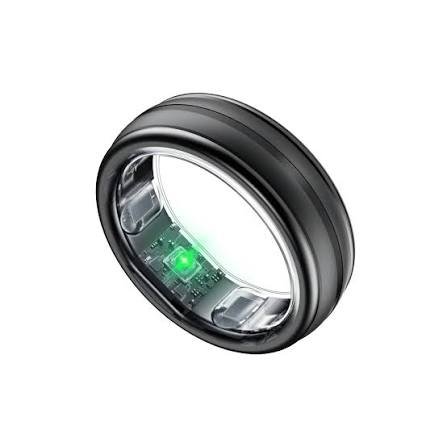
A healthy lifestyle starts with small, consistent habits. Regular exercise, good sleep, and daily movement can make a real difference in overall well-being. However, staying motivated is not always easy. This is where modern wearable technology can help. A fitness ring is a compact device that tracks important health and activity information throughout the day. It can also be a thoughtful option for people searching for practical and meaningful fitness gifts.
Unlike bulky fitness equipment, a fitness ring is lightweight, stylish, and easy to wear. It can help users understand their daily habits without adding another complicated step to their routines. Whether you are shopping for a fitness enthusiast, a busy professional, or someone starting a wellness journey, this small device may be worth considering.
What Is a Fitness Ring?
A fitness ring is a wearable electronic device designed to monitor selected health and activity measurements. It usually fits around a finger and contains small sensors that collect information while the user goes about daily activities.
Depending on the model, a fitness ring may track sleep patterns, heart rate, daily movement, activity levels, and other wellness indicators. Some models also estimate recovery and readiness based on collected data.
The main advantage is its compact design. Users can wear a ring while working, walking, relaxing, or sleeping, depending on the manufacturer’s guidance. This makes it convenient for people who prefer not to wear a smartwatch all day.
However, different rings offer different features. Before purchasing one, it is important to compare its tracking capabilities, compatibility, battery life, comfort, and subscription requirements.
Why Fitness Rings Are Becoming Popular
Wearable technology has become an important part of modern wellness routines. Many people want a simple way to understand their habits and monitor their progress.
Fitness rings appeal to users who prefer a discreet accessory instead of a large screen on their wrist. Their minimalist appearance also makes them suitable for everyday outfits, including casual and professional clothing.
Another reason for their popularity is convenience. A ring can collect useful information in the background, allowing users to review their results later through a compatible smartphone application.
For people who want to improve their routines gradually, this information can provide helpful insights. For example, tracking sleep may encourage someone to maintain a consistent bedtime, while activity measurements may remind them to move more frequently.
Fitness Ring Features Worth Considering
Not every fitness ring offers the same experience. Understanding the available features can help buyers choose a product that matches their needs.
Activity Tracking
Many fitness rings measure daily movement, steps, or activity levels. These measurements can help users understand how active they are throughout the day.
Someone who spends long hours at a desk may use this information to set simple goals, such as taking more walks or standing up regularly.
Sleep Monitoring
Sleep tracking is another feature found in many wearable rings. Depending on the model, the device may estimate sleep duration, sleep stages, and nighttime patterns.
This information can help users recognize habits that may affect their rest. However, wearable sleep measurements are estimates and should not replace professional medical assessment.
Heart Rate Monitoring
Some fitness rings measure heart rate during rest and selected activities. Reviewing these measurements over time may help users understand general patterns in their daily routines.
Sensor performance can vary, especially during intense movement. Buyers should check the manufacturer’s specifications before relying on a ring for particular activities.
Recovery Insights
Certain devices combine sleep, activity, and heart rate information to provide recovery or readiness estimates.
These insights may help users decide when to prioritize rest and when to follow their usual exercise routine. They should be treated as general guidance rather than a definitive measure of physical readiness.
Why a Fitness Ring Makes a Thoughtful Gift
Finding a useful gift can be challenging, especially when the recipient already owns common accessories. A fitness ring offers something different because it combines technology, personal style, and wellness tracking.
It can be a meaningful choice for birthdays, holidays, anniversaries, graduations, or personal milestones. Instead of giving something that may be used only occasionally, you can choose an accessory that fits into everyday life.
A fitness ring may suit someone who enjoys monitoring workouts, someone who wants to improve sleep habits, or someone who appreciates modern gadgets. It can also be a motivating gift for a friend who has recently started walking, running, or following a new fitness routine.
The best gift is one that matches the recipient’s lifestyle. Consider their interests, comfort preferences, and willingness to use a connected device before making a purchase.
How to Choose the Right Fitness Ring
There is more to choosing the right model than just looking at prices and features. A few important details can help you make a better decision.
First, consider the features the recipient will actually use. Someone interested in sleep tracking may prioritize comfort and overnight monitoring. A person focused on exercise may care more about activity measurements and sensor performance.
Second, check smartphone compatibility. Some rings work only with specific operating systems or require a particular application.
Third, compare battery life and charging methods. A longer battery life can make everyday use easier, while a convenient charging system may reduce interruptions.
Finally, review the complete cost. Some products require a paid subscription to access detailed insights. Others provide core features without recurring fees. Understanding these conditions helps prevent unexpected expenses after purchase.
Fitness Rings Compared With Smartwatches
Fitness rings and smartwatches serve similar purposes, but they offer different experiences.
A smartwatch usually includes a screen, notifications, timers, and additional applications. Some models provide detailed workout displays and GPS features, making them useful for people who want information directly on their wrist.
A fitness ring focuses on a smaller, more discreet design. It may be particularly appealing to people who want background wellness tracking without frequent notifications or a screen.
Neither option is automatically better for everyone. A runner who needs live workout statistics may prefer a smartwatch, while someone interested in sleep and everyday activity patterns may appreciate a ring.
When choosing fitness gifts, consider whether the recipient values simplicity, advanced workout features, or a combination of both.
Other Fitness Gifts to Consider
A fitness ring is not the only useful option for someone interested in health and exercise. Combining it with a complementary gift can make the present more personal.
Here are several ideas worth considering:
- Resistance bands: Suitable for home workouts, stretching, and strength exercises.
- Insulated water bottle: Helps make carrying water convenient during work or exercise.
- Yoga mat: A practical choice for stretching, yoga, and bodyweight workouts.
- Fitness journal: Allows users to record workouts, personal goals, and progress.
- Comfortable workout clothing: Useful for walking, gym sessions, and outdoor activities.
- Running accessories: Items such as reflective bands or comfortable running socks can support regular exercise.
The right choice depends on the recipient’s current routine. A beginner may appreciate simple equipment, while an experienced athlete may prefer a specialized accessory.
Who Would Appreciate a Fitness Ring?
A fitness ring can be suitable for several types of people. Busy professionals may like its discreet design, particularly if they do not want a screen on their wrist throughout the day.
Fitness enthusiasts may enjoy reviewing activity and recovery estimates alongside their existing training routines. People interested in wellness may find sleep and movement tracking useful for building consistent habits.
It may also suit frequent travelers who prefer lightweight accessories. However, anyone working with equipment, lifting heavy weights, or participating in contact sports should check whether wearing a ring is safe for that activity.
Because finger size and comfort vary, sizing is especially important. Many brands offer sizing kits or specific fitting instructions. Always follow the manufacturer’s guidance before ordering.
Tips for Getting the Most From a Fitness Ring
Buying a fitness ring is only the first step. Its value depends on how consistently and thoughtfully the user applies the information it provides.
Start by learning the device’s basic features and setting realistic goals. Avoid trying to change every habit at once. Small improvements in walking, sleep schedules, or daily movement are often easier to maintain.
Review trends instead of worrying about every individual measurement. One unusual night of sleep or one inactive day does not necessarily indicate a problem.
It is also helpful to keep the device clean, charge it as recommended, and install software updates when available. Users should review privacy settings to understand what information the application collects and how that information is stored or shared.
Most importantly, remember that a fitness ring supports healthy habits but does not replace exercise, balanced nutrition, adequate rest, or professional medical advice.
Is a Fitness Ring Worth Buying as a Gift?
A fitness ring can be a worthwhile purchase when it matches the recipient’s needs, preferences, and budget. Its compact design, convenient tracking features, and everyday appearance make it different from traditional fitness accessories.
Before buying, compare several models and check their accuracy limitations, subscription costs, battery life, sizing options, and return policies. Reading recent customer reviews can also help identify common concerns.
If the recipient already uses a smartwatch or another fitness tracker, check whether a ring would add useful features rather than duplicate what they already own.
Thoughtful fitness gifts do not need to be expensive. Their value comes from how well they support someone’s interests and daily routine.
Frequently Asked Questions
1. What does a fitness ring track?
Depending on the model, it may track steps, activity levels, heart rate, sleep patterns, and estimated recovery indicators.
2. Is a fitness ring suitable for beginners?
Yes. Beginners may find it helpful for observing everyday activity and setting manageable wellness goals.
3. Can a fitness ring replace a smartwatch?
Not completely. A ring may offer useful wellness tracking, while a smartwatch often provides a screen, notifications, and more detailed workout features.
4. Does every fitness ring require a subscription?
No. Subscription policies vary by manufacturer and model. Check which features are included in the purchase price.
5. Is a fitness ring a good birthday gift?
It can be a thoughtful birthday gift for someone interested in wearable technology, fitness, or personal wellness, provided the device suits their preferences.
6. What should I check before buying a fitness ring?
Review sizing, comfort, compatibility, tracking features, battery life, subscription costs, privacy settings, and return policies.
Conclusion
A fitness ring combines a compact design with convenient wellness and activity tracking. For people who enjoy technology or want to understand their everyday habits, it can be a practical addition to a healthy lifestyle.
When exploring fitness gifts, consider the recipient’s goals rather than choosing a product simply because it is popular. A suitable fitness ring, paired with thoughtful expectations and consistent habits, can be a useful reminder to make time for movement, rest, and personal well-being.

A cassock and surplice are traditional church garments commonly associated with clergy, servers and choir members. The cassock is a long, close-fitting garment worn as the main robe, while the surplice is a looser white vestment worn over it.
Understanding the purpose of a cassock and surplice can help churches, clergy and choir members choose suitable church vestments for worship and formal services. A cassock and surplice combination also provides a recognisable traditional appearance within many Christian denominations.
What Is a Cassock?
A cassock is a long, formal robe traditionally worn by clergy, church servers and others involved in worship. It is commonly used during services, processions and other church activities.
Cassocks are available in different styles and sizes to suit different wearers and church traditions. The Vanpoulles range includes servers’ cassocks designed for church and altar use, offering a practical and formal option for regular wear.
What Is a Surplice?
A surplice is a loose-fitting liturgical garment worn over a cassock. It is commonly worn by clergy, choir members and church servers during services and ceremonial occasions.
Vanpoulles offers traditional and organist surplices in different styles and adult sizes. Features such as the neckline, sleeve design and overall length can vary depending on the intended use.
How Are Cassocks and Surplices Worn?
The traditional arrangement is straightforward: wear the cassock first, then the surplice over it. This creates a layered appearance that combines the structured design of the cassock with the looser form of the surplice.
The exact use can depend on the denomination, service and role of the wearer. Church traditions can vary, so it is sensible to consider local practice when selecting liturgical clothing.
Who Wears a Cassock and Surplice?
A cassock and surplice may be worn by different people involved in church worship. Depending on the tradition, this can include clergy, choir members, altar servers and other church assistants.
The garments can therefore suit a range of formal church settings. Choosing the right style and size is especially important when several members of a choir or serving team need a consistent appearance.
Cassocks for Church Servers
Servers’ cassocks are designed with the practical requirements of church and altar service in mind. They may need to accommodate movement during processions, worship and other duties while retaining a neat appearance.
Vanpoulles includes servers’ cassocks within its vestments and textile products collection. Its range includes garments for both children and adults, so churches can choose suitable options for different members of a serving team.
Choosing the Right Surplice
When choosing a surplice, consider several factors. The garment should suit its intended role and allow enough room for comfortable movement.
Key considerations include:
- The correct size and length
- The style of neckline
- Sleeve design
- The intended church or choir use
- Ease of care and maintenance
- Compatibility with the cassock underneath
Vanpoulles’ traditional surplice features a round neck and is offered in adult sizes. Its organist surplice has split sleeves, providing another option for a specific role.
Caring for Church Robes and Vestments
Proper care can help church garments remain suitable for regular use. Always follow each garment’s cleaning instructions, especially when different fabrics or decorative details are involved.
Storage is also important. Vestments should be kept clean, dry and protected from unnecessary creasing or damage. A suitable clergy travel cover can also make transporting robes and albs more convenient when garments need to be taken between locations.
Finding Suitable Cassock and Surplice Garments
Choosing a cassock and surplice involves more than selecting a traditional style. Churches and individuals should consider the intended role, correct fit, comfort, appearance and the requirements of their particular worship setting.
A suitable range makes it easier to find garments for clergy, servers, and choir members, as well as other liturgical clothing. Vanpoulles provides a comprehensive selection of vestments and textile products, including cassocks, surplices, albs, stoles, copes, chasubles and other church garments.

If you’ve been searching for an abaya that actually fits your life — not just your measurements — the Rue Haya abaya collection is worth a close look. Designed for women who want sophistication without compromise, every piece in the collection is built around a simple premise: modesty and elegance aren’t opposites. They’re the same thing, done right.
Here’s a complete look at the styles available, the details that set each one apart, and how to choose the right abaya for what you actually need.
Open Abayas: Effortless Layering, Maximum Versatility
The open abayas at Rue Haya are the collection’s most versatile category — and for many women, the most-reached-for. Worn like a long coat or duster over your outfit, abayas open at the front give you full coverage while keeping whatever you’re wearing underneath visible and part of the look.
The Suhaila Satin Open Abaya collection is where this style shines brightest. Available in Champagne Gold, Soft Pistachio, Rose Gold, and Soft Ivory, these flowy abaya styles drape beautifully in a silky satin that moves with every step. The Champagne Gold and Rose Gold options are particularly striking for special occasions, while the Soft Ivory and Pistachio work effortlessly for both everyday wear and daytime events.
For a more structured take on abayas open, the Naima Contrast Trim Structured Knit Abaya in Black pairs a relaxed open silhouette with a clean white contrast trim — graphic, modern, and completely wearable across seasons.
The Rimal Soft Crepe Open Abaya in Soft Peach Floral and Soft Blush Floral bring something softer to the open abaya category — printed crepe in delicate colorways that work beautifully for garden events, Eid gatherings, or spring outings.
Closed Abayas: Clean Lines, No-Fuss Elegance
For women who prefer a seamless silhouette, the closed abaya delivers exactly that. No front opening, no layering required — just a clean, unbroken line from shoulder to hem that looks polished with almost no effort.
The Layal Noir Soft Crepe Abaya is the standout in this category. A quietly refined closed abaya in soft crepe, available in Black, Off White, Navy, and Beige. The Black and off white abaya versions are particularly striking: the Black features a crisp white contrast trim that creates a sharp, editorial look, while the white abaya dress version reverses that contrast with black trim on an ivory base.
This is the style to reach for when you want your abaya to do the work — when you want to walk in looking completely put-together with minimal effort. Pair the black with heeled mules; the off white with gold jewelry and a soft chiffon hijab.
Two-Piece Abayas: Style That Works Harder
The two piece abaya is one of the most exciting developments in modest fashion — and the Rue Haya abaya collection has invested deeply in this category.
The Samira Embroidered Crepe Abaya Set is the flagship two-piece in the collection, currently on sale. Available in Black, Navy, Olive Green, and Spiced Red, each set features delicate embroidery detail that elevates a classic silhouette into something genuinely special. Worn together, they read as one seamless look; separately, each piece can be styled with other items in your wardrobe.
For a more relaxed two-piece aesthetic, the Hind Lightweight Silk Two-Piece Abaya Set is the go-to. Available in Mocha Brown, Black, Denim Blue & Nude, Emerald & Nude, and Burgundy & Nude — each set features a belted waist that adds structure without stiffness. The chocolate brown abaya version in Mocha Brown is a particularly strong seller, offering a rich warm tone that works across seasons and skin tones.
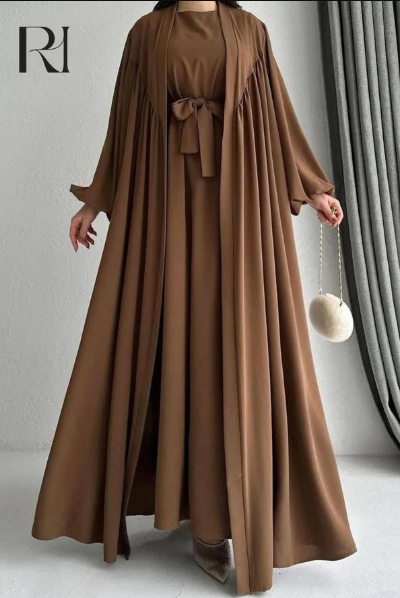
The Majda Sheer Organza Abaya Set takes two-piece styling into more formal territory — a sheer organza outer layer over a matching inner piece, available in Gold & Black, Lavender & Black, Navy & Black, and Beige & Black. These are the sets for weddings, formal occasions, and events where you want to arrive and be remembered.
Special Styles Worth Knowing
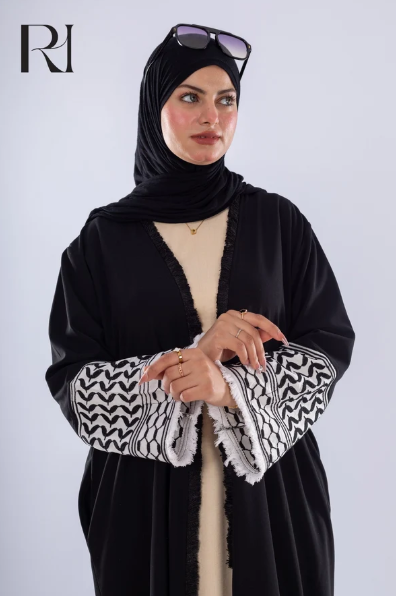
The Keffiyeh Abaya
One of the most meaningful pieces in the collection is the keffiyeh abaya — an abaya that incorporates keffiyeh-inspired embroidery or pattern detailing as a quiet but powerful nod to Palestinian heritage. For the Rue Haya brand, founded by a Palestinian-American-Canadian family, this piece carries particular significance. It’s a wearable expression of identity, and it’s designed to be worn with pride.
The Chocolate Brown Abaya
Rich, warm, and endlessly wearable — the chocolate brown abaya has become one of the most requested tones in modest fashion. The Hind Lightweight Silk Two-Piece Abaya Set in Mocha Brown and the Suhaila Draped Satin Open Abaya in Cocoa Brown both deliver this colorway beautifully. Neither is a flat brown — both carry a warmth and depth that photograph well and work across a wide range of hijab colors.
The Black Abaya Dress
The black abaya dress needs no introduction — it’s the wardrobe constant that every collection is measured against. In the Rue Haya abaya collection, the Samira Embroidered Crepe Abaya Set in Black, the Layal Noir Soft Crepe Abaya in Black, and the Aya Royalty Crepe Abaya Set in Black each offer something different: embroidered detail, clean minimalism, and structural elegance respectively.
Prayer Abayas
For women who use their abaya as a prayer abaya — wearing it both as an outer garment and for salah — look for styles in softer, more flexible fabrics with relaxed cuts that allow full freedom of movement through every position of prayer. The Suhaila Satin Open Abaya styles and the Layal Noir Closed Abaya in crepe are both well-suited for this purpose, with fabrics that move naturally and cuts generous enough for complete modesty during prayer. For dedicated prayer garments, the Rue Haya prayer wear collection offers purpose-built options.
How to Choose Your Rue Haya Abaya
The right Rue Haya abaya comes down to how you live and what you need it for.
For daily ease and layering flexibility → open abayas in satin or crepe. For clean, effortless elegance with no layering → closed abaya in soft crepe. For styling range and fashion versatility → two piece abaya sets in silk or embroidered crepe. For formal and special occasions → the Majda Organza or Sabeel Embroidered Chiffon sets. For warm tones that work year-round → the chocolate brown abaya in silk or satin. For a white abaya dress or off white abaya with contrast trim → the Layal Noir in Off White.
Browse the complete Rue Haya abaya collection — 66 pieces across open, closed, and two-piece styles, designed for women who refuse to choose between their values and their wardrobe.


-

 Celebrity1 year ago
Carolin Bacic: Life, Biography, Family, and Legacy
-

 Celebrity9 months ago
Alex Eala: Rising Tennis Star from the Philippines and Her Journey to Global Success
-

 Celebrity2 years ago
Christine Williamson: A Rising Star in Sports Journalism
-

 Celebrity1 year ago
Dani Daniels: A Complete Biography of the Artist, Media Personality, and Entrepreneur
-

 Celebrity8 months ago
Valerie Perrine: A Complete Biography of the Acclaimed Actress and Icon
-

 Celebrity1 year ago
Eleonora Incardona: Biography, Career, Age, Boyfriend, Net Worth & Lifestyle (2025)
-

 Celebrity2 years ago
Vera Davich: Biography, Life, and Legacy2025
-

 Celebrity1 year ago
Ari Kytsya: Biography, Career, Age, Lifestyle & Rise as a Global Social Media Star