
Health
Are You Recovering from a Sports Injury the Wrong Way? Here’s What Chiropractic Care Can Do

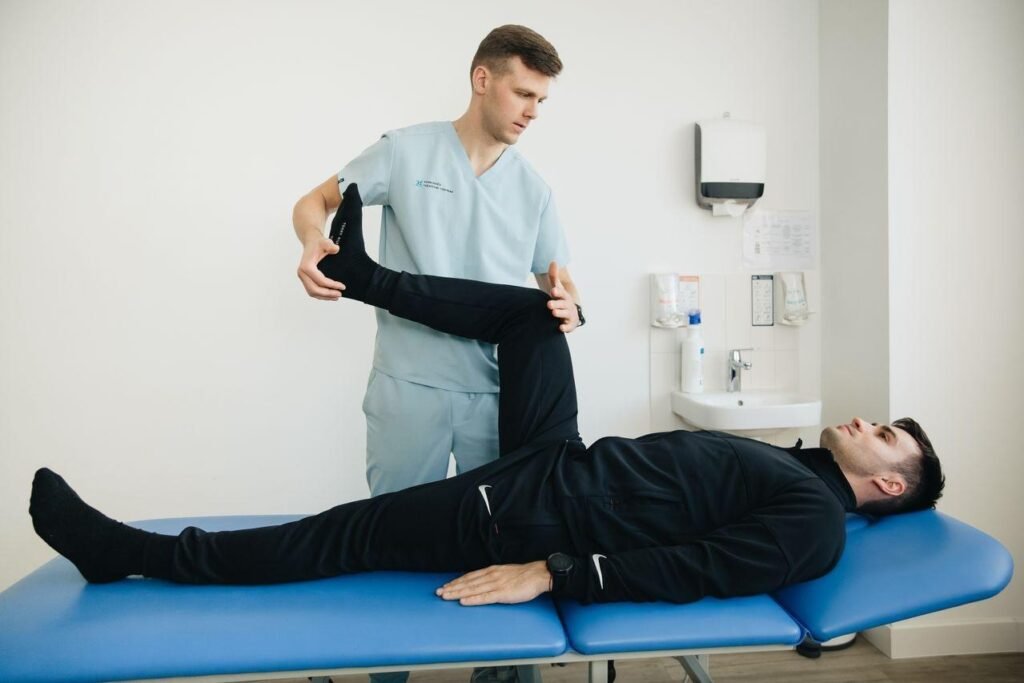
Photo by Funkcinės Terapijos Centras
Getting hurt while playing sports is tough. When you sprain an ankle or hurt your shoulder, your first thought is usually to rest, use ice, and wait. But just sitting around can actually slow down your healing and cause other body problems later. True recovery requires an active plan that fixes the real cause of the issue instead of just hiding the pain.
The Pitfalls of Conventional “Passive” Recovery
Many athletes think that staying completely still is the safest way to heal after getting hurt. While resting at first is necessary, staying inactive for too long often hurts your body more than it helps. Relying only on time and patience can cause hidden problems that change how you move in the future.
- The Danger of Prolonged Rest
When you stop moving an injured limb for weeks, the muscles quickly lose their strength. This lack of activity leads to bad joint stiffness and allows tough scar tissue to form inside. Over time, this tight tissue limits your flexibility and makes it very hard to play your sport again.
- The Band-Aid Solution
Taking pain pills might clear away the immediate ache, but it does not fix the physical problem that caused the hurt. Hiding the pain can trick you into moving too soon, which often leads to getting hurt all over again.
- The Kinetic Chain Effect
When one part of your body hurts, you naturally change how you walk or run to protect that spot. This shift puts bad weight and extra pressure on your healthy joints and muscles. If you do not fix this imbalance quickly, you will start feeling pain in new areas that were fine before.
How Chiropractic Care Transforms Sports Injury Recovery
Professional adjustments offer an active way to heal by targeting the exact source of your pain. This hands-on method helps line up your bones so your muscles do not have to work extra hard to support you. By focusing on joint movement, you can heal much faster and get your strength back.
- Restoring Joint Mobility
Gentle pressure helps unlock stiff joints so they can slide and turn normally again. This quick fix takes the heavy stress off your tight muscles and ligaments right away. Once the pressure drops, your body can move naturally without any pinching or hurting.
- Enhancing Nervous System Function
Your spine holds the main path for messages traveling between your brain and the rest of your body. When your bones are out of line, it can mess up the signals that control healing and muscle movement. Keeping this pathway clear allows your body to repair itself much faster.
- Customized Rehabilitation
A real recovery plan involves a lot more than just cracking a few joints. Providers create specific stretching and exercise plans that match the exact movements you use in your sport. This focus ensures you rebuild strength at the right angles you need to play well.
Beyond the Spine: The Power of Multimodal Care
Real healing means looking at your whole body as one connected system instead of separate pieces. Mixing bone alignment with muscle care ensures that every part of your injury heals at the exact same pace. This complete method cuts down your recovery time and builds a much stronger foundation for exercise.
- A Holistic Ecosystem
Bones and muscles must work together to help you move smoothly. If a provider only fixes the joint alignment but leaves the surrounding muscles tight, your body will just pull itself back out of place. Treating both parts at the same time keeps your body balanced for the future.
- Complementary Modalities
Using different treatments together helps tackle your injury from multiple angles at once. For instance, cross-disciplinary clinics that offer professional massage therapy in Cambridge demonstrates how manual tissue manipulation perfectly complements spinal adjustments to break down scar tissue. Combining these methods keeps blood flowing well and relaxes deep muscle knots.
Choosing the Right Professional for Your Recovery
Finding the right person to guide your recovery is a huge step in getting back to your sport. You need a professional who truly understands the physical strain of your specific activities and daily life. Making a smart choice ensures you get a safe plan that fits your personal goals.
- What to Look For
Look for providers who have extra training in sports injuries and how the body moves. A good professional will do a full checkup to see how you balance, bend, and walk. They should explain your issues clearly and focus on preventing future injuries rather than just giving a quick fix.
- Local Expertise Matters
Picking a provider close to home makes it much easier to show up for your regular appointments. Consistency is the most important part of tracking your healing and changing your plan as you get stronger. If you are a local athlete looking to get back on the field safely, consulting an experienced chiropractor in Oshawa can provide the localized, hands-on care needed to map out a precise rehabilitation blueprint.


Physical therapy clinics lose an estimated 10–15% of potential revenue to denied or underpaid claims each year, and a significant portion of that loss is due to one single thing: denied or underpaid therapy cap and medical necessity claims. Although the hard therapy cap was eliminated from the package in 2018, along with the KX modifier and targeted medical review process, the billing risk remains. It only took different forms. Even clinics that don’t keep an eye on thresholds, or fail to document thresholds once a patient exceeded the annual limit, continue to see claims bounce back at rates similar to the old cap system.
The discovery can be frustrating for many PT practice owners. The cap should have been removed. In real life, Medicare’s “therapy threshold” for combined PT and speech-language pathology services is slightly over $2,410.00, and the total billed amount must reach that amount or exceed it for each subsequent claim and requires a KX modifier along with documentation demonstrating continued medical necessity. If you miss this modifier, or provide documentation that does not support continued care, the claim will be denied or marked for review. Its predecessor is the old cap, but it’s smaller and quieter.
Why Therapy Cap Denials Keep Happening
Part of the problem is sheer volume. A busy outpatient PT clinic might be tracking threshold amounts across hundreds of active patients simultaneously, each on a different treatment timeline, each accumulating charges at a different pace. Without a system built specifically to flag patients as they approach the threshold, it’s easy for front-desk and billing staff to miss the moment a claim needs a KX modifier, especially in smaller practices where one or two people are handling billing alongside a dozen other responsibilities.
The other half of the equation is documentation. Medicare isn’t satisfied with having the KX modifier slapped on; it wants clinical notes that reflect continued necessity, measurements of functional progress, new goals, and a good rationale for therapy beyond the threshold as being medically indicated, not routine maintenance. A big part of denials is attributed to the disconnect between the clinical language used to treat patients and the language used in billing. Therapists are not trained to write payer-proof documentation; that is where the disconnect lies, and a big part of the reason denials occur.
Another risk is targeted medical review. Providers who have frequent patients with claims that exceed thresholds can be flagged and subjected to extra review and scrutiny, increasing the likelihood of delayed or denied reimbursement during the review process and giving clinics with higher claim volumes and/or more expensive treatment plans a higher chance of being flagged for review.
The Revenue Impact Adds Up Quietly
A single denied claim for a therapy cap issue isn’t catastrophic on its own, usually in the range of $75 to $150 per visit. Volume and delay are the real issues. If it’s not foolproof, a clinic that treats 40 patients per week, many of whom may hit the annual limit multiple times throughout a treatment course, can end up with dozens of denials per month. With every denial comes the research, correction, and resubmission of a clean claim, which forces staff to be diverted from other revenue cycle tasks, including clean claims.
There’s also an unquantifiable opportunity cost that isn’t so easy to see on the spreadsheet. Clinics that are identified for specific medical review may be more conservative with their care, and so may discharge patients sooner than clinically appropriate, just to avoid the administrative burden of continued documentation. This is a loss to the care of the patient as well as to revenue.
What Outsourcing Actually Changes?
This is the point where a lot of clinic owners start looking at outsourced physical therapy billing services, and the appeal is straightforward: dedicated billing teams build systems specifically designed to catch these issues before they become denials, rather than reacting to them after the fact.
The most significant change is proactive threshold tracking. An outsourced billing team will automatically track all patient numbers in a clinic’s entire patient directory and notify the accounts as they near the limit, even long before the KX modifier is needed, so there is no “week of forgetfulness” where accounts go undetected. That alone is a major component of the denial that could be avoided.
Documentation coaching is the second shift. The experts in the billing industry understand what to include in medical necessity notes, and some companies specialize in outsourcing that will work with clinical staff to streamline documentation templates to ensure that functional progress is documented and ongoing need is not just assumed but clearly stated, but doesn’t add a ton of extra work for the therapist. It’s more of a cooperative rather than a punishment-based solution.
Denial management is also a much more systematic process. Outsourced billing partners tend to monitor denial trends by payer, by type of claim, and by documentation style at a particular clinic to see if a clinic’s denials are occurring in relation to a particular type of treatment plan, a particular documentation style by a particular therapist, or a particular payer. The type of pattern recognition is hard for an in-house team that has to build on top of their own claims, just because they don’t always have the time to look back at claims data for months and months.
The picture is completed by appeals handling. If a therapy cap denial does occur, committed billing teams understand how to quickly build an appeal, backing it with the appropriate documentation and Medicare guidance, before the claim is too far gone to appeal.


A cutting phase generally has one primary objective: reducing body fat while preserving as much muscle and training performance as reasonably possible.
That sounds straightforward, but the process can become more difficult as calories decrease. Training may feel harder, hunger can increase, recovery may slow, and people sometimes respond by making their diet or exercise plan unnecessarily extreme.
A successful cutting phase does not need to involve starving yourself or spending hours doing cardio every day. A more sustainable approach combines an appropriate calorie deficit with resistance training, sufficient protein, recovery, and realistic expectations.
Understand What a Cutting Phase Is
A cutting phase is a period in which calorie intake is intentionally managed to promote fat loss.
The objective differs from simply losing as much body weight as possible.
Someone who resistance trains will usually want to preserve muscle while reducing body fat. This makes training performance and nutrition particularly important.
Rapid changes on the scale are not automatically evidence of a better cutting plan.
Body weight can fluctuate because of water, food intake, glycogen, sodium, and other factors.
Progress should therefore be assessed over time rather than according to a single day’s measurement.
Use a Manageable Calorie Deficit
Fat loss requires an energy deficit, but making that deficit extremely aggressive can create unnecessary problems.
When calories are reduced too sharply, hunger and fatigue may increase while training performance can become more difficult to maintain.
A moderate approach can make the diet easier to sustain.
The appropriate calorie intake varies considerably between individuals because body size, activity, training, goals, and metabolism all influence energy requirements.
Adjust the plan according to actual progress rather than copying someone else’s calorie target.
Keep Protein Intake Consistent
Protein becomes particularly important during a cutting phase because the goal is to maintain muscle while losing weight.
Include adequate protein within the overall diet and distribute protein-containing foods according to a schedule that works for you.
Common sources include meat, fish, eggs, dairy products, legumes, soy foods, and other protein-rich options.
Protein supplements can also provide convenience when appropriate, but they are not fundamentally different from the wider objective of meeting daily nutritional requirements.
Food quality and overall diet still matter.
Continue Resistance Training
One common mistake during a cut is dramatically changing a productive resistance-training program.
Strength training provides an important reason for the body to retain muscle.
You may need to adjust volume as calories decrease and recovery becomes more challenging, but that does not mean resistance training should become an afterthought.
Continue performing challenging exercises with appropriate technique.
Maintaining performance reasonably well throughout a cut can be a useful indicator that the program is supporting muscle retention.
Use Cardio Strategically
Cardiovascular exercise can increase energy expenditure and provide health and fitness benefits.
However, adding excessive cardio immediately can make recovery more difficult.
Start with an amount that complements resistance training rather than interfering with it.
Walking can also contribute meaningfully to daily activity without creating the same recovery demands as intense cardio sessions.
As the cutting phase progresses, activity can be adjusted according to results.
The objective is to create a sustainable overall energy deficit rather than exhausting yourself.
Where Supplements Fit Into a Cutting Phase
Supplements can play a supporting role, but they should not become the foundation of a fat-loss strategy.
No supplement can compensate for consistently consuming more calories than required for the intended goal.
Likewise, supplements cannot replace adequate protein, resistance training, sleep, and recovery.
Once nutrition, resistance training, sleep, and recovery are in place, supplements can be considered according to individual goals. People researching the best supplements for cutting should focus on what each ingredient is intended to support, whether it complements their diet and training, and whether the product adds genuine value to their existing routine.
Avoid assuming that a larger supplement stack automatically produces better results.
Do Not Automatically Stop Creatine
Some people stop taking creatine when beginning a cut because they associate it with weight gain.
Creatine can increase water stored within muscle, but this is different from gaining body fat.
People who already use creatine as part of their resistance-training routine may choose to continue during a cutting phase because maintaining training quality remains important.
Scale weight should always be interpreted in context.
A change in water weight does not necessarily indicate that fat loss has stopped.
Be Sensible With Caffeine
Caffeine is common in coffee, energy drinks, pre-workouts, and some supplements marketed toward people dieting.
It can increase alertness and may help some people feel more prepared to train.
However, consuming more caffeine is not automatically better.
High intake can interfere with sleep or cause other unwanted effects in some people.
Poor sleep can make dieting and training considerably harder.
Consider total caffeine intake from every source rather than looking at individual products separately.
Prioritize Sleep and Recovery
Recovery can become more challenging when calories are reduced.
Sleep should therefore remain a priority.
Consistently inadequate sleep can make training feel harder and may also make appetite management more difficult.
If recovery deteriorates, consider whether training volume, cardio, calorie intake, stress, or sleep needs adjustment.
A cutting phase should challenge you, but it should not require feeling completely exhausted every day.
Track More Than Scale Weight
The scale is useful, but it does not provide a complete picture.
Body weight naturally fluctuates.
Consider longer-term trends alongside waist measurements, progress photographs, gym performance, and how clothing fits.
Looking at several indicators can make it easier to distinguish real progress from temporary water-weight fluctuations.
Avoid making dramatic changes because of one unexpected weigh-in.
Know When to Finish the Cut
Cutting phases should have a purpose rather than continuing indefinitely.
As body weight and calories decrease, maintaining performance and recovery can become more difficult.
Establishing an approximate goal or timeframe can help prevent the diet from becoming unnecessarily prolonged.
Once the cutting phase ends, calorie intake can be adjusted gradually according to the next goal.
Long-term fitness depends on maintaining productive habits beyond a single dieting phase.
Frequently Asked Questions
What is a cutting phase?
A cutting phase is a period of controlled calorie reduction intended to decrease body fat while preserving as much muscle and training performance as possible.
Do I need supplements when cutting?
No. Supplements are optional. Nutrition, calorie management, resistance training, protein, sleep, and recovery remain the fundamentals.
Should I stop creatine while cutting?
Not necessarily. Creatine can remain useful for people performing resistance training. Water associated with creatine use should not be confused with body fat.
Is protein more important during a cut?
Adequate protein is particularly useful when calories are restricted and maintaining muscle is a priority.
Should I increase cardio when cutting?
Cardio can help increase energy expenditure, but it should be introduced in a way that does not unnecessarily interfere with resistance training and recovery.
Can caffeine help during a cutting phase?
Caffeine may support alertness and exercise performance for some people, but total intake and individual tolerance should be considered.
How quickly should I lose weight during a cut?
There is no universal rate appropriate for everyone. The ideal pace depends on factors including starting body composition, goals, training, and individual circumstances.
Why is my weight not decreasing every day?
Body weight fluctuates because of water, food, sodium, glycogen, and other factors. Longer-term trends are generally more useful than individual measurements.

Medical equipment purchasing involves more than finding a product that performs a particular function.
Hospitals, clinics, emergency medical services, and other healthcare organizations also need to consider reliability, compatibility, staff requirements, maintenance, patient needs, and the expected working environment.
A poorly matched device can create operational problems even if the equipment itself is technically capable.
Taking a structured approach to purchasing can help healthcare organizations choose equipment that fits their actual requirements and remains practical to operate over time.
Define the Requirement First
Purchasing should begin with a clear understanding of the problem the equipment needs to solve.
Is the device intended for patient transport, monitoring, emergency response, examination, or another function?
Where will it be used?
An ambulance, hospital corridor, treatment room, and private residence create very different working conditions.
Defining these factors before comparing products helps buyers focus on appropriate equipment instead of being distracted by features they may never use.
Match Medical Equipment to Its Intended Use
Healthcare equipment should be evaluated according to its actual working environment.
Size, weight, mobility, capacity, power requirements, durability, and ease of operation can all become important depending on the application.
Equipment selection should begin with the intended application rather than a particular product or price point. Healthcare teams comparing Medical Devices should consider where the equipment will be used, who will operate it, compatibility with existing systems, maintenance requirements, and the needs of the patients it is intended to support.
A product that performs well in one environment may not necessarily be appropriate in another.
Consider the Needs of Staff
Healthcare workers may use equipment repeatedly throughout a shift.
Ease of operation therefore matters.
Complicated controls or awkward physical handling can create unnecessary difficulties, particularly during time-sensitive situations.
Ergonomics can also be important for equipment used to move or reposition patients.
Organizations should involve relevant staff in purchasing decisions when practical because employees who regularly use the equipment can identify operational considerations that may not be obvious from a product specification.
Consider Patient Transport Requirements
Patient transport presents specific equipment challenges.
Stretchers, ambulance cots, stair chairs, transfer devices, and related equipment may be used in environments ranging from hospital corridors to emergency scenes.
Buyers should consider weight capacity, dimensions, maneuverability, patient securing systems, loading requirements, and compatibility with vehicles or other equipment.
The patient population also matters.
An organization should select equipment appropriate for the range of patients it expects to serve.
Look Beyond the Initial Purchase Price
The cheapest device is not always the least expensive option over its working life.
Maintenance, repairs, replacement components, accessories, batteries, staff training, and downtime can all influence total cost.
A more expensive device that is reliable and straightforward to maintain may provide better long-term value than equipment requiring frequent repairs.
Purchasing teams should therefore evaluate expected ownership costs rather than comparing only initial prices.
Check Replacement Part Availability
Equipment eventually requires maintenance.
Before purchasing, determine whether appropriate replacement parts and accessories are readily available.
This becomes particularly important for devices expected to remain in service for many years.
A minor failed component can sometimes prevent an otherwise functional piece of equipment from being used.
Reliable access to parts can reduce downtime and make long-term maintenance more manageable.
Evaluate Compatibility
New equipment does not operate in isolation.
It may need to work with existing vehicles, mounting systems, accessories, power supplies, software, storage spaces, or other devices.
Compatibility should be confirmed before purchasing.
Assumptions can become expensive if equipment arrives and cannot be integrated with existing infrastructure.
For larger purchases, testing or demonstrations may help organizations evaluate whether a product fits existing workflows.
Establish Inspection Procedures
Medical equipment needs ongoing attention after purchase.
Inspection procedures can help identify wear, damage, or developing faults before they interfere with use.
The appropriate checks depend on the device.
For transport equipment, inspections might include frames, wheels, brakes, restraints, mattresses, batteries, powered components, and other mechanisms.
Organizations should follow relevant manufacturer guidance and internal procedures.
Inspection records can also provide useful information about equipment reliability over time.
Plan Preventive Maintenance
Waiting until equipment fails is not always an effective maintenance strategy.
Preventive maintenance can identify developing problems and allow repairs to be planned before equipment becomes unavailable unexpectedly.
Maintenance schedules should reflect manufacturer guidance, frequency of use, operating conditions, and organizational requirements.
Accurate service records are useful for identifying recurring faults.
If one device repeatedly requires repair, the organization can use that history when deciding whether continued maintenance or replacement represents better value.
Consider New and Refurbished Options Carefully
Some healthcare organizations consider refurbished equipment when budgets are limited or when particular models remain suitable for their needs.
Refurbished equipment should still be evaluated carefully.
Buyers should understand the condition, inspection process, servicing performed, warranty, specifications, and suitability for the intended use.
The fact that equipment has been previously used does not automatically make it inappropriate.
Likewise, a low price does not automatically make it good value.
The purchasing decision should be based on condition, reliability, suitability, and support.
Train Staff Before Routine Use
New equipment should not simply arrive and immediately enter normal service without appropriate preparation.
Staff need to understand operation, safety features, limitations, inspection requirements, and procedures for reporting problems.
Training becomes particularly important when new equipment operates differently from the models employees already know.
Refresher training may also be useful for devices used infrequently.
Staff should feel confident using equipment before they need to rely on it in demanding circumstances.
Maintain an Equipment Inventory
A centralized inventory can improve equipment management.
Useful records may include manufacturer, model, serial number, purchase date, location, inspection history, repair history, warranty details, and expected replacement timeframe.
This information makes it easier to identify equipment requiring service or approaching the end of its expected useful life.
It can also support budgeting.
Instead of replacing several devices unexpectedly in the same year, organizations can plan future capital requirements more effectively.
Develop a Replacement Strategy
Equipment does not need to fail completely before replacement is considered.
Age, repair frequency, reliability, part availability, changing clinical requirements, and compatibility can all influence replacement decisions.
Planning ahead reduces dependence on emergency purchasing.
Emergency purchasing can limit the time available to compare products and may result in decisions based primarily on immediate availability.
A planned replacement strategy provides more opportunity to evaluate alternatives properly.
Frequently Asked Questions
What should healthcare organizations consider when buying medical equipment?
Important considerations include intended use, patient requirements, reliability, specifications, compatibility, staff needs, maintenance, replacement parts, and total ownership costs.
Why is compatibility important?
Equipment may need to work with existing accessories, vehicles, mounting systems, infrastructure, or other devices. Confirming compatibility can prevent expensive purchasing mistakes.
Should healthcare facilities consider refurbished equipment?
Refurbished equipment can be considered when appropriate, but buyers should evaluate condition, servicing, inspection, specifications, warranty, and suitability carefully.
Why are medical equipment inspections important?
Regular inspections can identify wear, damage, or developing problems before equipment becomes unreliable or unavailable.
What is preventive maintenance?
Preventive maintenance involves scheduled checks and servicing intended to identify or address problems before equipment fails unexpectedly.
Why should staff be involved in purchasing decisions?
Employees who regularly use equipment may identify practical issues involving ergonomics, workflow, controls, maneuverability, or other operational requirements.
Why should organizations keep equipment records?
Records help track inspections, maintenance, repairs, warranties, equipment age, and replacement requirements.
When should medical equipment be replaced?
Replacement may be considered when equipment becomes unreliable, increasingly expensive to maintain, difficult to repair, incompatible with current needs, or no longer appropriate for its intended application.


-

 Celebrity1 year ago
Carolin Bacic: Life, Biography, Family, and Legacy
-

 Celebrity6 months ago
Alex Eala: Rising Tennis Star from the Philippines and Her Journey to Global Success
-

 Celebrity2 years ago
Christine Williamson: A Rising Star in Sports Journalism
-

 Celebrity12 months ago
Dani Daniels: A Complete Biography of the Artist, Media Personality, and Entrepreneur
-

 Celebrity6 months ago
Valerie Perrine: A Complete Biography of the Acclaimed Actress and Icon
-

 Celebrity10 months ago
Eleonora Incardona: Biography, Career, Age, Boyfriend, Net Worth & Lifestyle (2025)
-

 Celebrity2 years ago
Vera Davich: Biography, Life, and Legacy2025
-

 Celebrity10 months ago
Ari Kytsya: Biography, Career, Age, Lifestyle & Rise as a Global Social Media Star