
Business
How Integrated Robot Joint Modules Simplify Robotic System Design

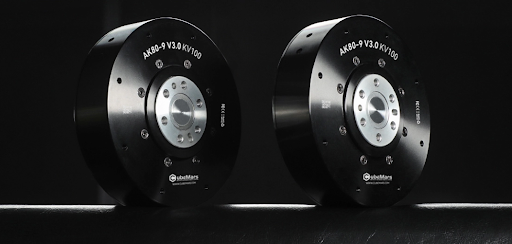
Designing a robot joint from separate parts can quickly become complicated. Engineers need to select a motor, match it with a gearbox, add feedback sensors, design the housing, connect the driver, manage cables, and make sure the whole system works with the robot controller.
An integrated robot joint module simplifies this process by combining several key motion components into one compact unit. Instead of building every joint from the ground up, engineers can focus on the robot’s structure, movement, control logic, and real-world task performance.
This is especially useful for robotic arms, humanoid robots, quadruped robots, exoskeletons, mobile robots, and custom automation systems where many joints need to work together.
Why Building Robot Joints From Separate Parts Takes More Engineering Work
A robot joint may look simple from the outside, but inside it requires many parts to work together. The motor must provide motion. The transmission must deliver torque. The encoder must provide feedback. The driver must control the system. The mechanical structure must hold everything in place.
When these parts are selected separately, engineers need to solve several problems at once:
- Will the motor fit inside the joint?
- Does the gearbox match the torque and speed needs?
- Can the encoder be mounted accurately?
- Is the driver compatible with the control system?
- How will cables be routed?
- Will the joint stay compact and reliable?
Engineers developing compact robotic systems often evaluate a robot joint motor based on torque output, size, weight, feedback accuracy, control mode, and integration needs.
The more parts that must be matched manually, the more time the design process can take. Integrated joint modules reduce this burden by packaging important motion functions into a more complete joint solution.
How Integrated Modules Combine Motor, Feedback, and Control in One Unit
The biggest advantage of an integrated robot joint module is that it brings multiple functions together. This makes the joint easier to install, test, and connect with the rest of the robot.
A simple comparison looks like this:
| Joint Function | Separate Design | Integrated Module |
| Motion Output | Motor selected separately | Built into the module |
| Torque Transfer | Gear system added separately | Matched with the joint design |
| Position Feedback | Encoder installed separately | Integrated feedback system |
| Control Connection | Driver setup handled separately | Easier controller connection |
| Mechanical Packaging | Custom housing required | Compact module structure |
This does not mean engineers no longer need to design carefully. It means they can spend less time matching basic components and more time improving how the robot actually moves.
For many projects, that difference is important.
Why Modular Joint Design Makes Robot Architecture Easier to Plan
Robots often use repeated joint structures. A robotic arm may have several rotating joints. A quadruped robot may have multiple joints in each leg. A humanoid robot may need actuators in the shoulders, elbows, wrists, hips, knees, and ankles.
When each joint is built as a module, the whole robot architecture becomes easier to organize.
Instead of thinking only about individual parts, engineers can think in terms of joint roles:
- A wrist joint may need compact size and precise positioning.
- A shoulder joint may need smooth movement and wide range of motion.
- A knee joint may need stronger support and repeated motion.
- A leg joint may need fast response and stable torque output.
This makes system planning clearer. Engineers can match each joint module to the function of that part of the robot.
How Integrated Joint Modules Speed Up Prototyping
Robot development usually involves many rounds of testing. A team may need to build a prototype, test movement, adjust joint placement, change the frame, tune the control system, and test again.
Integrated joint modules can speed up this process because the motion unit is already more complete. Engineers can move into motion testing sooner instead of spending too much time assembling and debugging separate joint components.
This is useful during:
- Early robot prototyping
- Robotic arm development
- Legged robot testing
- Exoskeleton design
- Research projects
- Custom automation development
Faster prototyping also helps teams find design problems earlier. If a joint location, torque level, or movement range needs to change, engineers can make adjustments based on real test data.
How Joint Modules Improve Multi-Joint Coordination
Many robots are only useful when several joints move together smoothly. A robotic arm needs multiple joints to reach and position an object. A quadruped robot needs leg joints to coordinate during walking. A humanoid robot needs upper and lower body joints to work together during balance and movement.
Integrated joint modules can make this coordination easier because each joint has a clearer motion structure and feedback path.
Multi-joint coordination depends on:
| Requirement | Why It Matters |
| Predictable Motion | Helps each joint follow the planned movement |
| Accurate Feedback | Allows the controller to track joint position |
| Smooth Torque Output | Supports stable motion between joints |
| Consistent Timing | Helps multiple joints move together |
| Compact Structure | Makes the robot easier to design and assemble |
When the joint module is easier to control and monitor, the full robot system becomes easier to coordinate.
This is one of the main ways integrated modules simplify robotic system design.
Where Integrated Joint Modules Are Commonly Used
Integrated robot joint modules are useful in many robotic systems because they reduce design complexity and support compact motion.
| Application | Why Integrated Modules Help |
| Robotic Arms | Support precise multi-joint movement |
| Humanoid Robots | Help organize many upper- and lower-limb joints |
| Quadruped Robots | Support repeated leg motion and gait control |
| Exoskeletons | Provide compact actuation for wearable joints |
| Mobile Robots | Help integrate motion into compact platforms |
| Research Robots | Make prototyping and testing faster |
These applications are different, but they share one common need: reliable joint movement in a compact design.
Integrated modules help engineers build around that need more efficiently.
What Engineers Should Check Before Choosing a Joint Module
An integrated joint module can simplify design, but it still needs to match the robot’s real requirements. Engineers should not choose only by size or torque. The full system matters.
A practical checklist includes:
- Required torque
- Speed range
- Module size
- Module weight
- Feedback accuracy
- Control mode
- Communication interface
- Mounting structure
- Thermal behavior
- Duty cycle
- Motion smoothness
- Space for cable routing
- Compatibility with the robot controller
The best choice depends on the joint’s task. A wrist joint, knee joint, shoulder joint, and leg joint may all require different priorities.
Good robotic system design starts by understanding what each joint must do.
Final Thoughts
Integrated robot joint modules simplify robotic system design by reducing the amount of component-level engineering required inside each joint. They combine key motion functions into a compact structure, help engineers plan robot architecture more clearly, speed up prototyping, and support better multi-joint coordination.
As robots become more complex, joint design becomes more important. Engineers need motion systems that are compact, responsive, accurate, and easier to integrate.
By using integrated joint modules, development teams can spend less time solving basic actuator assembly problems and more time improving the robot’s movement, control, and real-world performance.


The art of packing fragile and high-value items when you move house
Moving house is rarely calm. Yet the part that causes the most regret is almost always the same: the box that rattled, the frame that cracked, the heirloom that did not survive the journey.
Fragile and high-value items deserve a different mindset to the everyday contents of your home. They are not just objects to shift from one room to another. They carry memory, money, or both, and they cannot simply be replaced when something goes wrong.
The good news is that careful packing is a learnable skill rather than a talent. With the right materials and a little patience, you can protect almost anything you own and move it safely. This guide walks through how to do it well from start to finish.
Start with the right materials
Most packing failures trace back to weak supplies. Thin boxes, recycled newspaper, and a single roll of tape will only take you so far when glassware and electronics are involved.
Invest in double-walled cartons, proper packing paper, bubble wrap, and foam corners. Acid-free tissue is worth buying for anything with a delicate surface, such as silver, lacquer, or fine ceramics.
Keep a few specialist boxes on hand too. Picture cartons, dish barrels, and wardrobe boxes are designed for awkward shapes, and they hold their structure far better than a generic carton you found at the supermarket.
Wrap each item as if it travels alone
The single most useful habit is to treat every fragile piece as though it will make the trip by itself. Wrap it fully, with no exposed edges, then cushion it inside its container.
Glassware should be wrapped individually, never stacked bare. Stemware needs extra attention around the neck, which is the first point to snap under pressure. Plates travel best standing on their edge rather than lying flat.
For electronics, the original boxes are ideal because the moulded inserts were built for the device. If those are long gone, wrap each unit in antistatic material first, then bubble wrap, and label which cables belong where.
Protect art, mirrors and antiques with care
Framed art and mirrors are vulnerable across the flat surface, not just at the corners. Apply painter’s tape in a large cross over the glass so that, if it does break, the shards stay together instead of scattering.
Wrap the frame in bubble wrap, add foam corners, then slide it into a picture carton. Always store and carry these pieces upright. Laying them flat invites pressure cracks that you may not notice until much later.
Antiques can be deceptively delicate. Old joints, veneers, and finishes react badly to knocks and to sudden changes in temperature. Pad generously, and avoid plastic directly against aged timber, which can trap moisture and mark the surface.
Label clearly and pack with logic
A well-packed box still needs to be handled correctly, and that depends on what the label tells people. Mark every fragile carton on multiple sides, not just the top, so the warning is visible however it is stacked.
Note which way is up, and add a short description of the contents. A box that reads “fragile, glassware, this way up” gets treated with more respect than one simply marked “kitchen”.
Pack heavier items low and lighter ones high within each box, and never leave gaps. Empty space lets contents shift in transit, and movement is what turns a small bump into a breakage.
Know when professional help pays off
There is a point where doing it yourself stops being thrifty and starts being a gamble. High-value collections, large artworks, pianos, and irreplaceable family pieces often sit beyond what a weekend of home packing can safely handle.
This is where bringing in specialists makes sense, and many people who own valuable or fragile collections choose dedicated packing services in Melbourne rather than risk the items on their own. Trained packers carry the right materials, work to a system, and have handled the awkward cases many times before.
The value here is not only physical protection. It is also time and peace of mind during a stressful week, which is often worth more than the cost of the service itself.
Think about insurance before you lift a box
Insurance is the part most people skip until it is too late. Before moving day, check whether your contents cover extends to items in transit, because many standard policies quietly exclude that window.
For genuinely valuable pieces, consider a separate transit or removals policy. Read the conditions closely, since some insurers will only pay out if the item was professionally packed in the first place.
Keep a simple inventory as you go. Photograph high-value items, note their condition, and store the record somewhere you can reach it. If a claim ever becomes necessary, that evidence does the heavy lifting for you.
Build a small survival kit for the essentials
Some items should never go in the back of the truck at all. Jewellery, important documents, small electronics, and anything truly irreplaceable belong with you.
Pack a single, clearly identified bag or box that stays in your own car. Treat it as the one container you would grab in an emergency, and resist the urge to top it up with everyday clutter.
This habit removes a surprising amount of anxiety. Knowing your passport, hard drives, and grandmother’s ring are within arm’s reach lets you focus on the larger logistics without that nagging worry.
Give yourself time and a steady pace
Rushing is the enemy of careful packing. Fragile items punish haste, and the last few hours before a move are when most accidents happen.
Start with the pieces you use least, and work towards the everyday items. Spreading the task across several days keeps your attention sharp and your wrapping consistent from the first box to the last.
If you can, set aside a clear, clean surface as your packing station. A tidy space with materials laid out within reach makes the whole process faster, calmer, and far gentler on the things you care about most.
Packing well is ultimately about respect for your belongings. Give the fragile and the valuable the extra minutes they deserve, and they will reach your new home in the same condition they left the old one.

Legal disputes are not always dramatic courtroom battles. Many begin as simple disagreements between individuals, businesses, property owners, or other parties. When a conflict cannot be resolved through discussion, legal action may become necessary. Understanding civil dispute law West Seattle can help people recognize their options when a disagreement affects their finances, property, or personal interests.
Civil disputes can arise in many situations. Contract disagreements, property issues, unpaid debts, and personal injury matters are common examples. While each case is unique, most disputes involve one party claiming that another caused harm or failed to meet a legal obligation. Knowing how these cases develop can help individuals make informed decisions.
Top Situations That Commonly Lead to Civil Disputes
Many disputes begin with misunderstandings. One party may believe an agreement was broken, while the other believes they acted appropriately. These differences can grow when expectations are not clearly documented. Written records often become important when determining what actually occurred.
Property related conflicts are another common source of disputes. Neighbors may disagree about boundaries, access rights, or maintenance responsibilities. Business relationships can also create challenges when parties interpret obligations differently. Addressing concerns early may prevent a conflict from becoming more complicated.
Why Documentation Matters in Legal Conflicts
Good records can make a significant difference during a dispute. Emails, contracts, invoices, photographs, and written communications often provide valuable information. These materials help establish timelines and clarify what actions were taken. Accurate records may also reduce uncertainty when facts are questioned, which is an important consideration in matters involving civil dispute law West Seattle.
Documentation becomes even more important as time passes. Memories can fade, and verbal conversations may be remembered differently by each party. Written evidence provides an objective reference point. Keeping organized records is often one of the most effective ways to support a legal position and strengthen the overall evaluation of a dispute.
Best Ways to Address a Disagreement Before Litigation
Not every dispute requires formal legal action. In some situations, direct communication can help resolve concerns before they escalate. Discussing the issue calmly and clearly may lead to a practical solution. Many parties prefer resolving disagreements without lengthy legal proceedings.
Negotiation can also be useful when both sides are willing to cooperate. Finding common ground may save time and resources. While resolution is not always possible, early discussions often help identify the key issues. Understanding the other party’s position can provide valuable insight.
How Personal Injury Claims Fit Into Civil Law
Personal injury cases are a significant part of civil law. These claims generally arise when someone suffers harm because of another party’s actions or negligence. The injured person may seek compensation for losses related to the incident. Civil courts frequently handle these types of disputes, and a personal injury lawyer West Seattle may help individuals understand the legal process involved.
Unlike criminal cases, personal injury matters focus on financial recovery rather than punishment. The goal is often to address damages resulting from an injury. Medical expenses, lost income, and other losses may become part of the claim. Each situation depends on its specific facts and evidence.
When a Personal Injury Lawyer West Seattle May Be Helpful
An accident can create challenges that extend beyond physical injuries. Medical treatment, missed work, and ongoing recovery often place pressure on injured individuals and their families. A personal injury lawyer West Seattle may assist with understanding legal rights and evaluating available options. Early guidance can help individuals navigate a complex situation.
Personal injury matters often involve substantial documentation. Medical records, accident reports, witness statements, and photographs may all contribute to a claim. Gathering information early can help preserve important evidence. Careful preparation often supports a stronger case evaluation.
Top Sources of Evidence in Injury Cases
Evidence helps establish how an accident occurred and what damages resulted. Medical records are frequently among the most important forms of documentation. They help demonstrate the nature of injuries and the treatment received. Consistent medical documentation can provide valuable support throughout a claim.
Witness statements may also contribute important information. Independent observations often help clarify disputed facts. In some situations, photographs, video footage, or official reports may be available. Combining multiple forms of evidence often creates a clearer picture of the incident.
Understanding Damages in Civil Cases
Damages refer to losses that a person claims resulted from another party’s actions. In personal injury matters, damages may include medical expenses and lost earnings. Some claims may also involve future treatment needs or other financial impacts. The nature of damages varies depending on the circumstances.
Civil disputes outside of injury cases may involve different forms of financial loss. Contract disagreements, for example, can lead to claims related to business or personal expenses. Evaluating damages often requires careful review of documents and supporting evidence. Accurate records can play a critical role in this process.
Best Practices for Protecting Your Legal Interests
Taking prompt action can be beneficial when a dispute arises. Gathering relevant documents and preserving communications may help support your position later. Waiting too long can make it more difficult to obtain important information. Early preparation often improves the ability to evaluate available options.
It is also important to remain organized. Keeping records in one location makes them easier to access if needed. Detailed notes about significant events may also prove useful. Small details can sometimes become important as a case develops.
Common Challenges People Face During Disputes
Many individuals are unfamiliar with legal procedures. As a result, they may feel uncertain about what steps to take. Understanding deadlines, documentation requirements, and legal terminology can be difficult without guidance. Learning about the process often helps reduce confusion.
Emotional stress is another common challenge. Disputes frequently involve financial concerns, personal relationships, or unexpected events. Remaining focused on facts and documentation can help individuals address issues more effectively. Clear communication is often valuable throughout the process.
Top Reasons Civil Cases Require Careful Evaluation
Every dispute involves unique facts. Two cases may appear similar but have very different legal considerations. Small details can influence how a matter is evaluated and resolved. Careful review helps ensure important information is not overlooked.
Legal issues often involve multiple factors working together. Contracts, communications, witness accounts, and financial records may all contribute to the overall picture. Examining these elements thoroughly can provide a better understanding of available options. Preparation remains an important part of addressing legal challenges.
Final Thoughts
Civil disputes can arise from many different circumstances, ranging from contract disagreements to personal injury claims. Understanding civil dispute law West Seattle helps individuals recognize potential legal issues and the importance of proper documentation. Early attention to facts and evidence can often make a meaningful difference.
Whether a matter involves a business conflict, property issue, or accident related injury, preparation is important. A personal injury lawyer West Seattle may assist individuals facing challenges after an accident while helping them understand their legal options. Taking informed steps can provide a stronger foundation for resolving disputes effectively.
FAQs
1. What is civil dispute law West Seattle?
It involves legal disagreements between individuals, businesses, or organizations that are resolved through civil legal processes.
2. What types of cases are considered civil disputes?
Common examples include contract disputes, property disagreements, debt claims, and personal injury matters.
3. Why is documentation important in a civil case?
Documents help establish facts, support claims, and clarify what occurred during a dispute.
4. When should evidence be collected after an accident?
Evidence should be gathered as soon as possible while information remains available and accurate.
5. How can a personal injury lawyer West Seattle help?
A lawyer may assist with evaluating claims, preserving evidence, and helping individuals understand their legal rights.

Introduction
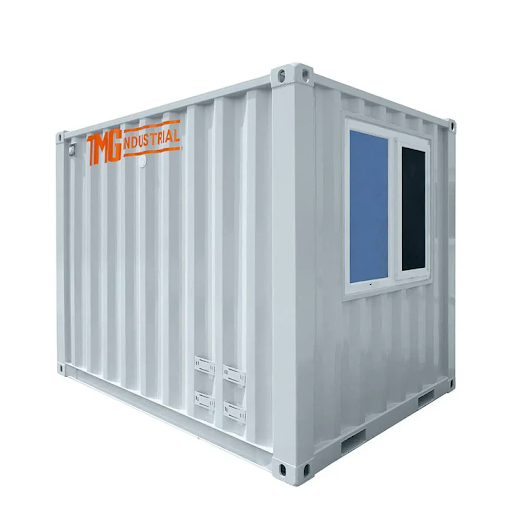
Across Canadian construction sites, resource projects, and industrial yards, the need for secure, weatherproof workspace often arises far from any permanent building. Erecting a conventional office on a temporary or remote site is slow and costly. A steel container office offers an alternative: a self-contained, transportable workspace built on a shipping-container platform. Canadian contractors, site managers, and equipment buyers use these units to create site offices, security posts, and meeting rooms that cope with a demanding climate.
Design Principles
The concept adapts the proven structure of an intermodal shipping container into an enclosed work space. The steel shell provides the load-bearing frame, while interior finishing, glazing, and fittings turn it into a usable office. Because a container is engineered to be lifted, stacked, and transported, the office inherits that durability and mobility.
Common applications include:
· Site offices on construction and infrastructure projects
· Security and gatehouse posts at yards and depots
· Remote workspace for mining, forestry, and energy operations
· Temporary administrative space during building works
· Lockable storage combined with a work area
Structural Characteristics
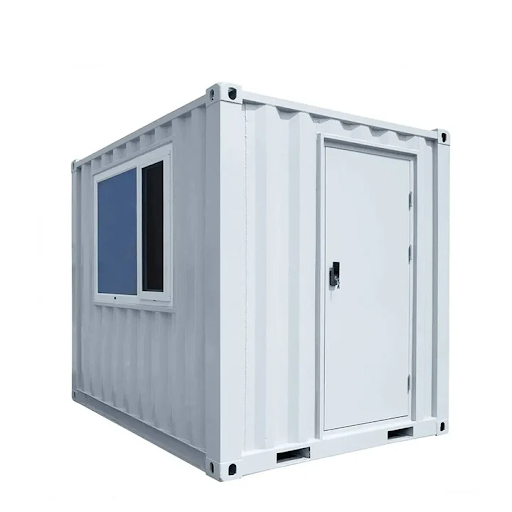
The structure is built around a heavy galvanized steel frame. Galvanizing coats the steel with zinc, which corrodes in place of the underlying metal and extends service life in a wet, freeze-thaw climate. A 10-foot footprint provides a compact working area suited to one or two occupants, while a foldable workstation conserves floor space when it is not in use.
Glazing is a key element. Three-layer tempered glass improves insulation and resists impact compared with a single pane, which matters where heating costs and security both count. Tempered glass also breaks into blunt fragments rather than sharp shards, which can reduce injury risk.
Insulation and Climate Performance
Steel conducts heat readily, so an uninsulated container is uncomfortable in Canadian conditions. Effective units add insulation to the walls, roof, and floor, which reduces heat loss in winter and heat gain in summer. Multi-layer glazing supports this by limiting heat transfer through the windows, so the space can be heated efficiently rather than losing warmth almost as quickly as it is produced.
Security Features
A site office often holds tools, documents, and electronics, which makes security a priority. A steel shell is more resistant to forced entry than lighter materials, and a smart lock can add controlled, keyless access with the ability to grant or revoke entry. Together these features can reduce the theft risk that affects unattended sites during overnight and weekend periods.
Transport and Installation
Because the unit is based on a container platform, it can be lifted by crane or handled with standard container equipment and delivered on a flatbed. On site, it should rest on firm, level ground or footings so that doors and windows align and operate correctly. A level base also helps prevent the frame from twisting, which would otherwise stress the glazing and door seals over time.
Safety Considerations
The points below are general guidance rather than a substitute for the manufacturer’s instructions and local regulations:
· Set the unit on a stable, level foundation suited to its weight
· Have the electrical connection completed by a qualified person, using outdoor-rated components
· Provide adequate ventilation, especially where portable heaters are used
· Keep doorways and walkways clear, particularly in snow and ice
· Inspect the lock, hinges, and seals on a regular schedule
Advantages and Limitations
Advantages:
· Faster to deploy than constructing a permanent office
· Transportable and reusable across multiple sites
· Galvanized steel shell resists corrosion and forced entry
· Compact footprint suited to constrained sites
Limitations:
· Requires insulation and heating for year-round comfort
· Needs a level, stable base and a safe power connection
· Limited internal area compared with a built office
· Craning or specialized handling needed for placement
Industry Outlook
Steel container offices reflect a broader move toward modular site offices and relocatable infrastructure. As projects spread into remote regions and schedules tighten, demand for workspace that arrives ready to use continues to grow. Manufacturers are improving insulation, integrating solar power and climate control, and refining secure access to meet evolving job-site requirements. Buyers exploring modular workspace options can find a variety of container-based solutions through industry suppliers. Buyers should match insulation, glazing, and security to their site conditions and the length of deployment, since a unit specified for mild, short-term use may underperform in a cold, long-term posting.

The art of packing fragile and high-value items when you move house

Laverne Cox Net Worth: Career Earnings, Acting Success, Income Sources & Financial Growth

Oliver Tree Net Worth: Career, Income Sources, Music Success, Lifestyle & Financial Journey

Carolin Bacic: Life, Biography, Family, and Legacy

Christine Williamson: A Rising Star in Sports Journalism

Dani Daniels: A Complete Biography of the Artist, Media Personality, and Entrepreneur
-
 Celebrity10 months ago
Carolin Bacic: Life, Biography, Family, and Legacy
-
 Celebrity1 year ago
Christine Williamson: A Rising Star in Sports Journalism
-
 Celebrity9 months ago
Dani Daniels: A Complete Biography of the Artist, Media Personality, and Entrepreneur
-

 Celebrity3 months ago
Valerie Perrine: A Complete Biography of the Acclaimed Actress and Icon
-

 Celebrity1 year ago
Vera Davich: Biography, Life, and Legacy2025
-

 Celebrity3 months ago
Alex Eala: Rising Tennis Star from the Philippines and Her Journey to Global Success
-

 Celebrity7 months ago
Eleonora Incardona: Biography, Career, Age, Boyfriend, Net Worth & Lifestyle (2025)
-

 Celebrity5 months ago
Dame Esther Rantzen: Life, Career, and Legacy of a British Broadcasting Icon