
Business
What Getting Rid of Renovation Waste Actually Involves and How to Plan for It Properly

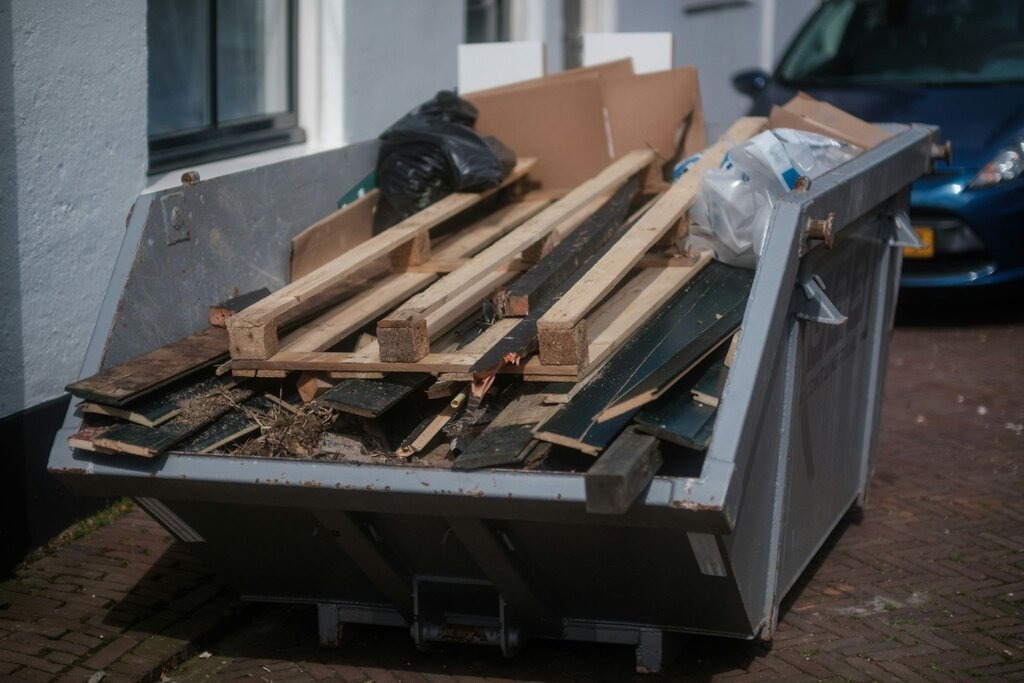
Renovation projects have a way of expanding in every direction once they start. The scope grows, the timeline stretches, and the waste accumulates at a pace that most homeowners didn’t account for when they were planning everything else. A bathroom strip-out that looked like a manageable pile of tiles and fittings turns into a volume of debris that has nowhere to go. A kitchen renovation that was supposed to take two weeks generates enough material to fill a bin twice over before the new cabinets are even delivered.
The homeowners who navigate renovation waste well are almost never the ones with more experience. They’re the ones who thought about it before the first wall came down rather than after the first pile of rubble appeared with nowhere obvious to put it. That distinction is smaller than it sounds, and the planning it requires is less involved than most people assume.
Why Renovations Produce More Waste Than Any Other Home Project
Renovation debris is different from ordinary household rubbish in ways that make standard removal options consistently inadequate. Regular bin collections aren’t designed for the volume, weight, or material types that renovation work produces. Council hard rubbish collections happen on fixed schedules that rarely align with project timelines. And loading a trailer repeatedly for multiple tip runs adds time, effort, and fuel costs that compound across a project in ways that quickly exceed the cost of a well-chosen skip bin.
The materials themselves are the reason. Tiles, concrete, bricks, timber framing, plasterboard, and old fixtures are heavy relative to their volume, bulky relative to their weight, and awkward to handle in small quantities. They don’t compress, they don’t fit into standard bins, and they can’t be left on the nature strip without creating safety and council compliance issues. A renovation that generates these materials in any significant volume needs a dedicated waste solution that’s sized and positioned for the work, not an improvised arrangement that creates a secondary problem alongside the primary one.
The Renovation Stages Where Waste Peaks
Renovation waste doesn’t accumulate evenly across a project. It peaks at specific stages that are predictable enough to plan around, and understanding where those peaks fall for a given project type shapes a smarter hire plan than treating the whole renovation as a single undifferentiated waste event.
Demolition and strip-out is almost always the highest volume stage regardless of the renovation type. Removing tiles, ripping out cabinetry, taking down walls, and clearing old fittings generates the bulk of the project’s waste in a compressed period. This is the stage that catches homeowners most off guard because it happens at the beginning, before the new work has started, and the volume of what’s been removed is suddenly very visible with nowhere to go.
Fit-out and finishing generates a different kind of waste. Packaging from new materials, off-cuts from timber and flooring, adhesive containers, and general site rubbish accumulates steadily rather than in a single burst. It’s lower volume than demolition waste but consistent enough to fill a bin over time if collection isn’t planned around the pace of the work.
For homeowners considering hiring skip bins for renovations that span multiple stages, planning the hire in two phases, a larger bin for the demolition stage and a smaller one for the fit-out, often produces a better outcome than a single large bin that sits half-empty for weeks at a time or a small bin that fills on day one and creates a problem before the project has properly started.
Where the Bin Goes and Why Placement Matters
The placement of a skip bin during a renovation affects how efficiently the work gets done in ways that aren’t obvious until the bin is in the wrong position. A bin placed too far from the work area means more carrying, more time, and more physical effort per load. One placed without considering vehicle access creates a collection problem when the provider arrives to remove it. And one placed on public property without the relevant council permit creates a compliance issue that adds an unwanted complication to a project that already has enough moving parts.
For most residential renovations, the driveway or front yard is the most practical placement position, keeping the bin close to the work without requiring a permit for public placement. Where site constraints make this impossible, understanding what the permit process involves for a specific council area before the bin is delivered removes the compliance uncertainty rather than leaving it to be resolved under time pressure once the work is already underway.
The dimensions of the bin matter for placement decisions too. A bin that fits the available space without blocking pedestrian access, vehicle entry, or neighbouring property sightlines is a bin that sits without creating secondary problems. Checking the dimensions against the available space before confirming the hire takes minutes and prevents the kind of placement problem that’s much harder to resolve after delivery.
How to Avoid the Costs That Catch Most People Off Guard
Renovation skip bin hire has a consistent set of additional costs that appear for homeowners who didn’t know to look for them, and they follow a predictable pattern that’s entirely avoidable with a small amount of upfront awareness.
Weight limits are the most common source of unexpected charges. Renovation materials are dense, and a bin that appears visually half-full can be at or near its weight limit if it contains tiles, concrete, or bricks. Excess weight charges apply when the limit is exceeded, and they apply per tonne over the limit, which means a single overloaded bin can add a meaningful amount to the total hire cost. Distributing heavy materials across the hire period rather than loading them all at once, and mixing heavy materials with lighter ones where possible, keeps the bin within its weight limit without requiring a larger and more expensive container.
Extended hire periods are another consistent cost that homeowners underestimate. Most standard hire periods cover one to two weeks, and projects that run longer than expected, which most renovations do, incur daily or weekly extension charges that add up quietly. Booking a slightly longer hire period than the optimistic project timeline suggests produces a better financial outcome than repeatedly extending a hire that was always going to take longer than planned.
Why Waste Planned Early Stays a Detail Rather Than Becoming a Problem
The renovations that run most smoothly are the ones where every operational detail was resolved before the work started rather than improvised as problems arose. Waste removal sits firmly in that category. A homeowner who knows what bin size suits their project, where it will go, what it can take, and what the hire will actually cost in total is a homeowner whose renovation has one fewer variable to manage once the work is underway.
That preparation doesn’t require specialist knowledge or significant time. It requires the same practical thinking that goes into every other renovation decision, applied to the waste side of the project before the first wall comes down rather than after the first pile of rubble has nowhere to go.



At eight o’clock in the morning on the fourth Saturday of August, in a field at Bellabeg in the upper valley of the River Don, about a hundred and seventy men fall in behind a pipe band.
They are wearing kilts, plaids, and Balmoral bonnets with an eagle’s feather. Most are in the dark blue and green of Forbes, the distinctive colours of the Forbes tartan. A contingent are in the red and black of Wallace, and another in Gordon. Each man carries on his shoulder an eight-foot pike or a Lochaber axe, a long-hafted blade with a hook on the back of it that has not been a practical weapon since about 1700. At a word of command the pipes strike up, and they march off up the road.
They will be marching for the next five hours. The route is a six-mile circuit of Strathdon, and its purpose is to call at each of the principal houses of the glen. At every one, the column halts on the gravel. The laird or his lady comes out. A toast is proposed. Trays appear, and every man in the ranks is handed a dram of whisky, which he drinks, and then they shoulder pikes and march on to the next house, where it happens again.
Bringing up the rear, since 1823 or thereabouts, is a horse and cart. Its official function is to carry the marchers’ coats. Its traditional function is to carry any marcher who, by the fifth or sixth house, finds he can no longer carry himself.
This is the March of the Lonach Highlanders. It is not a re-enactment, and it is not put on for visitors, though visitors come by the thousand. It has been done every year for two centuries because the men of Strathdon like doing it.
Lònach
The glen belongs, as it has since the thirteenth century, to Clan Forbes.
The Forbeses are an Aberdeenshire family, of the Braes of Forbes on Donside, and their chief, Lord Forbes, is the premier lord of Parliament in the Scottish peerage. Tradition says the first of them won the land by killing a monstrous bear that had been terrorising the district, which is why there are three bears’ heads on the clan’s arms. Their motto is Grace me guide. Their gathering cry is the name of a hill above the strath: Lònach.
For three hundred years their history was one long feud with their neighbours the Gordons, a quarrel made worse at the Reformation, when the Forbeses turned Protestant and the Gordons stayed Catholic. Its most terrible episode came in November 1571, when a party of Gordon soldiers came to the Forbes castle of Corgarff, at the head of the Don, and found the laird away. His wife, Margaret, refused to open the gates. They piled brushwood against the tower and set it alight. She died in the fire with her children and her servants, some two dozen people in all. The old ballad Edom o’ Gordon tells the story, and the little tower still stands alone on its moor.
The Lonach Highland and Friendly Society belongs to a gentler age. It was founded in 1823 by Sir Charles Forbes of Newe, to mark his son’s coming of age, with the declared aims of preserving the Highland dress and the Gaelic language and supporting its members in hard times. It has done so ever since. The Gathering and Games that follow the march each year are among the great days of the Highland summer, and the sight of the Lonach men coming onto the field at one o’clock, pikes sloped, a little flushed, to a roar from the crowd, is one that nobody forgets.
A doubtful story and a certain tartan
The tartan they march in has a pretty legend attached to it and a better documented truth.
The legend says it was designed in 1822 by a Miss Forbes, for the Forbes family of Pitsligo, by taking the Black Watch and adding a white line. The Scottish tartan archives record the story and then politely dispose of it, because the pattern is already there in the Key Pattern Book of the Bannockburn weavers William Wilson & Sons in 1819, three years too early.
Whoever designed it, there was no argument about whose it was. The Smith brothers of Mauchline, publishing their Authenticated Tartans in 1850, wrote that “the correctness of the Forbes Tartan here given, seems to be, in the opinion of the Trade, a matter beyond the slightest doubt.”
It is a member of the great dark family descended from the Government sett. Broad bands of navy blue and bottle green are divided by black. Fine black tramlines run through the blue. And down the centre of each green band runs a single white line, guarded on either side by a thread of black. That guarded white line is the Forbes signature. It distinguishes the sett from the Lamont, which has a plain white line, and from the Gordon, which has yellow. Nothing else in the cloth is bright. It is a cool, serious, thoroughly north-eastern tartan.
Forbes tartan is offered by retailers in Modern, Ancient and Weathered colours, made to order as kilts, trousers, skirts, waistcoats and scarves, or sold by the yard.
Its darkness gives it a particular talent. It is one of the best tartans in existence for tailoring.
Strathdon, the fourth Saturday in August
Callum Forbes is thirty-four and a chartered surveyor in Aberdeen. His father marched with Lonach, and his grandfather, and he has marched himself every year since he turned sixteen. He knows every yard of the six miles and every step of every drive.
By five o’clock in the afternoon he has been on his feet since seven. He has walked the circuit under an eight-foot pike in eight yards of heavy wool, a plaid, a tunic and a feathered bonnet. He has accepted the hospitality of the strath at six separate houses, since refusing would be an insult. He has stood through the games. He is sunburnt, footsore and profoundly happy. He did not need the cart. He wants that noted.
Tonight there is the Lonach Ball, and he faces a problem that every man in the glen faces on this one night of the year. He has spent ten hours in a kilt. He loves it. He would very much like to take it off.
Two years ago he found the answer. He had gone to Scottish Kilt to replace his everyday kilt, and noticed that a workshop able to make a mens plaid kilt in his sett, to his measurements, would also cut him a suit from the very same cloth. Their men’s tartan suits come in two- and three-piece cuts, made to measure in more than five thousand tartans, and every piece of a suit is made in one sett from a single cutting run, so that jacket, waistcoat and trousers match in shade and the lines of the pattern meet at the seams. There is a slim cut, a classic three-piece, and a dinner suit for black tie.
He ordered the three-piece dinner suit in Forbes. He gave them chest, shoulders, sleeve, jacket length, waist and inside leg, and it arrived fitting him like a suit from a tailor, which is what it was.
What he had grasped was that the Forbes might have been designed for the purpose. A red tartan made into a suit is a statement. A dark one is simply a dark suit with a secret. From across a ballroom it reads as deep navy with a green cast. At the distance of a handshake, the grid appears, and the fine guarded white line gives it the look of an expensive chalk stripe. It is sober enough for a bank and unmistakable to anyone who knows what they are looking at, and in Strathdon everyone does.
He wears it the way he would wear any dinner suit. A white dress shirt. A black bow tie, because a tartan one would be too much of a good thing. Black Oxfords. A white pocket square. Nothing else with a pattern anywhere near it.
In the hall at Bellabeg at nine o’clock, among two hundred men in kilts, he is one of perhaps a dozen in tartan trousers, and the only one in the full suit. The Patron’s piper looks him up and down.
“Forbes,” says the piper. “The whole rig. That’s smart. Could you not face the kilt?”
“I’ve had the kilt on since seven this morning.”
“Aye. How many houses did you manage?”
“All six.”
“And you walked in?”
“I walked in,” says Callum, with dignity. “The cart went home empty this year.”
“That,” says the piper, “is a disgrace to the glen. Your grandfather rode in it twice.” He looks at the suit again. “Mind, he never looked as well as that at the ball.”
Grace me guide
The Forbeses have held the same valley for seven hundred years. They have fought the Gordons, buried the dead of Corgarff, and outlasted every change of king and church. Since 1823 they have marked the end of summer by marching round their glen with pikes on their shoulders and whisky in their stomachs, with a cart behind them just in case.
Their tartan is like them, dark and steady, and not given to display. It is magnificent in a kilt on the march. Cut into a suit for the evening after, it is one of the quietest and most distinguished things a man of the name can put on, and it has the added merit, after six miles and six drams, of allowing him to sit down.

NICOP is the document of identity that is specifically issued to overseas Pakistanis, and it is a document that is tailored for overseas Pakistanis. It is issued to sort out all their identity issues for overseas Pakistanis at the foreign destination. NICOP is issued with an expiry date mentioned on the card, and after that, it must undergo NICOP renewal UK. For the assistance of immigrants, the Nadra authorities were allowed to renew NICOP online six months before the expiry date. The reason behind that is to facilitate immigrants and ensure their important NICOP remains valid at all times.
The applicant who takes no notice of the facility provided by the Nadra authority will have to face the expiry of the card, and all their travelling and banking operations will be stopped till they apply for renewal NICOP. In this blog, we thoroughly explain the processing and delivery time of the NICOP renewal online when it is applied after expiry. To renew the expired NICOP, the immigrant needs a quick service provider that will activate all their stopped facilities. These facilities are stopped because of the expired NICOP.
Nadra Card Centre Immediate Processing & Delivery of the NICOP Renewal UK
Nadra Card Centre is known for its quick operations with the fastest delivery of the NICOP renewal for overseas Pakistanis. They process one of the quickest renewals by providing an executive application that can provide you with doorstep delivery of the card within a week. They provide you with speedy solutions, and their exclusive executive services are available to resolve the expiry of the NICOP card in the UK. They can complete your application for the NICOP card renewal without any physical interaction, and within one hour, your request is forwarded to the authority.
All the procedures are followed by British Pakistanis while sitting at home, and you will apply for Pakistan id card online uk without any hassle.
What is the Expected Delivery & Processing to Renew NICOP Online
The processing time of the NICOP renewal online depends on the services you apply for to have the NICOP renewal in the UK. Nadra Card Centre offers three services as per the needs of NICOP foreign immigrants. These services are executive services, urgent services and slow services to renew the Nadra card. These three services have different processing times, and immigrants must choose the services as per their needs. We are explaining the processing time of these services.
Delivery & Processing Time of the Executive Services of NICOP Renewal
The executive services are one of the quickest available services offered by the Nadra Card Centre. They can process and deliver ID cards within a time frame of 5-6 days. That is the quickest available, and we guarantee you will never have such a quick online NICOP renewal from any other service provider. Executive services are designed to cater to the emergency needs of the applicants, and it is the most premium service of the NICOP renewal online, exclusively offered by the Nadra Card Centre. The other side of the executive services is that it is a costly option, as it can deliver the ID card within a week.
Delivery & Processing Time of the Urgent Services of the NICOP Online Renewal
Processing & delivery time of the urgent services is from 3 -4 working weeks. We promise that immigrants who go with the urgent services will have the NICOP within 3-4 working weeks, with doorstep delivery of the NICOP. These are the services that are used by immigrants who are in emergencies, but they have the margin to wait for 20-30 days. They will calculate their margin and avail the urgent services that are designed to address minor emergency matters. This service comes at a lower cost when compared with the executive services for Pakistan national identity card renewal.
Delivery & Processing time of the Slow Services of Online NICOP Pakistan
The delivery & processing time for the slow services exclusively offered by the Nadra Card Centre is between 7 and 8 working weeks. This service is designed for immigrants who have a plan to renew NICOP within the grace period awarded by the Nadra authority. The applicant with a NICOP that is going to expire applies for the slow service, and their ID card will be at their doorstep within 45 days, well before the expiry of the NICOP. This service is one of the cost-effective services, and the immigrant is aware that about six months before renewal will be able to avail themselves of the NICOP card renewal online.
Nadra Card Centre Immediate Delivery & Processing of the NICOP Renewal Online UK
Nadra Card Centre processes the application for the NICOP Pakistan renewal as early as possible, particularly in the case of an executive and urgent application. They are responsible, capable & trustworthy to renew NICOP online UK. Because of their exclusive services offers the immigrant will always be satisfied, as they have been working in the industry for more than a decade.


Introduction
Video consistency is the single hardest thing AI video generation gets asked to do. A character’s face has to hold across a five-shot sequence. The same jacket has to stay the same color when the camera cuts. The lighting has to feel like it belongs to one scene, not five separate renders stitched together. And when a creator uploads a source clip to restyle or transform, every frame that comes out the other side has to feel like it came from the same take.
The platforms that solve consistency approach it from two directions. Some focus on video-to-video transformation — taking an existing clip and rendering it into a new style, aesthetic, or setting while preserving motion and structure. Others focus on multi-shot consistency — keeping characters, environments, and lighting stable across a sequence of separately generated clips. The ten platforms below are ranked by how confidently they hold either kind of consistency. If the goal is finding an AI video generator that treats consistency as a first-class problem rather than a happy accident, this shortlist covers the field.
How We Test
- Video-to-video fidelity: Whether motion and structure survive style or content transformation.
- Character consistency across shots: Whether a specific identity holds across linked but separately generated clips.
- Environmental consistency: Whether backgrounds, lighting, and props stay stable across a scene.
- Reference input capacity: How many reference clips or images can guide a consistency-controlled generation.
- Style transfer control: Whether a source clip can be restyled without losing its underlying motion.
- Duration ceiling: Maximum consistency-controlled clip length in a single generation.
TL;DR
| Rank | Platform | Best For | V2V Support | Character Lock | Multi-Shot |
| 1 | FreeMaker | Multi-model V2V routing | Seedance / Seedance 2 / Wan | Multi-shot storytelling | Yes |
| 2 | Runway | V2V + scene editing | Aleph 2.0 | Image/video reference | Yes |
| 3 | Kling AI | Multi-shot element locking | Multi-Elements Editor | Elements 3.0 | 15s multi-shot |
| 4 | Krea | Style transfer + LoRA | 7+ engines | LoRA identity | Extend & merge |
| 5 | Domo AI | Video restyle + role tags | Video-to-Video | Omni Reference (50 refs) | Yes |
| 6 | Higgsfield | Cinematic consistency | Reference-based | Character locking | Yes |
| 7 | Vidu | Reference-locked long takes | Reference to Video | Multi-Subject | 60s single-take |
| 8 | Pika | Effects-preserving V2V | Pikaffects | Reference-based | Standard |
| 9 | Luma AI | Physics-consistent motion | Ray 2 | Reference frames | Standard |
| 10 | OpenArt | Motion transfer consistency | Motion Sync | Character Builder | Yes |
Website List
1. FreeMaker
What is it?
FreeMaker is an AI video generator that treats video-to-video as a multi-model routing problem. Its video generation stack includes three dedicated V2V engines — Seedance, Seedance 2, and Wan — each with different strengths on source footage. Seedance handles fast stylistic transformation; Seedance 2 improves motion fidelity and detail retention; Wan focuses on structural preservation during restyling. Combined with multi-shot storytelling for separately generated but linked scenes, it fits creators who need consistency across both the transformation itself and the sequence around it.
Features
- Three V2V engines: Seedance, Seedance 2, and Wan — same source clip can be tested across engines to find the cleanest transformation.
- Upstream image tools: FreeMaker’s image side, including specialized tools like the coat of arms maker, lets creators pre-build identity anchors — emblems, insignia, distinguishing props — as stills before rendering the video sequence around them.
- Multi-shot storytelling: Chain separately generated shots so the same subjects and environments hold across cuts.
- Start/end frame video: Anchor consistency by defining both endpoints of a shot — the model interpolates without drift.
- Fast render: 30–90 seconds per clip, useful when iterating V2V transformations across engines.
- Frame rate control: 24 / 30 / 60 fps — higher rates preserve motion detail through style transfer.
Pricing
- Free: Up to 60 credits through a 7-day daily check-in.
- Lite: $14.9/mo or $178.8/yr — 300 credits/mo, 720P, commercial rights, watermark-free.
- Pro: $29.9/mo or $358.8/yr — 600 credits/mo, 1080P.
- Premium: $149.9/mo or $1,798.8/yr — 3,200 credits/mo, 1080P, priority support.
Pros & Cons
- ✅ Three dedicated V2V engines under one subscription — widest V2V model comparison in the shortlist.
- ✅ Multi-shot storytelling extends consistency past individual clips into linked sequences.
- ✅ Commercial rights and watermark-free exports on every paid tier.
- ❌ No dedicated character-locking feature beyond model-native reference handling.
- ❌ Premium models drain credits quickly during V2V iteration.
Best for
Creators who want to test the same source footage across multiple V2V engines and pick the transformation that preserves motion and structure best.
2. Runway
What is it?
Runway is an AI video generator whose Aleph 2.0 model was built specifically for video-to-video work — restyling, transforming, or editing existing clips while preserving motion. Character consistency via image or video reference then holds identity across separately generated shots, and post-generation scene editing lets creators adjust lighting, backdrop, or objects without breaking the consistency they’ve already established.
Features
- Aleph 2.0: First-party model built for video-to-video transformation.
- Character consistency: Image or video references lock identity across multi-shot sequences.
- Scene relighting: Adjust mood or time of day without regenerating the clip.
- Object addition and removal: Modify scene elements while consistency remains locked.
- Gen-4.5: Complementary first-party model for T2V and I2V with strong motion fidelity.
- Third-party model access: Kling 3.0, Veo 3.1, FLUX.2 max available for cross-engine consistency testing.
Pricing
- Free: 125 one-time credits, watermarked, commercial use allowed.
- Standard: $12/mo (annual) — 625 credits/mo, 4K upscaling, watermark removal.
- Pro: $28/mo (annual) — 2,250 credits/mo, 500GB storage.
- Max: $76/mo (annual) — 9,500 credits/mo, 16-bit HDR, 1-month credit rollover.
Pros & Cons
- ✅ Aleph 2.0 is one of the few first-party models explicitly built for V2V.
- ✅ Post-generation scene editing preserves character consistency while environment changes.
- ✅ Third-party model access widens the consistency-testing engine roster.
- ❌ Credits reset monthly on Standard and Pro plans.
- ❌ 4K upscaling costs additional credits.
Best for
Creators transforming existing footage via V2V and needing post-generation environmental control without breaking consistency.
3. Kling AI
What is it?
Kling AI is an AI video generator whose Elements 3.0 and Multi-Elements Editor treat consistency as an asset problem — characters, props, and environments are locked as reusable elements that persist across shots. Combined with 15-second multi-shot video generation and storyboard narration, it fits creators who need the same visual anchors to survive across a linked sequence rather than a single clip.
Features
- Elements 3.0: Reference-based locking of characters, props, and environments — up to 500 elements on Ultra.
- Multi-Elements Editor: Add or remove specific elements from generated clips while consistency holds.
- 15-second multi-shot: Multiple linked shots in one generation with subjects held across cuts.
- Storyboard narration: Shot-level control over which locked element appears in which shot.
- Multi-element reference: Up to 7 images or a 3–10s clip drive scene identity.
- Native 4K output: Detail preserved across linked shots without upscaling.
Pricing
- Basic (Free): Watermarked outputs.
- Standard: $8.80/mo — 660 credits, 1080p/4K, commercial rights.
- Pro: $32.56/mo — 3,000 credits, up to 50 elements.
- Premier: $80.96/mo — 8,000 credits, up to 150 elements.
- Ultra: $159.99/mo — 26,000 credits, up to 500 elements.
Pros & Cons
- ✅ 500-element ceiling on Ultra tier is the highest reference-locked consistency in the shortlist.
- ✅ Storyboard narration gives shot-level consistency control across a sequence.
- ✅ Native 4K preserves consistency detail without upscaling artifacts.
- ❌ Credit consumption scales sharply with element count and duration.
- ❌ Ultra tier pricing is steep for individual creators.
Best for
Creators building multi-shot sequences where a large cast of locked elements — characters, props, environments — must hold across cuts.
4. Krea
What is it?
Krea is an AI video generator whose consistency approach combines LoRA training with a seven-engine frontier roster. Training a custom LoRA on reference images produces a reusable identity anchor that holds across generations, and the same anchor can then be tested across Seedance 2.5, Veo 3.1, Sora 2, Kling 3.0, Wan 2.6, Runway Gen-4.5, and MiniMax H3 to find the engine that renders it most faithfully.
Features
- LoRA training: Train custom character or style LoRAs on reference images for persistent identity across video generation.
- 7+ frontier engines: Seedance 2.5, Veo 3.1, Sora 2, Kling 3.0, Wan 2.6, Runway Gen-4.5, MiniMax H3.
- First and last frame control: Explicit endpoints anchor consistency across a shot arc.
- Extend and merge: Chain consistency-locked clips sequentially with AI transitions.
- AI Image Editor: Refine reference stills before training a consistency anchor.
- Model comparison: Same LoRA-anchored prompt runs across engines side-by-side.
Pricing
- Free: 100 units/day, personal use.
- Basic: $5.25/mo (annual) — 5,000 units/mo, commercial license.
- Pro: $21/mo (annual) — 20,000 units/mo, full video model access.
- Max: $63/mo (annual) — 60,000 units/mo, unlimited relaxed generations.
Pros & Cons
- ✅ LoRA training gives persistent identity locking that survives across engines and generations.
- ✅ Widest frontier engine roster for consistency A/B testing.
- ✅ Same trained anchor can be reused indefinitely — no re-training per project.
- ❌ LoRA training adds an upfront workflow step.
- ❌ Compute-unit metering makes multi-engine consistency comparison expensive.
Best for
Creators building recurring characters or styles that need consistency across many separate projects and engines.
5. Domo AI
What is it?
Domo AI is an AI video generator whose Video-to-Video feature restyles existing clips while its Omni Reference system layers up to 50 role-tagged references on top — “Image 1 = character face, Image 2 = outfit, Video 1 = motion reference.” For consistency work, the tagging layer is the differentiator: it lets creators lock specific visual anchors to specific roles during video generation, avoiding the cross-contamination that untagged reference pools cause.
Features
- Video-to-Video: Restyle existing clips while preserving motion and structure.
- Omni Reference (50 refs): Role-tagged references so each consistency anchor binds to a specific role.
- Character to Video: Drive a specific character through motion with identity locked from reference.
- Frames to Video: 2–8 keyframe images define consistency endpoints across a shot.
- Multi-model access: MiniMax H3, Seedance 2.5, and others available for V2V experimentation.
- Relax Mode: Unlimited generation on supported models — useful for iterating consistency-locked scenes.
Pricing
- Free: Free credit allowance.
- Basic: $9/mo (annual) — 600 credits, ~85 videos.
- Standard: $29/mo (annual) — 2,200 credits, unlimited Relax Mode.
- Pro: $99/mo (annual) — 8,000 credits, 60s talking avatar.
- Team: $99/seat/mo (annual) — 24,000 shared credits.
Pros & Cons
- ✅ 50-reference role-tagged consistency system is unusual in the category.
- ✅ V2V restyle plus role-tagged references give fine-grained consistency control.
- ✅ Relax Mode allows unlimited iteration on consistency-locked compositions.
- ❌ Seedance output on Domo AI caps at 720P.
- ❌ Extended-duration consistency work drains credits at Fast Mode rates.
Best for
Creators combining V2V restyling with granular per-role consistency locking across multi-anchor scenes.
6. Higgsfield
What is it?
Higgsfield is an AI video generator whose cinematic focus produces consistency through directorial control rather than reference stacking. Its video generation is anchored by motion presets, shot templates, and character locking that hold identity through directed camera moves — dolly, arc, push-in — where most competitors’ consistency breaks down. For creators treating consistency as a shot-language problem, it fits the workflow.
Features
- Cinematic motion presets: Directed camera moves with consistency preserved through the move.
- Character locking: Identity holds across cuts and camera moves.
- Shot template library: Pre-composed cinematic shot types with built-in consistency logic.
- Reference-driven identity: Upload character images to anchor consistency.
- Multi-model access: Integration with frontier video engines for cinematic rendering.
- Directorial workflow: Shot-language emphasis rather than prompt stacking.
Pricing
- Paid plans: Tiered subscription with escalating credits and cinematic model access.
Pros & Cons
- ✅ Cinematic motion presets preserve consistency through directed camera moves.
- ✅ Shot templates give quick starting points with built-in consistency logic.
- ✅ Directorial workflow suits productions treating consistency as a shot-language problem.
- ❌ Pricing transparency is lower than most competitors.
- ❌ Learning curve on cinematic shot language is higher than click-to-generate tools.
Best for
Creators treating video consistency as a directorial problem — where camera moves and shot language must not break identity.
7. Vidu
What is it?
Vidu is an AI video generator whose Reference to Video feature holds consistency across extended single takes. Up to seven reference images anchor identity, Multi-Subject Consistency locks multiple subjects simultaneously, and 60-second single-take video generation extends the consistency window past most competitors. For creators who need long-duration consistency in one continuous shot rather than across cuts, it’s built for the use case.
Features
- Reference to Video: Up to 7 reference images anchor consistency in a single generation.
- Multi-Subject Consistency: Native model-level feature for locking multiple subjects.
- First and last frame control: Explicit scene endpoints for consistency-controlled arcs.
- 4K native output: Consistency detail preserved at commercial resolution.
- 60-second single-take: Extended duration for continuous consistency without cuts.
- Vidu Q2 model: Optimized for high motion amplitude while consistency holds.
Pricing
- Free: Limited daily credits with watermarks.
- Paid plans: Tiered subscription with 4K unlock and commercial rights.
Pros & Cons
- ✅ 60-second single-take consistency is longer than most competitors’ clip ceilings.
- ✅ Native Multi-Subject Consistency built into the core model.
- ✅ Seven reference images cover most identity anchors in one scene.
- ❌ Single-engine platform — no multi-model consistency comparison.
- ❌ Free tier restrictions limit exploratory consistency testing.
Best for
Creators who need extended-duration consistency in single continuous shots rather than across cut sequences.
8. Pika
What is it?
Pika is an AI video generator whose Pikaffects and reference-based V2V hold consistency through stylized transformations. Its video generation preserves motion and structure from a source clip while applying specific effects — melt, explode, deflate, and other transformation presets — that would break consistency on less specialized platforms. For creators whose consistency problem is “keep the motion, change the material,” it fits the workflow.
Features
- Pikaffects: Named transformation presets that preserve source motion while restyling material or physics.
- Video-to-Video: Source clip motion and structure preserved through style transfer.
- Reference-based identity: Upload references to anchor character or style consistency.
- Sound effects integration: Automatic sound design that matches transformation type.
- Extended durations: Multi-shot chaining for sequences with consistent transformation logic.
- Web and app access: Consistency-controlled generation across desktop and mobile.
Pricing
- Paid plans: Tiered subscription with escalating credits and model access.
Pros & Cons
- ✅ Pikaffects preserve motion consistency during stylized material transformations.
- ✅ V2V motion fidelity is strong for effects-driven consistency work.
- ✅ Automatic sound effects match the transformation logic.
- ❌ Consistency approach is effects-oriented rather than character-oriented.
- ❌ Limited role-tagging or multi-reference stacking compared to competitors.
Best for
Creators whose consistency problem is preserving motion through stylized material or physics transformations.
9. Luma AI
What is it?
Luma AI is an AI video generator whose Ray 2 model produces consistency through physics simulation rather than reference stacking. Its video generation renders motion with physical plausibility — momentum, weight, contact — that keeps generated clips internally consistent frame-to-frame. For creators whose consistency problem is “the motion has to feel real across the whole shot,” it approaches the problem at the physics layer rather than the identity layer.
Features
- Ray 2 model: Physics-consistent motion rendering.
- Keyframe consistency: Reference frames anchor start and end states with plausible motion between.
- Camera motion controls: Directed camera moves with physical consistency preserved.
- Image-to-video with motion consistency: Source stills animate with physically plausible momentum.
- Loop generation: Consistent looping clips for continuous playback.
- API access: Programmatic consistency-controlled generation for pipeline integration.
Pricing
- Free: Trial credits.
- Paid plans: Tiered subscription with escalating credits and Ray 2 access.
Pros & Cons
- ✅ Physics-consistent motion is unusual in the category — most competitors treat motion as prompt output.
- ✅ Keyframe consistency gives explicit endpoint control with plausible interpolation.
- ✅ API access supports programmatic consistency-controlled pipelines.
- ❌ Consistency approach is motion-oriented rather than identity-oriented.
- ❌ Reference stacking is thinner than dedicated consistency platforms.
Best for
Creators whose consistency problem is physical motion plausibility rather than character or environmental identity.
10. OpenArt
What is it?
OpenArt is an AI video generator whose Character Builder and Motion Sync split consistency into two axes — identity and performance. Character Builder produces reusable character IDs that hold across scenes; Motion Sync transfers motion from a reference clip onto those built characters. Its video generation lets creators drive consistent characters through consistent motion references simultaneously, giving both identity and performance a locked anchor.
Features
- Character Builder: Reusable character identities held across scenes.
- Motion Sync: Transfer motion from reference clips onto built characters.
- Lip Sync: Native lip alignment with consistent character identity.
- Cinematic camera controls: Camera moves around consistency-locked characters.
- Multi-model access: Seedance 2.5, Kling 3.0, Sora 2, WAN 2.7, LTX-2.3, HappyHorse, Pixverse, Gemini Omni Flash.
- Conversational editing: Chat commands adjust performance while consistency holds.
Pricing
- Free: Free credits on signup.
- Starter: $13/mo (annual) — 4,000 credits/mo, 8 parallel generations, watermark-free, commercial rights.
Pros & Cons
- ✅ Character Builder plus Motion Sync gives both identity and motion a separate consistency anchor.
- ✅ Multi-model access under one subscription for consistency A/B testing across engines.
- ✅ Full commercial rights and watermark-free even on entry tier.
- ❌ Advanced model use consumes credits quickly during consistency iteration.
- ❌ Node-style workflows have a learning curve.
Best for
Creators driving consistent characters through consistent motion references — where both identity and performance need locked anchors.
Key Takeaways
For dedicated V2V engines: FreeMaker (Seedance / Seedance 2 / Wan), Runway (Aleph 2.0), and Domo AI (Video-to-Video) are the three platforms with first-class V2V transformation. FreeMaker offers the widest V2V model comparison; Runway offers post-generation scene editing on top; Domo AI adds role-tagged reference layering.
For multi-shot consistency: Kling AI’s Elements 3.0 (up to 500 locked elements) and Krea’s LoRA training are the two systems built for holding identity across long sequences of separately generated clips.
For directorial or physical consistency: Higgsfield preserves consistency through cinematic camera moves; Luma AI’s Ray 2 preserves consistency through physics simulation. Both approach the problem from angles that reference stacking doesn’t reach.
For split-axis consistency: OpenArt’s Character Builder + Motion Sync and Vidu’s Multi-Subject Consistency + Reference to Video are the two platforms that separate identity consistency from motion or duration consistency and let creators anchor each independently.
Conclusion
Video consistency is really two problems in a trench coat. One is preserving motion and structure during transformation — the V2V problem, solved best by FreeMaker’s multi-engine routing, Runway’s Aleph 2.0, or Domo AI’s role-tagged Video-to-Video. The other is preserving identity across separately generated shots — the multi-shot problem, solved best by Kling AI’s element locking, Krea’s LoRA training, or Vidu’s long-take consistency.
The fastest shortlist test: take one source clip with clear motion and an identifiable subject, run it through three V2V engines, and evaluate how much of the original motion survives the transformation. Then take a locked character reference and generate three separately prompted shots — a wide, a medium, and a close-up — and evaluate how much of the identity survives the cuts. The platform that keeps motion recognizable through V2V and identity recognizable through cuts is the platform worth building the consistency workflow around.



-

 Celebrity1 year ago
Carolin Bacic: Life, Biography, Family, and Legacy
-

 Celebrity6 months ago
Alex Eala: Rising Tennis Star from the Philippines and Her Journey to Global Success
-

 Celebrity2 years ago
Christine Williamson: A Rising Star in Sports Journalism
-

 Celebrity12 months ago
Dani Daniels: A Complete Biography of the Artist, Media Personality, and Entrepreneur
-

 Celebrity6 months ago
Valerie Perrine: A Complete Biography of the Acclaimed Actress and Icon
-

 Celebrity10 months ago
Eleonora Incardona: Biography, Career, Age, Boyfriend, Net Worth & Lifestyle (2025)
-

 Celebrity2 years ago
Vera Davich: Biography, Life, and Legacy2025
-

 Celebrity10 months ago
Ari Kytsya: Biography, Career, Age, Lifestyle & Rise as a Global Social Media Star