Crypto
Bitcoin Cloud Mining Contract: A Complete Guide to How It Works, Risks, Returns, and Best Practices

The concept of a bitcoin cloud mining contract has gained widespread attention as more people seek exposure to Bitcoin mining without managing expensive hardware or dealing with technical complexity. Cloud mining promises a simplified way to earn Bitcoin by renting computing power from remote data centers. For beginners, it appears convenient and accessible, while experienced investors view it as a diversification strategy. However, cloud mining also comes with risks, hidden costs, and market dependencies that are often misunderstood.
What Is a Bitcoin Cloud Mining Contract?
A bitcoin cloud mining contract is an agreement between an individual and a cloud mining provider, allowing the user to rent hashing power to mine Bitcoin remotely. Instead of purchasing and operating mining hardware, users pay a fee to access mining infrastructure owned and maintained by a third party. In return, they receive a share of the mined Bitcoin proportional to the power they rent. These contracts typically specify duration, hash rate, maintenance fees, and payout terms. Understanding these elements is critical before committing funds, as they directly affect profitability and risk.
How Bitcoin Cloud Mining Works
Bitcoin cloud mining operates by pooling users’ funds to finance large-scale mining operations. Providers run specialized ASIC miners in data centers with low electricity costs. When you purchase a bitcoin cloud mining contract, the provider allocates a portion of its total hash power to your account. As Bitcoin blocks are mined, rewards are distributed based on your share of hash power, minus operational fees. This system allows users to participate in mining without managing hardware, but it also means relying entirely on the provider’s transparency and efficiency.
The History of Cloud Mining
Cloud mining emerged around 2013–2014, as Bitcoin mining became more competitive and hardware-intensive. Early adopters sought alternatives to home mining, which had become less profitable due to rising difficulty. Over time, cloud mining services expanded, offering contracts for Bitcoin and other cryptocurrencies. While some providers operated legitimately, others turned out to be scams, shaping today’s cautious approach to bitcoin cloud mining contracts. This history highlights why due diligence is essential before investing.
Types of Bitcoin Cloud Mining Contracts
There are several types of bitcoin cloud mining contracts available. Fixed-term contracts last for a specific period, such as one or two years. Lifetime contracts claim to run as long as mining remains profitable, though they often end sooner due to fees. Pay-as-you-go models allow flexibility without long commitments. Each type has unique risk and reward profiles, making it important to choose based on budget, time horizon, and risk tolerance.
Understanding Hash Rate and Mining Power
Hash rate represents the computing power used to mine Bitcoin, measured in TH/s (terahashes per second). A bitcoin cloud mining contract specifies how much hash rate you are renting. Higher hash rates increase potential rewards but also cost more. Since Bitcoin’s mining difficulty adjusts regularly, the same hash rate may yield different returns over time. Investors must understand this dynamic to avoid unrealistic profit expectations.
Costs and Fees in Cloud Mining Contracts
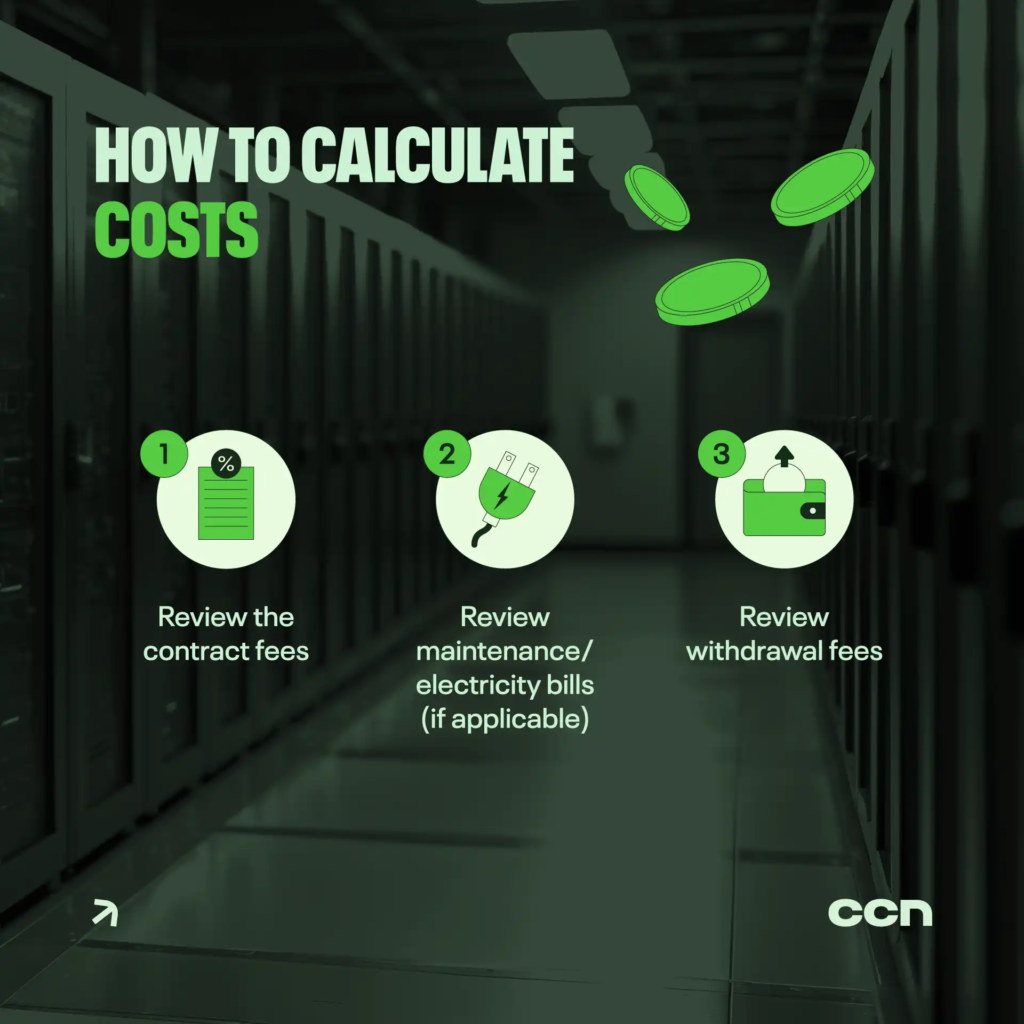
Every bitcoin cloud mining contract includes costs beyond the upfront price. Maintenance fees, electricity costs, cooling, and pool fees are often deducted from daily earnings. Some providers bundle these fees into the contract price, while others charge them separately. Hidden or poorly explained fees are a common reason cloud mining becomes unprofitable. Transparent fee structures are a key indicator of a trustworthy provider.
Profitability of Bitcoin Cloud Mining
Profitability depends on several variables: Bitcoin price, mining difficulty, contract fees, and duration. When Bitcoin prices rise significantly, cloud mining contracts may generate profits. Conversely, price drops or difficulty increases can eliminate earnings entirely. Unlike holding Bitcoin directly, cloud mining adds operational risk, making returns less predictable. Calculating realistic scenarios before purchasing a bitcoin cloud mining contract is essential.
Risks Associated With Cloud Mining
Bitcoin cloud mining contracts carry notable risks. The most significant is counterparty risk, as users rely on providers to operate honestly. Market volatility, regulatory changes, and technical failures also impact outcomes. Additionally, many cloud mining scams have historically targeted inexperienced users. Understanding these risks helps investors avoid costly mistakes.
Common Cloud Mining Scams
Scams remain a major concern in the cloud mining space. Fraudulent platforms often promise guaranteed returns, unrealistic daily profits, or referral-heavy income structures. Legitimate bitcoin cloud mining contracts never guarantee profits, as mining rewards depend on external factors. Recognizing red flags is crucial for protecting your capital.
How to Evaluate a Cloud Mining Provider
Evaluating a provider involves researching company history, transparency, user reviews, and technical disclosures. Reputable providers share information about data center locations, mining equipment, and payout structures. A trustworthy bitcoin cloud mining contract should include clear terms, realistic projections, and responsive customer support. Avoid platforms that lack verifiable details.
Legal and Regulatory Considerations
Regulation of cloud mining varies by jurisdiction. Some countries impose restrictions on mining activities, while others regulate cloud mining as an investment product. Users should understand local laws and tax obligations related to earnings from a bitcoin cloud mining contract. Compliance reduces legal risks and unexpected penalties.
Cloud Mining vs. Home Mining
Comparing cloud mining to home mining highlights key trade-offs. Home mining offers full control but requires high upfront costs, technical knowledge, and ongoing maintenance. Cloud mining offers convenience and scalability but sacrifices control and introduces third-party risk. For many, a bitcoin cloud mining contract serves as a low-effort alternative, though not always the most profitable.
Cloud Mining vs. Buying Bitcoin Directly
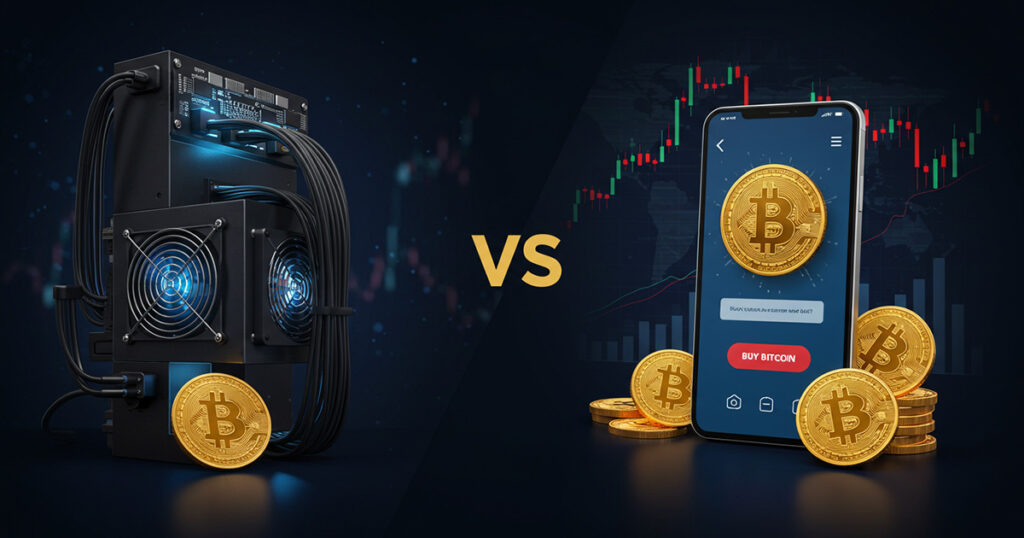
Buying Bitcoin directly often proves simpler and less risky than cloud mining. While cloud mining attempts to generate Bitcoin gradually, direct purchases provide immediate ownership. For long-term investors, holding Bitcoin may outperform a bitcoin cloud mining contract, especially after accounting for fees. Understanding this comparison helps align strategy with goals.
Environmental Impact of Cloud Mining
Bitcoin mining consumes significant energy, raising environmental concerns. Cloud mining providers often locate operations in regions with renewable or low-cost energy sources. Some companies promote green mining initiatives to reduce carbon footprints. Environmentally conscious investors may consider this factor when selecting a bitcoin cloud mining contract.
Taxation of Cloud Mining Earnings
Earnings from cloud mining are generally considered taxable income in many jurisdictions. The value of Bitcoin received at the time of payout may be subject to income tax, while future gains could incur capital gains tax. Proper record-keeping is essential for anyone participating in a bitcoin cloud mining contract.
Future Outlook for Cloud Mining
The future of cloud mining depends on Bitcoin adoption, regulatory clarity, and technological advances. As mining difficulty increases, smaller operators may exit the market, favoring large-scale providers. This consolidation could improve efficiency but also increase centralization risks. Understanding these trends helps investors assess the long-term viability of bitcoin cloud mining contracts.
Best Practices for Beginners
Beginners should start small, avoid long-term commitments, and prioritize education. Using mining calculators, reading independent reviews, and understanding contract terms can prevent losses. A cautious approach to bitcoin cloud mining contracts helps manage expectations and minimize risk.
Conclusion
A bitcoin cloud mining contract offers a convenient entry point into Bitcoin mining without hardware ownership. However, convenience comes at the cost of reduced control and increased risk. Profitability depends on market conditions, provider reliability, and contract structure. While cloud mining can complement a broader crypto strategy, it is rarely a guaranteed path to profit. Investors who approach cloud mining with realistic expectations, careful research, and disciplined risk management are best positioned to make informed decisions in this evolving space.
Frequently Asked Questions (FAQs)
1. What is a bitcoin cloud mining contract?
It is an agreement to rent mining power remotely to earn Bitcoin.
2. Is cloud mining profitable?
Profitability depends on Bitcoin price, difficulty, and fees.
3. Are cloud mining contracts risky?
Yes, they involve market risk and reliance on third-party providers.
4. Can cloud mining be a scam?
Some platforms are fraudulent, so research is essential.
5. Is cloud mining better than buying Bitcoin?
Not always; buying Bitcoin directly is often simpler and safer.
6. Do I need technical knowledge for cloud mining?
No, but understanding contract terms is crucial.


The crypto market is known for its volatility and unpredictability, but also for its potential to generate significant profits. As a result, the crypto market has welcomed traders, investors, and developers worldwide who need to use various tools to increase their chances of success with their crypto strategies.
Crypto predictions can help investors gain deeper insights into the importance of this data and decide which cryptocurrencies are best to add to their portfolios. This is even more true today, when crypto predictions can be improved with Artificial Intelligence (AI). The good thing about AI is that it can analyze more data than humans can. As a result, crypto predictions can be more reliable because they are based on larger datasets and offer a clearer picture of the future of cryptocurrencies. As cryptocurrencies are more popular than ever, and you hear plenty of transformation and changes about them on the crypto news today, they need to adapt to better respond to the users’ needs, who use AI on a daily basis.
In this article, we will analyze the impact of AI on crypto predictions. Keep reading to learn more.

Image source: https://unsplash.com/photos/a-person-holding-a-cell-phone-in-front-of-a-laptop-q7hV_tY4n6E
Why is AI a good tool in the crypto predictions market?
Compared to other sectors, the crypto market operates 24/7, so anyone can invest at any time. Cryptocurrencies are known for their volatility, which can fluctuate significantly in a short period for several reasons. These factors include regulatory news, market sentiment, macroeconomic conditions, and technological advancements.
Plus, cryptocurrencies are decentralized assets, meaning their value is not pegged to fiat currencies, which is why they can experience significant price swings. There is a large amount of data centred on cryptocurrencies, which makes it challenging for humans to analyze. This is when AI can emerge in the landscape and provide its expertise to help all crypto enthusiasts with reliable crypto predictions.
AI has greater power to analyze large amounts of data and recognize patterns forming in the crypto space.
Which key artificial intelligence technologies can help with crypto predictions?
Machine Learning algorithms
Machine Learning algorithms analyze large amounts of data, including decision trees and regression models, to discover insights into trading volumes, historical price data, and other market indicators. As a result, machine learning algorithms can uncover patterns in price movements and offer insights into future crypto trends.
Natural Language Processing (NLP)
Natural Language Processing (NLP) can also help identify crypto price movements by analyzing data from sources such as news articles, social media platforms, and other forums. With all the data they found, they can have a better overview of public sentiment. The NLP algorithm can also detect significant events by analyzing press releases, news headlines, and other regulatory announcements.
Predictive analytics
AI can also handle predictive analytics and integrate data from various sources, including trading volumes, on-chain metrics, and other price charts. With these macroeconomic indicators, investors can develop predictive models, which are a powerful tool for making more informed decisions.
What are the main advantages of AI in developing crypto predictions?
AI offers a long list of advantages in crypto predictions, helping more investors trust it. Here are some of them.
- Speed: AI can develop crypto predictions faster than humans ever could. And, as any second matters in the crypto landscape, this becomes an essential tool for real-time trading.
- Accuracy: AI has the power to use more data when creating predictions, so that it ensures it doesn’t miss something that could provide a better overview of the market. This is why AI-generated crypto predictions can benefit from greater accuracy.
- Keeping emotions in check: One disadvantage of humans making crypto predictions is that they may let their emotions cloud their judgment, leading to errors. Instead, it is much better to remain rational and objective when making decisions, and AI provides the proper environment for this.
- 24/7: The crypto market is open all the time, which is not the case for humans, who must rest. As a result, they analyze recurring data and patterns, yielding more reliable crypto predictions.
What are the other areas of crypto where AI can be used?
Algorithmic trading
Because AI operates 24/7 and makes rational decisions, there have also been developments such as AI trading bots, launched to make life easier for investors worldwide. The role of these AI trading bots is to analyze market conditions and take advantage of opportunities as soon as the conditions are met. With AI bots, humans will not need to stay up all the time and can focus on other important things in their lives.
Portfolio Management
Most investors don’t really realize the need for a diversified portfolio or how to manage their assets. This is why investors could miss some opportunities. Instead, with the help of AI analysis, investors could build a more diversified portfolio that considers market forecasts and individual risk tolerance.
Risk identification
As AI has more data to analyze, it can also identify risks and help others and investors make better decisions. Some of the risks prevalent in the crypto space include liquidity issues and price crashes, and the good news is that AI will help them identify both.
Determining the risk of fraud
Cryptocurrencies offer the opportunity to make massive profits, which is why some believe they can take advantage of people and scam them. AI can identify these patterns and alert people before it is too late, and their funds have disappeared.
Last remarks
AI has the power to reshape many industries and create numerous opportunities for investors worldwide. This gives them the opportunity to analyze more data, optimize their trading strategies, and anticipate price movements. In a space as volatile as the crypto space, this can offer them essential advantages and help them distinguish between successful and failed investments. So, investors can truly leverage AI, as this tool is one of the best ways to stay updated with all the trends that are present in 2026 in the crypto realm.



-

 Celebrity1 year ago
Carolin Bacic: Life, Biography, Family, and Legacy
-

 Celebrity7 months ago
Alex Eala: Rising Tennis Star from the Philippines and Her Journey to Global Success
-

 Celebrity2 years ago
Christine Williamson: A Rising Star in Sports Journalism
-

 Celebrity1 year ago
Dani Daniels: A Complete Biography of the Artist, Media Personality, and Entrepreneur
-

 Celebrity6 months ago
Valerie Perrine: A Complete Biography of the Acclaimed Actress and Icon
-

 Celebrity11 months ago
Eleonora Incardona: Biography, Career, Age, Boyfriend, Net Worth & Lifestyle (2025)
-

 Celebrity2 years ago
Vera Davich: Biography, Life, and Legacy2025
-

 Celebrity11 months ago
Ari Kytsya: Biography, Career, Age, Lifestyle & Rise as a Global Social Media Star