
Life Style
What Is an Everest Expedition? A Complete Beginner’s Guide

Mount Everest is the tallest mountain on Earth, rising to an elevation of 8,848.86 meters (29,031.7 feet) above sea level. Everest is located on the Nepal-Tibet border in the Himalayas, which has been the subject of fascination to explorers, mountaineers, and adventure enthusiasts for over a century. A large number of climbers visit the region every year to make it to the summit.
To a lot of individuals, the thought of the Everest trip seems interesting, as well as enigmatic. What exactly does it involve? How long does it take? What type of preparation would be necessary?
This beginner’s guide describes what an Everest trip is, how it functions, and what adventurers go through in one of the most difficult journeys on Earth.
Understanding an Everest Expedition
Everest expedition refers to a protracted and well-planned trip to the highest mountain in the world, Mount Everest, to its summit at 8,848.86 m (29,031.7 ft). It takes months of preparation, acclimatization, and technical climbing as opposed to the normal mountain trek.
The average Everest expeditions take between 6 and 10 weeks. During this time, climbers slowly move higher up the mountain while their bodies adjust to the lower oxygen levels at high altitude.
The journey usually starts with a trek to Everest Base Camp, which is located on the south side of the mountain at approximately 5,364 m (17,598 ft) in Nepal. It is there that the climbers set up a few higher camps on the mountain, after which they make the final push to the summit.
The Everest expedition is not only about climbing. It also includes collaboration, supply chain, weather forecast and thoughtful physical and mental health management.
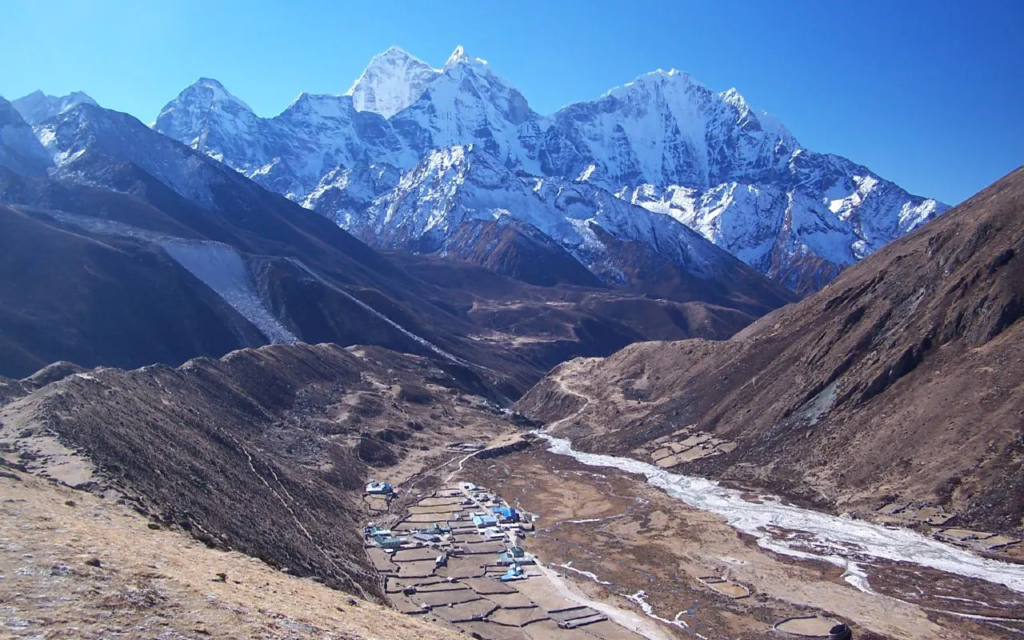
The History of the Everest Expeditions
On May 29, 1953, the first successful attempt was made on Mount Everest when Sir Edmund Hillary, a New Zealand-based person and Tenzing Norgay Sherpa, a Nepalese man, reached the summit.
Before this historic ascent, multiple attempts had been made to get to the summit of the mountain by various expeditions that had to go back because of tough weather conditions, inadequate gear and a little understanding of the climbers at high altitudes.
The expeditions to Everest have increased since 1953 due to better climbing equipment, weather forecasting tools, and experienced Sherpa guides. The Everest region is being visited today by climbers worldwide in the main climbing seasons on a yearly basis.
Nevertheless, Everest is a risky and challenging mountain despite the modern advances.
The Two Main Routes to Climb Everest
The Everest expeditions use two major paths.
The most popular is the South Col Route, which is based in Nepal. Climbers begin with a walk across the Khumbu Valley and arrive at Everest Base Camp at 5 364m (17,598 ft). There, they ascend the Khumbu Icefall and proceed slowly on the mountain.
The North Ridge Route originates on the Tibetan side of Everest. The camp on this side is at around 5,150 m (16,896 ft) and trekkers trail to the peak is on the north.
Both of the routes pose severe difficulties, such as extreme cold weather, strong winds and low oxygen levels.
The Stages of an Everest Expedition
An Everest expedition has a well-thought-out progression. Climbers do not just walk up the hill in several days from the base camp to the summit. The body of a person has to enjoy a gradual adjustment to the elevation.
The expedition starts with the walk up to the Everest Base Camp that typically takes 8-12 days from Lukla. The trek enables the climbers to gradually achieve the height of 5,364 m (17,598 ft) and adapt to the thin air.
Once they get to base camp, climbers take several days to rest and prepare their equipment. Base camp serves as the primary point of life of the expedition.
Climbers set up several higher camps above base camp.
Camp I is located in the Western Cwm, and it is approximately 6, 065 m (19,898 ft). This part entails the crossing of the risky Khumbu Icefall, which is an ever-changing mass of ice blocks and crevasses.
Camp II, also known as the Advanced Base Camp, is approximately 6400 m (21000 ft). Climbers tend to spend more time here working on higher climbs.
Camp III is the Lhotse Face, and it is at an altitude of around 7,200 m (23,622 ft). The oxygen levels are significantly lower at this level, and climbers start consuming supplemental oxygen either when they sleep or when climbing.
Camp IV, which is located at the South Col, is approximately 7,900 m (25,918 ft). This camp falls in the so-called death zone, where the human body would not be able to live long unless oxygen support is provided.
Climbers leave Camp IV and make the last attempt to reach the summit of 8,848.86 m (29,031.7 ft).
Acclimatization: Adjusting to High Altitude
Acclimatization is one of the most crucial constituents of an Everest expedition. The air is less oxygenated and thinner as the climbers ascend.
The air at sea level has sufficient oxygen for the body. However, on top of Everest, oxygen concentration is approximately half that of sea level.
In order to adjust, climbers live by a rotation called, climb high, sleep low. They climb to the higher camps in the daytime and go back to the lower camps to sleep.
This progression process assists the body in generating additional red blood cells as well as adapting to the elevation.
Unless the acclimatization process is done properly, climbers are exposed to severe altitude illnesses like acute mountain sickness, high-altitude pulmonary edema, and high-altitude cerebral edema.

Equipment Used in an Everest Expedition
The process of climbing Everest demands special equipment that is made to work in extreme cold and high altitude.
It can be as cold as -30 °C (-22 °F) near the summit, and the wind is also very strong, making the environment even worse.
Insulated climbing suits, down jackets, and climbing high altitude boots are used to prevent frostbite. Climbers also use climbing harnesses, helmets, ropes, and ice axes.
Oxygen supplement is commonly applied above 7000 meters (22968 feet) to assist the climbers to breathe more easily.
The modern Everest expeditions also involve communication systems, weather systems, and satellite systems, which are significant.
The Role of Sherpa Climbers
A major element of just about every Everest expedition is the presence of Sherpa climbers. Sherpas are the Himalayan professionals who are experts in climbing mountains, and they can help in guiding, carrying equipment, and repairing the ropes.
They also tend to lay the climbing path through hazardous zones like the Khumbu Icefall and the steep slopes above Camp III.
Sherpas also carry oxygen boxes, foodstuff and tents to the high camps. They have experience and know the mountain, and this greatly increases the chances of being successful at the summit.
Many of the world’s most accomplished Everest climbers are Sherpas.
The Challenges of Climbing Everest
A trip to Everest is a challenging one. The most difficult issue is the absence of oxygen at high altitude. At the top, 8,848.86 m (29,031.7 ft), the oxygen content is approximately a third of that at sea level.
Climbers proceed step by step and stop every step to take several breaths.
The other significant challenge is extreme weather. The power of winds, a lot of snow, and unexpected storms may make climbers reverse their decision despite the time spent preparing.
Additional dangers are avalanches, falling ice, and crevasses, as well as frostbite.
Due to these risks, it is never certain that climbers can make it to the top.
When Everest Expeditions Take Place
The majority of the Everest expeditions are done in selected seasons when climatic conditions are more favorable.
The most popular climbing season is the spring season, which is between April and May. During this period, the jet stream winds briefly move away from the summit, creating a short window of calmer weather.
Autumn (September to October) is also a climbing period, but that is less frequent since the weather is colder, and it has a shorter weather window.
At other times of the year, the mountain becomes very dangerous because of heavy snowfall and strong winds.
How Difficult Is an Everest Expedition?
Climbing Everest is ranked among the most challenging tasks in climbing.
Even professional climbers need months or years of preparation before they set out on the expedition. Training is usually accompanied by endurance training, power training, and ascending to smaller high-altitude sceneries.
Besides getting physically ready, climbers have to acquire a strong mental fortitude. Working in wretched conditions, having to address fatigue, and unforeseeable weather, would demand high levels of determination.
Despite the challenges, reaching the summit is possible, and many climbers say the feeling of standing on the top is an incredible achievement.

Why People Attempt an Everest Expedition
To a great number of climbers, an expedition to Everest is the ultimate adventure.
Some are driven by the possibility of being on the tallest point on earth at 8,848.86 m (29,031.7 ft). Others have personal agendas, discovery, or extreme enthusiasm for mountaineering.
Climbers usually refer to Everest as a destination where man is tested in terms of strength and perseverance.
It is not just the process of getting to the top, but rather a matter of teamwork, endurance, and appreciation of the force of nature.
Final Thoughts
An Everest expedition is much more than a mountain climb. It is a lengthy and difficult adventure that involves walking, mountain climbing at high altitudes and planning.
Between the journey to the bottom of Everest at 5,364 m (17,598 ft) and the final ascent to the summit at 8,848.86 m (29,031.7 ft), the mountaineers have to climb through extreme altitude, changing weather and severe physical obstacles.
To beginners, the working of an Everest expedition itself is an enormous eye-opener about the effort involved in reaching the summit of the world.
Although a very few individuals will ever reach the peak of Everest, the tales of these missions remain inspirational to global adventurers.


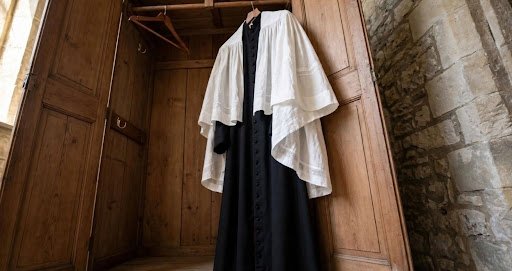
A cassock and surplice are traditional church garments commonly associated with clergy, servers and choir members. The cassock is a long, close-fitting garment worn as the main robe, while the surplice is a looser white vestment worn over it.
Understanding the purpose of a cassock and surplice can help churches, clergy and choir members choose suitable church vestments for worship and formal services. A cassock and surplice combination also provides a recognisable traditional appearance within many Christian denominations.
What Is a Cassock?
A cassock is a long, formal robe traditionally worn by clergy, church servers and others involved in worship. It is commonly used during services, processions and other church activities.
Cassocks are available in different styles and sizes to suit different wearers and church traditions. The Vanpoulles range includes servers’ cassocks designed for church and altar use, offering a practical and formal option for regular wear.
What Is a Surplice?
A surplice is a loose-fitting liturgical garment worn over a cassock. It is commonly worn by clergy, choir members and church servers during services and ceremonial occasions.
Vanpoulles offers traditional and organist surplices in different styles and adult sizes. Features such as the neckline, sleeve design and overall length can vary depending on the intended use.
How Are Cassocks and Surplices Worn?
The traditional arrangement is straightforward: wear the cassock first, then the surplice over it. This creates a layered appearance that combines the structured design of the cassock with the looser form of the surplice.
The exact use can depend on the denomination, service and role of the wearer. Church traditions can vary, so it is sensible to consider local practice when selecting liturgical clothing.
Who Wears a Cassock and Surplice?
A cassock and surplice may be worn by different people involved in church worship. Depending on the tradition, this can include clergy, choir members, altar servers and other church assistants.
The garments can therefore suit a range of formal church settings. Choosing the right style and size is especially important when several members of a choir or serving team need a consistent appearance.
Cassocks for Church Servers
Servers’ cassocks are designed with the practical requirements of church and altar service in mind. They may need to accommodate movement during processions, worship and other duties while retaining a neat appearance.
Vanpoulles includes servers’ cassocks within its vestments and textile products collection. Its range includes garments for both children and adults, so churches can choose suitable options for different members of a serving team.
Choosing the Right Surplice
When choosing a surplice, consider several factors. The garment should suit its intended role and allow enough room for comfortable movement.
Key considerations include:
- The correct size and length
- The style of neckline
- Sleeve design
- The intended church or choir use
- Ease of care and maintenance
- Compatibility with the cassock underneath
Vanpoulles’ traditional surplice features a round neck and is offered in adult sizes. Its organist surplice has split sleeves, providing another option for a specific role.
Caring for Church Robes and Vestments
Proper care can help church garments remain suitable for regular use. Always follow each garment’s cleaning instructions, especially when different fabrics or decorative details are involved.
Storage is also important. Vestments should be kept clean, dry and protected from unnecessary creasing or damage. A suitable clergy travel cover can also make transporting robes and albs more convenient when garments need to be taken between locations.
Finding Suitable Cassock and Surplice Garments
Choosing a cassock and surplice involves more than selecting a traditional style. Churches and individuals should consider the intended role, correct fit, comfort, appearance and the requirements of their particular worship setting.
A suitable range makes it easier to find garments for clergy, servers, and choir members, as well as other liturgical clothing. Vanpoulles provides a comprehensive selection of vestments and textile products, including cassocks, surplices, albs, stoles, copes, chasubles and other church garments.


If you’ve been searching for an abaya that actually fits your life — not just your measurements — the Rue Haya abaya collection is worth a close look. Designed for women who want sophistication without compromise, every piece in the collection is built around a simple premise: modesty and elegance aren’t opposites. They’re the same thing, done right.
Here’s a complete look at the styles available, the details that set each one apart, and how to choose the right abaya for what you actually need.
Open Abayas: Effortless Layering, Maximum Versatility
The open abayas at Rue Haya are the collection’s most versatile category — and for many women, the most-reached-for. Worn like a long coat or duster over your outfit, abayas open at the front give you full coverage while keeping whatever you’re wearing underneath visible and part of the look.
The Suhaila Satin Open Abaya collection is where this style shines brightest. Available in Champagne Gold, Soft Pistachio, Rose Gold, and Soft Ivory, these flowy abaya styles drape beautifully in a silky satin that moves with every step. The Champagne Gold and Rose Gold options are particularly striking for special occasions, while the Soft Ivory and Pistachio work effortlessly for both everyday wear and daytime events.
For a more structured take on abayas open, the Naima Contrast Trim Structured Knit Abaya in Black pairs a relaxed open silhouette with a clean white contrast trim — graphic, modern, and completely wearable across seasons.
The Rimal Soft Crepe Open Abaya in Soft Peach Floral and Soft Blush Floral bring something softer to the open abaya category — printed crepe in delicate colorways that work beautifully for garden events, Eid gatherings, or spring outings.
Closed Abayas: Clean Lines, No-Fuss Elegance
For women who prefer a seamless silhouette, the closed abaya delivers exactly that. No front opening, no layering required — just a clean, unbroken line from shoulder to hem that looks polished with almost no effort.
The Layal Noir Soft Crepe Abaya is the standout in this category. A quietly refined closed abaya in soft crepe, available in Black, Off White, Navy, and Beige. The Black and off white abaya versions are particularly striking: the Black features a crisp white contrast trim that creates a sharp, editorial look, while the white abaya dress version reverses that contrast with black trim on an ivory base.
This is the style to reach for when you want your abaya to do the work — when you want to walk in looking completely put-together with minimal effort. Pair the black with heeled mules; the off white with gold jewelry and a soft chiffon hijab.
Two-Piece Abayas: Style That Works Harder
The two piece abaya is one of the most exciting developments in modest fashion — and the Rue Haya abaya collection has invested deeply in this category.
The Samira Embroidered Crepe Abaya Set is the flagship two-piece in the collection, currently on sale. Available in Black, Navy, Olive Green, and Spiced Red, each set features delicate embroidery detail that elevates a classic silhouette into something genuinely special. Worn together, they read as one seamless look; separately, each piece can be styled with other items in your wardrobe.
For a more relaxed two-piece aesthetic, the Hind Lightweight Silk Two-Piece Abaya Set is the go-to. Available in Mocha Brown, Black, Denim Blue & Nude, Emerald & Nude, and Burgundy & Nude — each set features a belted waist that adds structure without stiffness. The chocolate brown abaya version in Mocha Brown is a particularly strong seller, offering a rich warm tone that works across seasons and skin tones.
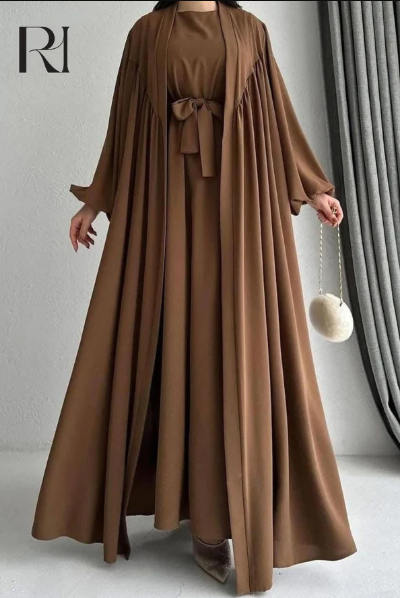
The Majda Sheer Organza Abaya Set takes two-piece styling into more formal territory — a sheer organza outer layer over a matching inner piece, available in Gold & Black, Lavender & Black, Navy & Black, and Beige & Black. These are the sets for weddings, formal occasions, and events where you want to arrive and be remembered.
Special Styles Worth Knowing
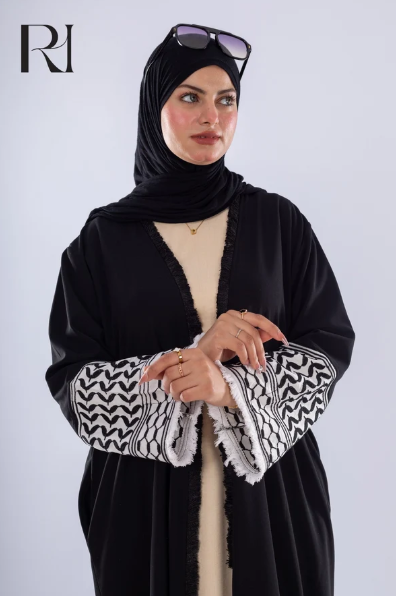
The Keffiyeh Abaya
One of the most meaningful pieces in the collection is the keffiyeh abaya — an abaya that incorporates keffiyeh-inspired embroidery or pattern detailing as a quiet but powerful nod to Palestinian heritage. For the Rue Haya brand, founded by a Palestinian-American-Canadian family, this piece carries particular significance. It’s a wearable expression of identity, and it’s designed to be worn with pride.
The Chocolate Brown Abaya
Rich, warm, and endlessly wearable — the chocolate brown abaya has become one of the most requested tones in modest fashion. The Hind Lightweight Silk Two-Piece Abaya Set in Mocha Brown and the Suhaila Draped Satin Open Abaya in Cocoa Brown both deliver this colorway beautifully. Neither is a flat brown — both carry a warmth and depth that photograph well and work across a wide range of hijab colors.
The Black Abaya Dress
The black abaya dress needs no introduction — it’s the wardrobe constant that every collection is measured against. In the Rue Haya abaya collection, the Samira Embroidered Crepe Abaya Set in Black, the Layal Noir Soft Crepe Abaya in Black, and the Aya Royalty Crepe Abaya Set in Black each offer something different: embroidered detail, clean minimalism, and structural elegance respectively.
Prayer Abayas
For women who use their abaya as a prayer abaya — wearing it both as an outer garment and for salah — look for styles in softer, more flexible fabrics with relaxed cuts that allow full freedom of movement through every position of prayer. The Suhaila Satin Open Abaya styles and the Layal Noir Closed Abaya in crepe are both well-suited for this purpose, with fabrics that move naturally and cuts generous enough for complete modesty during prayer. For dedicated prayer garments, the Rue Haya prayer wear collection offers purpose-built options.
How to Choose Your Rue Haya Abaya
The right Rue Haya abaya comes down to how you live and what you need it for.
For daily ease and layering flexibility → open abayas in satin or crepe. For clean, effortless elegance with no layering → closed abaya in soft crepe. For styling range and fashion versatility → two piece abaya sets in silk or embroidered crepe. For formal and special occasions → the Majda Organza or Sabeel Embroidered Chiffon sets. For warm tones that work year-round → the chocolate brown abaya in silk or satin. For a white abaya dress or off white abaya with contrast trim → the Layal Noir in Off White.
Browse the complete Rue Haya abaya collection — 66 pieces across open, closed, and two-piece styles, designed for women who refuse to choose between their values and their wardrobe.
Finding someone you trust to care for your children can be one of the more difficult decisions a parent makes. A babysitter may be responsible for meals, playtime, bedtime routines, and responding appropriately when unexpected situations arise.
For that reason, finding childcare should involve more than simply choosing the first available person.
Parents can make the process easier by establishing their requirements in advance, checking a babysitter’s experience, asking appropriate questions, and making sure both the caregiver and child are comfortable with the arrangement.
Decide What Type of Childcare You Need
Start by considering why you need a babysitter and how frequently you expect to use the service.
Some families only require occasional childcare for evenings or appointments. Others may need someone several times each week while parents are working.
The age of your child matters too. Looking after a school-age child can involve different responsibilities from caring for an infant.
Write down the expected hours, children’s ages, routines, and any important requirements before beginning your search.
Look for Relevant Childcare Experience
Experience should be relevant to your family’s circumstances.
If you have an infant, ask whether the babysitter has previously cared for babies. Families with several children may want someone comfortable supervising multiple age groups simultaneously.
Parents should also ask about previous responsibilities rather than simply asking how many years someone has worked as a babysitter.
Someone with the right type of experience may be a better fit than a person with more general childcare experience.
Use Appropriate Sources
Personal recommendations can be useful, particularly when they come from parents you know and trust. Professional babysitting services provide another option.
For families trying to find trusted babysitters in Dubai, using a service that works with licensed babysitting agencies and trained caregivers can provide a more structured way of arranging childcare. ServiceMarket states that the babysitters available through its partner agencies have childcare experience and professional training, including first aid and Basic Life Support.
Whatever method you use, avoid treating availability as the only selection criterion.
Interview Potential Babysitters
Speaking with a prospective babysitter gives you an opportunity to determine whether they understand your expectations.
Ask about their childcare experience, the ages they have previously cared for, and how they approach common situations.
You might discuss how they would handle a child who refuses to go to bed, becomes upset when a parent leaves, or does not want to eat.
The objective is not to catch someone out with difficult questions. It is to understand how they think and whether their approach is compatible with yours.
Ask About Emergency Preparedness
Emergencies are unlikely, but caregivers should know how to respond appropriately if something unexpected happens.
Ask about relevant first-aid training and what the babysitter would do in an emergency.
Leave clear emergency contact information whenever somebody else is caring for your children.
Parents should also explain anything specific to their child that the caregiver needs to know.
Explain Your Child’s Routine
Children often feel more comfortable when familiar routines continue while their parents are away.
Explain normal meal times, activities, bedtime routines, and household rules.
If your child is allowed a certain amount of screen time, make that clear. The same applies to snacks, homework, outdoor play, and bedtime.
Written instructions can be useful, particularly during the babysitter’s first few visits.
Discuss Allergies and Other Important Information
Never assume a babysitter knows about a child’s individual requirements.
Parents should clearly communicate allergies, dietary restrictions, relevant medical information, and other essential instructions.
Show the babysitter where important supplies are located and make sure emergency contact details are easy to find.
If a child has requirements that need specialist attention, make sure the caregiver has the appropriate qualifications and experience.
Introduce the Babysitter to Your Child
Whenever practical, allow your child to meet a new babysitter before leaving them together for an extended period.
Observe how they interact.
A good babysitter should be able to communicate appropriately with the child rather than focusing exclusively on the parents.
Some children need time to become comfortable with someone new, so an initially quiet reaction does not necessarily indicate a poor match.
Establish Clear Household Rules
Different households have different expectations.
Explain which rooms can be used, whether visitors are permitted, what food is available, and any rules regarding phones or other devices while the babysitter is responsible for the children.
Clarity prevents misunderstandings.
You should also discuss whether the caregiver is expected to perform tasks beyond direct childcare. Do not assume additional household duties are included unless they have been agreed upon.
Make Communication Easy
Both parents and babysitters should know how to contact each other.
Tell the caregiver where you will be and approximately when you expect to return.
Parents may also want occasional updates, particularly when using a new babysitter. Agree on what is reasonable beforehand rather than repeatedly contacting the caregiver throughout the evening.
Good communication should provide reassurance without making it difficult for the babysitter to focus on the children.
Review the Experience Afterwards
When you return home, ask how everything went.
Speak to the babysitter about meals, activities, bedtime, and anything unusual that happened.
You can also ask your children about their experience in an age-appropriate way.
If everyone was comfortable and the babysitter followed your instructions, you may have found someone worth booking again.
Consistency can be valuable because children often become more comfortable with caregivers they already know.
Final Thoughts
Finding a babysitter requires a balance between practical requirements and personal trust.
Experience, training, communication, availability, and compatibility with your children should all be considered before making a decision.
Taking time to evaluate potential caregivers can make childcare arrangements more comfortable for parents, children, and babysitters alike.
Frequently Asked Questions
What should I look for when choosing a babysitter?
Look for relevant childcare experience, appropriate training, good communication, reliability, and an approach that suits your family’s expectations.
Should I interview a babysitter first?
An interview can help you understand the caregiver’s experience and approach to childcare before leaving your children in their care.
What information should I give a babysitter?
Provide emergency contacts, children’s routines, allergies or relevant health information, household rules, meal instructions, and other information necessary to care for your children safely.
Can I hire a babysitter for only a few hours?
Yes. Part-time babysitting services can be appropriate when parents need childcare for particular periods rather than a full-time nanny. ServiceMarket, for example, offers bookings between four and 12 hours.
Is it better to use the same babysitter regularly?
Using the same caregiver can provide consistency and allow the babysitter to become familiar with your child’s personality and routines, subject to availability.



-

 Celebrity1 year ago
Carolin Bacic: Life, Biography, Family, and Legacy
-

 Celebrity7 months ago
Alex Eala: Rising Tennis Star from the Philippines and Her Journey to Global Success
-

 Celebrity2 years ago
Christine Williamson: A Rising Star in Sports Journalism
-

 Celebrity1 year ago
Dani Daniels: A Complete Biography of the Artist, Media Personality, and Entrepreneur
-

 Celebrity7 months ago
Valerie Perrine: A Complete Biography of the Acclaimed Actress and Icon
-

 Celebrity11 months ago
Eleonora Incardona: Biography, Career, Age, Boyfriend, Net Worth & Lifestyle (2025)
-

 Celebrity2 years ago
Vera Davich: Biography, Life, and Legacy2025
-

 Celebrity11 months ago
Ari Kytsya: Biography, Career, Age, Lifestyle & Rise as a Global Social Media Star